Explore Cyprus with Our Interactive Map

Explore our top stories and discover ideas worth your time.

Saint Paul and Barnabas

Saint Paul and Barnabas

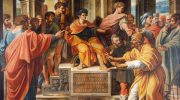
In 45 or 46 AD, two men arrived on the eastern shores of Cyprus at the port city of Salamis. Their names were Paul and Barnabas, accompanied by a young assistant named John Mark. This journey marked the beginning of what would become known as the First Missionary Journey of early Christianity, and Cyprus held the distinction of being the first stop outside Palestine where these apostles would preach to Gentile populations. The island was about to become the first place in the world governed by a Christian ruler. Barnabas was actually a native of Cyprus, born Joseph in Salamis to a Jewish family of the tribe of Levi. The early Christian community in Jerusalem had renamed him Barnabas, which means "son of encouragement" in Aramaic. He had sold his property and given all the proceeds to the apostles, demonstrating a remarkable commitment to the new faith. His companion Paul, still known at this time as Saul, had recently converted from being a persecutor of Christians to becoming one of their most passionate advocates. Together, they set out from Antioch in Syria on a mission that would change the religious landscape of the Mediterranean world. Historical Background When Paul and Barnabas landed at Salamis, they immediately went to the Jewish synagogues to preach. This pattern of starting with Jewish communities…

Read more
Amathus Acropolis Hellenistic Structures

Amathus Acropolis Hellenistic Structures

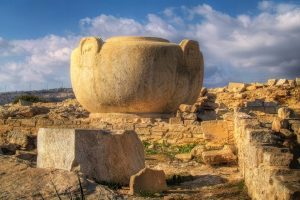
The acropolis of Amathus stands as evidence of the city's transformation during the Hellenistic period. When the kingdom fell to Ptolemaic rule around 312–311 BC, the focus of urban life shifted from the hilltop to the lower town, but this transition brought new construction that reshaped the ancient fortress into something different. Amathus was one of Cyprus's ancient royal city-kingdoms, established around 1100 BC on the southern coast. The site lies about 11 kilometers east of modern Limassol. For centuries, the acropolis served as both a natural fortress and a religious center, dominated by the sanctuary of Aphrodite. Archaeological evidence shows the city prospered through copper trade and maintained a unique cultural identity that blended Greek, Phoenician, and indigenous Cypriot traditions. The acropolis itself rises approximately 80 meters above sea level. Its elevated position provided defensive advantages and made it the natural location for the city's most important buildings, including the royal palace and the main sanctuary. Historical Background When Ptolemaic Egypt absorbed Cyprus in the early Hellenistic period, Amathus lost its status as an independent kingdom. Historical accounts suggest the acropolis was largely abandoned as administrative functions moved to the lower town. However, archaeological evidence tells a more complex story. Despite claims of decline, excavations have revealed substantial new construction during the Hellenistic period. The acropolis received fresh fortifications,…

Read more
The Cyprus Golden Oak

The Cyprus Golden Oak

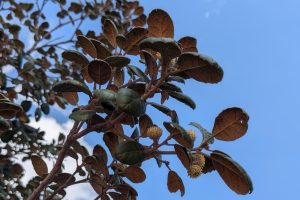
In the high, rocky landscapes of Cyprus's central mountains, one tree shines with a quiet golden glow. The Cyprus Golden Oak, an evergreen species found nowhere else on Earth, earns its name from the shimmering underside of its leaves. Walking through its groves offers a peaceful encounter with one of the island's most enduring natural wonders. Early history and naming The Cyprus Golden Oak, Quercus alnifolia, was first described in 1754 as a member of the genus Alnus (alders), hence the scientific epithet. Its local name, latzia (λατζιά), derives from Hylates — a title attributed by ancient Cypriots to the god Apollo. Hylates comes from the Greek word hyle (ὕλη), meaning forest. It’s an evergreen oak that grows only in Cyprus on basaltic and ultramafic rocks of Troodos ophiolite. Its most distinctive feature is the golden-coloured underside of its leaves, which gives the tree its common name. Notably, specimens cultivated outside their native habitat—such as those found in the Royal Botanic Gardens, Kew— fail to develop this characteristic golden coloration. Golden Oak ancestry and ecological role The Golden Oak branched off from its Turkish relatives to make a home on the volcanic rocks of the Troodos Mountains. It plays a crucial role on the mountain’s steep slopes, where its roots act as a natural anchor to stabilize the soil. Over…

Read more