Explore Cyprus with Our Interactive Map

Explore our top stories and discover ideas worth your time.

Easter Traditions in Cyprus

Easter Traditions in Cyprus

Easter represents the most important religious celebration in Cyprus, surpassing Christmas in spiritual significance and cultural observance. Known as Pascha in Greek, the Orthodox Easter follows the Julian calendar, often falling weeks after Western Easter. The celebration spans Holy Week with solemn church services, candlelit processions through village streets, and the midnight Resurrection liturgy when bells ring and fireworks light the sky. Families gather for elaborate feasts featuring roasted lamb, traditional flaounes cheese pastries, and red-dyed eggs. The festivities blend Byzantine religious ritual with distinctly Cypriot customs like bonfire lighting and the tsougrisma egg-cracking game. For both devout believers and secular Cypriots, Easter functions as the primary family reunion occasion and cultural identity marker, bringing together generations to maintain traditions passed down through centuries of Orthodox faith. The 40 Days of Lenten Preparation Orthodox Lent begins on Clean Monday, called Kathara Deftera, exactly 48 days before Easter Sunday. This day marks a dramatic shift from the excess of carnival to the austerity of fasting. Cypriots traditionally spend Clean Monday outdoors with countryside picnics, flying kites and consuming only fasting foods like tahini, olives, beans, flatbreads, and shellfish. The outdoor gathering symbolizes spiritual renewal and connection with nature before the solemn weeks ahead. During the 40-day Lenten period, observant Orthodox Christians abstain from meat, dairy products, eggs, fish with backbones, wine,…

Read more

Kantara Castle Cyprus

Kantara Castle Cyprus

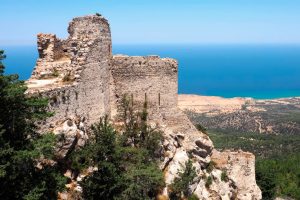
Kantara Castle is a Byzantine and medieval fortress located in the eastern Kyrenia mountain range in the Turkish-occupied part of Cyprus. The name comes from the Arabic word “qantara,” meaning bridge or arch, though some sources translate it as observation point. The castle sits at the easternmost position of three famous mountain castles in Cyprus, with Buffavento Castle to the west and St. Hilarion Castle further west. The castle occupies a strategic position with views over both the northern coast and the Mesaoria Plain. On clear days, visitors can see the Karpasia Peninsula, Famagusta Bay, and distant mainland coasts. This commanding location made Kantara essential for Cyprus’s defense for nearly 500 years. Historical Background The exact construction date remains unknown, but most historians place the Byzantine construction around 965 AD after Arab raiders were pushed back from Cyprus. For centuries, coastal populations had faced repeated attacks, and mountain watchtowers were needed to spot approaching ships and warn inland settlements. Before the fortress existed, an Orthodox monastery dedicated to St. Mary of Kantara stood on the site. Defensive walls were gradually added, turning the religious complex into a military stronghold. This mix of sacred and defensive use was common during unstable periods. Kantara formed part of a signal network with the other Kyrenia mountain castles. Guards could see neighboring fortresses and…

Read more
Cyprus Clay Pots Ceramics

Cyprus Clay Pots Ceramics

Cyprus has been shaping clay into beautiful vessels for over 7,000 years. The pottery tradition on this Mediterranean island represents one of the longest continuous craft practices in human history. From ancient times to modern workshops, Cypriot ceramics tell a story of skilled hands, local materials, and cultural exchange. The distinctive red clay pots, elegant jugs, and decorative vessels created here have become symbols of the island's creative spirit and its role as a crossroads between civilizations. Historical Context The ceramic story in Cyprus begins during the Neolithic period around 4400 BCE, when early settlers started working with the island's abundant clay deposits. These first potters created simple vessels with red and white decorations that were surprisingly uniform across the island. Unlike mainland pottery of the same era which showed regional variations, Cypriot ceramics developed a consistent style that hinted at shared cultural practices. The real transformation came during the Bronze Age, starting around 2600 BCE. Cyprus sat at a strategic location between Egypt, the Hittite empire, and Mycenaean Greece, which turned the island into a vital trading hub. Cypriot potters continued to handcraft their vessels even after the pottery wheel had been invented elsewhere. This traditional approach lasted until about 1500 BCE and produced ceramics of such high quality that they became sought-after commodities throughout the Mediterranean. Red Polished…

Read more