Explore Cyprus with Our Interactive Map

Explore our top stories and discover ideas worth your time.

Famagusta Martinengo Bastion

Famagusta Martinengo Bastion

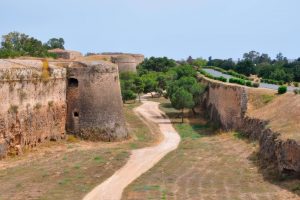
In the northwest corner of Famagusta's historic walled city stands one of the Mediterranean's most impressive examples of Renaissance military architecture. The Martinengo Bastion, also known as Tophane, represents a turning point in defensive technology and remains a testament to 16th-century engineering brilliance. visitncy.com When the Republic of Venice took control of Cyprus in 1489, military engineers quickly recognized a serious problem. The existing fortifications throughout the island were outdated and vulnerable to modern artillery. Medieval walls, built tall and thin to defend against siege towers and scaling ladders, could not withstand the devastating impact of cannon fire. Famagusta presented a particular challenge. As Cyprus's main port and commercial hub, the city required strong defenses. Yet its northwest corner remained especially weak, creating a dangerous gap in the defensive perimeter. The Venetians understood that this vulnerability could prove fatal if the Ottoman Empire decided to expand its territory into Cyprus. Giovanni Girolamo Sanmicheli Takes Command In 1550, the Venetians brought in Giovanni Girolamo Sanmicheli, nephew of the renowned fortification architect Michele Sanmicheli of Verona, to redesign Famagusta's defenses. The younger Sanmicheli arrived with experience in the latest military engineering techniques and an understanding of how warfare had evolved. wikipedia.org Construction took approximately nine years. Sanmicheli died in Famagusta in 1559 before seeing his masterwork completed, but his vision resulted in…

Read more
The House of Aion Mosaics

The House of Aion Mosaics

The House of Aion in Kato Paphos preserves a late Roman mosaic program designed to communicate ideas, not just decorate a room, using myth to argue for cosmic order, education, and limits on human ambition. Made in the 4th century AD during the empire’s rapid Christianisation, the floor reads as a coherent statement from a pagan elite defending continuity through refined symbolism rather than confrontation. archaeology-com This article explains where the building sits in ancient Paphos, how the five scenes build one argument, and what the mosaics reveal about power, belief, and artistic change in late antiquity. Paphos, Power, and Maloutena The House of Aion lies in the Maloutena district of ancient Nea Paphos, once the island's administrative and cultural centre under Roman rule. This was a prestigious neighbourhood, close to the seat of the Roman governor and surrounded by villas that reflected wealth, education, and political influence. wikimedia-org Its location matters. The house was not hidden or marginal. It stood among the most powerful spaces in the city, signalling that the ideas expressed inside were meant to be seen, discussed, and shared by those at the top of provincial society. A Reception Room for Debate Although commonly called a “house,” the structure breaks with standard Roman domestic design. The main reception room, a large triclinium, sits directly near the…

Read more
Panigyria Cyprus Villages Festivals

Panigyria Cyprus Villages Festivals

Across Cyprus, every village has at least one night each year when the roads feel a little busier, the air smells faintly of smoke and grilled meat, and familiar voices reappear as if they never left. The panigyri, the traditional village festival, is that moment: a lived ritual shaped by faith, agriculture, and the island's instinct for togetherness, turning quiet communities into crowded, luminous meeting places where memory and belonging become tangible again. A Gathering of Everyone cyprus-mail-com The word panigyri carries its meaning in its roots. It comes from the ancient Greek panēguris, built from pan ("all") and agora ("gathering" or "marketplace"), and it points to an older world where people came together for religious, political, and cultural life in the same shared space. In Cyprus, that idea endured through centuries of change and settled into the calendar as the central annual pulse of village life. Today, a panigyri usually marks a patron saint's feast day or aligns with a seasonal moment tied to harvest and local rhythm, which is why it often feels both sacred and grounded, elevated and practical at the same time. It blends devotion with celebration, turning the village square into a social arena where residents, visitors, and returning diaspora find each other again, sometimes after years, sometimes after a single season away. What makes…

Read more