Explore Cyprus with Our Interactive Map

Explore our top stories and discover ideas worth your time.

Panigyria Cyprus Villages

Panigyria Cyprus Villages

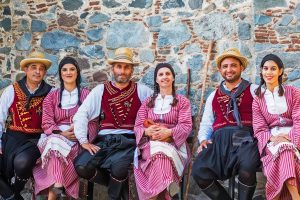
Across Cyprus, every village has at least one night each year when the roads feel a little busier, the air smells faintly of smoke and grilled meat, and familiar voices reappear as if they never left. The panigyri, the traditional village festival, is that moment: a lived ritual shaped by faith, agriculture, and the island’s instinct for togetherness, turning quiet communities into crowded, luminous meeting places where memory and belonging become tangible again. A Gathering of Everyone The word panigyri carries its meaning in its roots. It comes from the ancient Greek panēguris, built from pan (“all”) and agora (“gathering” or “marketplace”), and it points to an older world where people came together for religious, political, and cultural life in the same shared space. In Cyprus, that idea endured through centuries of change and settled into the calendar as the central annual pulse of village life. cyprus-mail-com Today, a panigyri usually marks a patron saint’s feast day or aligns with a seasonal moment tied to harvest and local rhythm, which is why it often feels both sacred and grounded, elevated and practical at the same time. It blends devotion with celebration, turning the village square into a social arena where residents, visitors, and returning diaspora find each other again, sometimes after years, sometimes after a single season away. What makes…

Read more

Circum Troodos White Ring Cyprus Route

Circum Troodos White Ring Cyprus Route

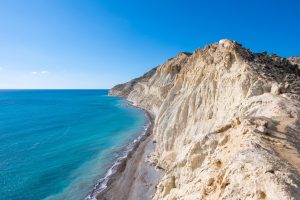
While climbing the high slopes of Troodos we’ve been walking on the frozen machinery of an ancient ocean. But now it’s time to step away from the mountain, slightly change our story and observe what had been happening under the sea, as the Olympus peak was rising into the sky. wikiloc Leaving the cool shade of Platres behind, we approach the wine village of Omodos. The dark volcanic surfaces give way to pale rocks. Chalk breaks easily under your fingers. Hills become rounder. Valleys widen. Vineyards, orchards and white stone villages appear. The geology has shifted from fire to sediment. Encircling the Troodos massif lies a vast geological belt known as the Circum-Troodos Sedimentary Succession. It is the quiet counterpart to the violent ophiolite core. While Troodos itself formed through submarine volcanism deep beneath the Neo-Tethys Ocean, these surrounding rocks were created slowly, grain by grain, as sediments settled on the seabed around the rising mountains. For nearly eighty million years, currents carried shells, clay, volcanic fragments and microscopic marine organisms into the surrounding basin. Layer upon layer accumulated. Over time these sediments hardened into limestones, chalks, marls and sandstones that now form the foothills surrounding the Troodos range. If the ophiolite tells the story of the ocean floor, the Circum-Troodos formations tell the story of the island emerging from…

Read more
Jacaranda Plant In Cyprus

Jacaranda Plant In Cyprus

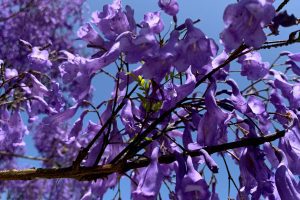
Drive through the avenues of Limassol or Nicosia in late April and you may feel you have stepped into a dream: entire streets and parks vanish beneath a shimmering canopy of lavender-blue. The source of this magic? The jacaranda – a South-American beauty whose clouds of trumpet-shaped flowers turn ordinary city corners into places of pure wonder every spring. Konstantin-Solovev The Trumpet-Tree Family Jacaranda belongs to the Bignoniaceae family the same group that gives us the African tulip tree and the catalpa. This family is famous for its showy, tubular flowers and woody pods. The genus Jacaranda contains about 49 species, nearly all native to tropical and subtropical South America. In Cyprus the star is Jacaranda mimosifolia, the blue jacaranda, sometimes still listed under the older name J. acutifolia. Locally it is known as Τζακαράντα (Tzakaránta), a direct adoption of the scientific name. The word comes from the Tupi-Guarani languages of Brazil and means “fragrant” (or, in some translations, “hard core”, referring to its durable heartwood). A Long Journey to the Mediterranean Native to the foothills of the Andes in north-western Argentina, southern Bolivia and parts of Brazil and Paraguay, jacaranda first travelled to Europe in the early 19th century as an ornamental curiosity. Like many warm-climate exotics, it reached the Mediterranean via botanical gardens and private collectors. In Cyprus…

Read more