Explore Cyprus with Our Interactive Map

Explore our top stories and discover ideas worth your time.

Cyprus Ports and Maritime Trade

Cyprus Ports and Maritime Trade

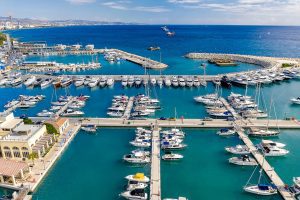
Cyprus operates as one of the Mediterranean's most important maritime hubs, with ports handling approximately 4.7 million tonnes of cargo annually and the island controlling the third largest merchant fleet in the European Union. The strategic location at the crossroads of Europe, Asia, and Africa has made Cyprus a natural transhipment center for European-Far East trade routes. Limassol serves as the main port, processing around 90 percent of the island's exports and imports with capacity for 500,000 twenty-foot equivalent units. The Cyprus ship registry ranks eleventh globally with over 2,200 ocean vessels totaling more than 25 million gross tons. Limassol city has evolved into Europe's largest third-party ship management center, with over 200 shipping companies managing approximately 20 percent of the world's third-party fleet. This concentration of maritime expertise contributes over one billion euros annually to Cyprus's economy, representing approximately seven percent of GDP. The Main Ports That Drive Cyprus Trade Limassol Port dominates Cyprus's maritime infrastructure as the busiest facility in the Mediterranean transit trade. Built after the 1974 Turkish invasion left Famagusta Port inaccessible, Limassol handles containers, iron, roll-on roll-off cargo, dry and liquid bulk, timber, and ferry passengers. Around 4,000 ships, 418,000 TEU, and 381,000 passengers pass through annually. The port can accommodate vessels up to 250 meters in length at berths with 14 meters of water…

Read more
Cyprus Scenic Mountain Passes

Cyprus Scenic Mountain Passes

Cyprus mountain roads offer some of the Mediterranean's most spectacular drives, with routes that climb from sea level to nearly 2,000 meters through ancient forests, traditional villages, and panoramic viewpoints. These roads showcase the island's dramatic geography while connecting travelers to centuries of history and natural beauty. vk-cyprus-com Mount Olympus Road The road to Mount Olympus climbs to 1,952 meters above sea level, making it the highest point on the island. Two military bases occupy the summit, one British, limiting public access to the very top. However, roads leading toward the peak provide stunning views of surrounding valleys and forests. -cyprusiana-ru.j The journey starts from several possible directions, with routes from Limassol through Platres being among the most popular. The ascent features countless switchbacks and hairpin turns as the road gains elevation. Dense pine forests cover the mountainsides, giving way to more exposed terrain at higher altitudes. Winter transforms this area into Cyprus's only ski destination, with snow covering the peaks from January through March. Drivers should fill fuel tanks before attempting the climb because petrol stations become scarce above 1,000 meters. The temperature drops noticeably with altitude, sometimes falling 10 degrees Celsius cooler than coastal areas. This makes the mountain roads a welcome escape during summer heat but creates challenging conditions in winter when ice forms on shaded sections.…

Read more
Traditional Building Materials of Cyprus Villages

Traditional Building Materials of Cyprus Villages

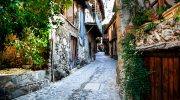
Since the arrival of the first permanent settlers of Cyprus during the early phase Neolithic, people have been living in houses made of stone and mud brick. The island's vernacular architecture uses local materials such as stone, clay, and wood, with traditional Cypriot houses featuring thick stone walls, small windows, and flat or pitched roofs designed to keep interiors cool in the hot Mediterranean climate. cyprusholidayvillas-co-uk These materials came directly from the landscape, with builders quarrying limestone from hillsides, digging clay from valley floors, and cutting timber from mountain forests. The reliance on local materials created regional variations in building styles while establishing construction methods that persisted for millennia until modern industrialization introduced concrete, steel, and imported materials. Stone as the Foundation of Village Architecture Buildings were constructed with locally available materials, primarily stone for foundations and lower courses. The main materials include limestone, sandstone, shell rock, and granite, with structures reaching two or three stories high depending on the type of stone used. Limestone dominated as the most common building stone across Cyprus due to its abundance and relative ease of quarrying and shaping. commons-wikimedia-org Kafkalla, a type of soft limestone, is easy to work with and has been extensively used in traditional Cypriot architecture, particularly for constructing houses, churches, and public buildings. The porous nature of kafkalla allows…

Read more