Explore Cyprus with Our Interactive Map

Explore our top stories and discover ideas worth your time.

Dragons, Deep Caves, and Serpent Myths

Dragons, Deep Caves, and Serpent Myths

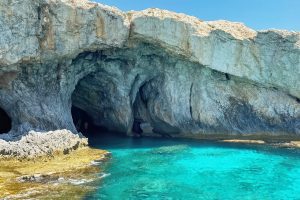
Cyprus possesses a landscape rich with caves, springs, and natural formations that have inspired supernatural stories for thousands of years. The island's geological features, from coastal grottos to mountain springs, became the settings for tales of dragons, serpents, and mysterious creatures that guarded treasures or threatened unwary travelers. pixabay-com These legends blend ancient mythology with local folklore, creating a unique tradition of supernatural stories connected to specific natural sites. The caves and springs of Cyprus served practical purposes as water sources and shelter, but they also held deeper meaning as places where the boundary between the ordinary world and the realm of myth became thin and permeable. Historical Context Serpent and dragon myths in Cyprus trace back to multiple cultural influences. The island's position at the crossroads of civilizations meant that Greek, Phoenician, Roman, and Byzantine traditions all contributed to local folklore. Ancient Greeks associated serpents with various deities and natural forces. The Agathodaemon, a benevolent spirit depicted as a serpent, was believed to protect homes and ensure prosperity for families. This protective serpent appears in Cypriot traditions as a guardian rather than a threat. The connection between serpents and water sources has ancient origins. Many Mediterranean cultures viewed springs and wells as sacred places where supernatural beings dwelled. In Cyprus, springs emerging from limestone rocks created mysterious cave systems…

Read more
Amathus Vase Stone

Amathus Vase Stone

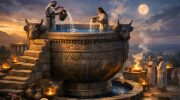
The Amathus Vase is a colossal Cypro-Archaic stone basin carved from local shell limestone, created as a fixed ritual centre in the Sanctuary of Aphrodite at Amathus. Its bull-handles, architectural motifs, and an Eteocypriot inscription fuse water purification, political authority, and indigenous identity into a single monument designed to be permanent. This article explains how the vase functioned in worship, what its imagery and language signal about Amathus, and how its 19th-century removal to the Louvre changed the way Cyprus’s past is seen today. cyprusalive-com Fourteen Tons of Ritual Scale The first thing the Amathus Vase communicates is scale. This is not a container designed to be moved, handled, or admired up close. It belongs to architecture rather than furniture, a fixed presence around which ritual unfolded. -commons-wikimedia-org Carved from a single block of local shell limestone, the vessel’s massive form would have dominated the sanctuary courtyard. Its weight alone makes clear that this was not an offering made by an individual, but a statement commissioned by authority. In ancient Cyprus, monumental stone signalled permanence, legitimacy, and divine favour. The vase was meant to endure, both physically and symbolically. A Vessel Shaped by Place The limestone used for the vase came from the southern Cypriot coast, embedding the object materially in the landscape of Amathus. Shell limestone is porous and…

Read more
Choirokoitia Settlement

Choirokoitia Settlement

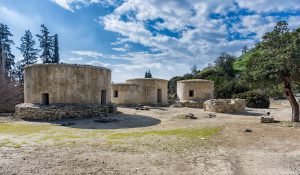
Choirokoitia Settlement is a remarkable Neolithic village on Cyprus's southern coast, dating back to around 7000 BC, where early humans first built permanent homes and formed communities. Recognized as the most important site of its kind in the eastern Mediterranean, it reveals how people shifted from wandering hunters to settled farmers, laying foundations for civilization. This ancient spot whispers stories of innovation and survival, sparking interest in humanity's shared journey toward organized life. turbinatravels-com A Window into Early Human Life Choirokoitia stands as one of the earliest and best-preserved examples of a settled Neolithic community in the region, offering a detailed look at the transition from nomadic existence to village life. Located in the Larnaca District on a hillside overlooking the Maroni River Valley, the site's strategic position provided natural defenses, access to water, and fertile soil for early agriculture. Spanning about 3 hectares, it housed up to 300 people in circular dwellings, marking a pivotal shift in human history known as the Neolithic Revolution. This change involved domesticating plants like emmer wheat, barley, lentils, and animals such as sheep, goats, and pigs, which were introduced to the island by the first settlers from the Levantine mainland around 8500 BC. topwar-ru The settlement's layout reflects emerging social organization, with houses clustered in a semi-circular pattern around a central open space,…

Read more