Explore Cyprus with Our Interactive Map

Explore our top stories and discover ideas worth your time.

Khirokitia UNESCO Chalcolithic Village

Khirokitia UNESCO Chalcolithic Village

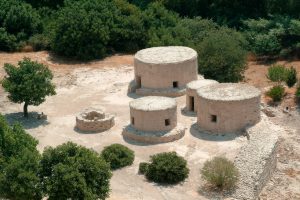
Khirokitia (also spelled Choirokoitia) represents the peak of Cyprus's Aceramic Neolithic period, when communities built permanent settlements without any knowledge of pottery production. The site covers approximately 3 hectares at its maximum extent and consists of circular stone and mudbrick houses clustered together on a hillside. These structures were protected by massive stone walls that enclosed the settlement on multiple sides. nashaplaneta.net The archaeological remains document a sophisticated farming society that thrived for over 1,500 years. Residents cultivated wheat and barley, raised domesticated sheep, goats, and pigs, and supplemented their diet through hunting and gathering wild foods. The settlement's name likely derives from the Greek words for pig (χοίρος) and cradle (κοιτίς), suggesting an area where pigs were raised, though several alternative etymologies exist in local tradition. Historical Background Porphyrios Dikaios, director of the Department of Antiquities of Cyprus, discovered Khirokitia in 1934 during archaeological surveys for the newly established Cyprus Museum. He identified surface scatters of prehistoric material on the terraced slopes of the Maroni River valley. Between 1936 and 1946, Dikaios conducted six excavation campaigns at the site despite interruptions from World War II between 1939 and 1945. His initial findings, published in The Journal of Hellenic Studies in 1934, first dated the settlement to around 4000 BC. However, radiocarbon dating later revealed a much earlier foundation date…

Read more
The Curse of Myrrha (Smyrna)

The Curse of Myrrha (Smyrna)

The story of Myrrha, also known as Smyrna in some versions, stands among the most tragic narratives in Greek mythology and is deeply connected to the mythological landscape of Cyprus. She is remembered as the daughter of King Kinyras, the legendary ruler associated with sacred kingship and the cult of Aphrodite. Her tale links Cyprus not only to themes of divine love and beauty through Adonis, but also to darker themes of transgression, punishment, and transformation. This myth became an important narrative explaining the origins of Adonis, a figure whose death and rebirth were closely tied to fertility cycles and seasonal renewal in Mediterranean religious tradition. In-Cyprus The inclusion of Myrrha in Cypriot mythological heritage reflects the island’s role as a cultural bridge between Greek storytelling and local religious identity. Her story, though tragic, serves as a foundation for the later cult of Adonis, whose association with Aphrodite made Cyprus central to his worship. Through Myrrha, themes of suffering, metamorphosis, and regeneration become embedded in the island’s mythic past, shaping its symbolic connection to life cycles and sacred transformation. The Nature of the Curse According to myth, Myrrha incurred the wrath of Aphrodite and was cursed with an unnatural desire for her father, King Kinyras. The reasons for the goddess’s anger vary across ancient sources, but often involve a perceived…

Read more

Archaeological Sites and Excavations in Cyprus

Archaeological Sites and Excavations in Cyprus

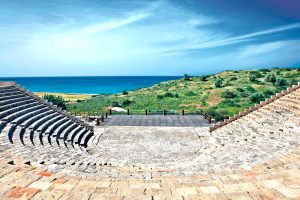
Beneath Cyprus's sunny beaches and pine-covered mountains lie layers of ancient civilizations waiting to be discovered. From 9,000-year-old Neolithic villages to Roman theaters still hosting performances, the island's archaeological sites tell the story of humanity's journey from Stone Age farmers to cosmopolitan Mediterranean traders - and remarkably, you can walk through most of them today. culture.gouv_fr A Living Museum Beneath Your Feet Cyprus is essentially one enormous archaeological site. Everywhere you turn - in downtown Larnaca, on clifftops overlooking the sea, hidden in mountain valleys - you'll find excavated ruins that reveal thousands of years of continuous human habitation. These aren't just piles of old stones; they're remarkably well-preserved windows into how people lived, worshipped, fought, and thrived across millennia. What makes Cyprus's archaeological landscape special is its completeness. You can trace the entire arc of Mediterranean civilization here: from Neolithic round-house villages to Bronze Age fortresses, from Phoenician temples to Greek theaters, from Roman bath complexes to early Christian basilicas. Each era built upon the last, creating stratified sites where one civilization's ruins literally rest atop another's foundations. From Stone Age Settlements to Classical Cities Cyprus's archaeological story begins over 11,000 years ago when the first humans arrived and found an island inhabited by pygmy hippos and dwarf elephants. By the 7th millennium BC, Neolithic farmers had established permanent…

Read more