Explore Cyprus with Our Interactive Map

Explore our top stories and discover ideas worth your time.

St. Sophia Cathedral Gothic Landmark Cyprus

St. Sophia Cathedral Gothic Landmark Cyprus

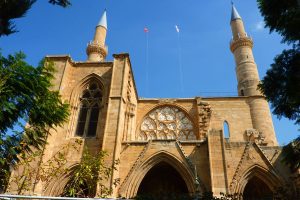
In the center of North Nicosia stands the largest Gothic building in Cyprus. Originally a cathedral, it was later turned into a mosque but still keeps its French Gothic style. Over 800 years, the building has seen coronations, earthquakes, sieges, and the rise and fall of kingdoms, making it one of the most important historic sites on the island. wikipedia-com St. Sophia Cathedral, now called Selimiye Mosque, was built in the 13th century. It was converted into a mosque in 1570 after the Ottoman conquest of Cyprus. The building measures 66 by 21 meters inside and can hold about 2,500 worshippers. It was the coronation church for the Lusignan kings of Cyprus and later for the titular kings of Jerusalem and Armenia. Historical Background Construction of St. Sophia Cathedral began in 1209 under the Lusignan dynasty, a French royal family that ruled Cyprus after the Crusades. Its design was strongly inspired by Notre-Dame de Paris and other French cathedrals. French masons came to Cyprus to lead the work, while local craftsmen helped. The building took more than 150 years to finish, with the final parts completed around 1326. For over 200 years, St. Sophia was the coronation church for the Lusignan kings. Kings of Cyprus were crowned here as rulers of Jerusalem, even though Jerusalem was no longer under their…

Read more
Cyprus Honey

Cyprus Honey

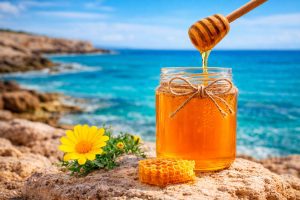
Honey in Cyprus is not simply a food product. It reflects landscape, climate, and survival shaped over centuries. Produced mainly in mountain and rural areas, Cypriot honey carries the character of wild thyme, pine forests, citrus groves, and seasonal movement across the island. Long before sugar became common, honey served as the primary sweetener, a form of medicine, and a symbol of hospitality. Its role has never disappeared. Instead, it has evolved alongside changing lifestyles and technologies. thegreekvibe-com An Island That Shapes Its Honey Cyprus’s geography plays a decisive role in how honey is produced. Two mountain ranges, varied elevations, and sharply contrasting microclimates allow flowering to unfold in stages rather than all at once. Coastal plains warm early in the year, while foothills and high mountain slopes bloom later, extending the foraging season for bees. This vertical landscape makes beekeeping in Cyprus inherently mobile. Apiaries are often moved throughout the year, following blossoms from lowland citrus groves to the thyme-covered slopes of the Troodos Mountains. Honey here is shaped as much by movement as by place, with each harvest reflecting a specific altitude, season, and environment. The Native Bee and Local Resilience At the heart of Cypriot honey production is a native honeybee adapted to the island's demanding conditions. This bee has developed endurance in heat, wind, and drought…

Read more

Madari Viewpoint Cyprus Panoramic Views

Madari Viewpoint Cyprus Panoramic Views

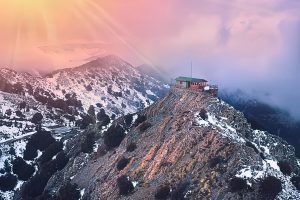
Madari Summit stands at 1,613 metres, securing the spot as the second-highest peak among the mountains in Cyprus. The Madari viewpoint sits atop Mount Adelfoi in the eastern Troodos range, offering unrestricted access to its summit, unlike Mount Olympus, where military installations block the highest point. livejournal-com The fire lookout station at the peak provides 360-degree views that stretch from the Turkish-occupied Pentadaktylos mountains in the north across the Mesaoria plain to the southern coast. Visitors can climb the open tower structure to gain even higher vantage points. The location draws photographers, nature enthusiasts, and hikers who want to experience Cyprus from its most panoramic natural viewpoint without the restrictions that limit access elsewhere in the mountains. Historical Development The Troodos Mountains formed approximately 90 million years ago as part of the Neotethys seafloor. The range rose slowly from the sea as a result of the collision between the African and European tectonic plates, a process that eventually formed the island of Cyprus. visitsolea-com The Madari area showcases the famous Troodos Ophiolite, one of the world's most complete and accessible examples of oceanic crust that has been lifted above sea level. Ophiolite formations include layers of oceanic crust and upper mantle rocks normally found deep beneath the ocean floor. As this process slowed and nearly ceased, the rock formations remained…

Read more