Explore Cyprus with Our Interactive Map

Explore our top stories and discover ideas worth your time.

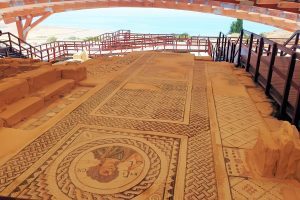
Sacred Landscape Representation

Sacred Landscape Representation

Sacred Landscape Representation in Cypriot art involved the use of motifs such as mountains, seas, fertility symbols, and celestial elements to express the island's profound spiritual connection to nature. These designs went beyond mere decoration, reflecting a worldview where the environment was infused with divine energy, from turbulent waves to bountiful fields. This artistic approach evokes the island's mystical essence, highlighting ancient perceptions of the natural world as a realm of sacred significance. reddit-com A World Expressed Through Art Cypriot art portrayed the landscape as a narrative medium, where natural features conveyed deeper spiritual layers. Mountains symbolized strength and divine oversight, seas evoked origins and transformation, fertility motifs celebrated renewal, and celestial patterns linked earthly existence to cosmic forces. This method remained uncomplicated, emphasizing reverence for nature's power and the island's hallowed character. ancientcyprus-com Origins and Evolution These motifs trace back to the Neolithic and Chalcolithic periods, from approximately 8000 to 2500 BC. Early inhabitants, reliant on farming and herding, incorporated elements reflecting survival and natural cycles into their works. Clay figurines emphasized fertility through wide hips, associating human life with the earth's productivity. metmuseum-org The Bronze Age, beginning around 2500 BC, introduced trade influences from Egypt and Greece. Pottery designs featured wavy lines for seas, symbolizing Aphrodite's emergence, while seals depicted mountains as guardians. Subsequent Greek and Roman periods…

Read more

Maronite Villages of Cyprus

Maronite Villages of Cyprus

The Maronite community of Cyprus represents one of the island's smallest yet most distinctive religious groups, descended from Arab Christians who fled persecution in modern-day Syria and Lebanon starting in the 8th century. Today approximately 7,500 to 10,000 Maronites live on Cyprus, though their numbers have declined dramatically from an estimated 80,000 in the 13th century when they inhabited 60 villages across the island. aljazeera-com Four traditional Maronite villages remain: Kormakitis, Asomatos, Agia Marina, and Karpasha, all located in the Turkish-controlled part of Cyprus. These communities maintain unique cultural practices, including speaking Sanna, a critically endangered Arabic dialect that preserves traces of Aramaic and represents one of the world's rarest languages. Four Waves of Migration from the Levant The Maronite presence in Cyprus developed through four distinct waves of emigration from the Levant between the 7th and 13th centuries. The first wave began around the 8th century when Islamic conquests radiated outward from the Arab Peninsula, prompting many Christians to abandon Syria and Lebanon for safer territories. These early migrants brought with them an Arabic dialect heavily influenced by Aramaic, the language spoken in the region before Arab invasion. libshop-fr In 938, the destruction of St Maron's Monastery in Lebanon triggered a second wave of refugees seeking sanctuary on Cyprus. Saint Maron, a 4th century hermit who became the spiritual…

Read more
Byzantine Frescoes & Iconography

Byzantine Frescoes & Iconography

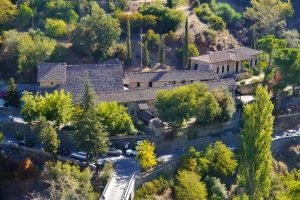
The Troodos Mountains of Cyprus contain one of the most remarkable collections of Byzantine religious art in the world. Ten churches and monasteries, all designated as UNESCO World Heritage Sites, preserve frescoes and paintings that span from the 11th to the 16th centuries. travel-rambler-ru These mountain sanctuaries hold more than just beautiful artwork. They represent a continuous tradition of Christian artistic expression that survived invasions, political upheaval, and changing empires. The paintings on their walls tell biblical stories in vivid colors that remain surprisingly bright after 900 years. What makes these sites particularly valuable is their completeness. Unlike many Byzantine monuments that suffered damage or destruction, the remote mountain locations protected these churches from the Arab raids that devastated coastal areas between the 7th and 10th centuries. The steep-pitched wooden roofs, specifically designed to handle mountain snow and rain, also helped preserve the interior artwork. Historical Background Cyprus became part of the Byzantine Empire when Constantinople was founded in 324 AD. The island inherited artistic traditions from both ancient Greek and Roman culture, which Byzantine artists developed into a distinctive Christian visual language. The first major period of Byzantine art in Cyprus lasted from the late 4th century until the 7th century. istanbultouristpass-com During this time, craftsmen built large basilicas with wooden roofs and created three exceptional apsidal mosaics. The…

Read more