Explore Cyprus with Our Interactive Map

Explore our top stories and discover ideas worth your time.

Cyprus Night Bats

Cyprus Night Bats

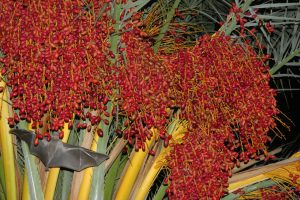
As the last light drains from a Cypriot sky and the air cools over the Troodos foothills, something stirs in the darkness of the old carob trees and ancient limestone caves. Before the stars have properly arranged themselves for the night, the bats are already out dozens, sometimes thousands of them slicing through the warm air in pursuit of mosquitoes, moths, and ripe figs. Cyprus is home to a remarkable diversity of bats, and their story is one of the island's most surprising, most dramatic, and most hopeful wildlife tales. www.inaturalist.org Wings in the Order of Things Bats belong to the order Chiroptera, a name that comes from the Greek words cheir (hand) and pteron (wing) literally, "hand-winged." With over 1,300 species worldwide, bats form the second largest order of mammals on Earth, surpassed only by rodents. Despite what many people assume, they are not related to mice or rats at all. Genetically speaking, bats are in fact closer to humans than they are to rodents. The order is split into two broad groups: the megabats large, fruit-eating species that navigate primarily by sight and the microbats, smaller insect-hunters that navigate through the darkness using echolocation, a biological sonar so precise it can detect a moth's wing-beat in total blackness. Cyprus is home to representatives of both groups, which makes…

Read more

Stavros tou Agiasmati

Stavros tou Agiasmati

Stavros tou Agiasmati, near Platanistasa in the eastern Troodos, is one of Cyprus's most complete late-medieval painted churches, with frescoes dated to 1494 covering the interior and parts of the exterior. Its steep timber roof and sheltered mountain setting protected the paintings, so the church still reads as a coherent visual program rather than scattered fragments. This article explains how the Holy Cross dedication shaped the imagery, why the painter Philippos Goul matters, and what makes Agiasmati’s Last Judgment and village-facing messages unusually powerful. i-pinimg-com A Painted Church Near Platanistasa Stavros tou Agiasmati stands a few kilometres outside the village of Platanistasa, surrounded by forested slopes and mountain air that feels deliberately removed from the coast. Its location was not accidental. In medieval Cyprus, mountain churches offered protection, isolation, and continuity at times when the lowlands were exposed to political change and external threat. cyprusiana-ru The building itself follows the distinctive Troodos tradition of timber-roofed churches. A steep wooden roof with deep eaves wraps around the stone core, shielding the walls from rain and snow. This practical solution turned out to be a gift to history. It protected the paintings not only inside the church, but also on its exterior walls, allowing them to survive with exceptional clarity. Why This Church Matters What makes Stavros tou Agiasmati remarkable is not…

Read more
Green Sea Turtle Conservation Programs in Cyprus

Green Sea Turtle Conservation Programs in Cyprus

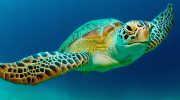
The green sea turtle represents one of the Mediterranean's rarest nesting species. In this entire sea, only 300 to 400 female green turtles nest each year, with the vast majority choosing beaches in Cyprus and Turkey. This makes Cyprus critically important for the species' survival in the region. The green turtle earned its name from the green fat stored beneath its shell, a result of its diet that consists almost entirely of seagrass and algae once the turtle reaches adulthood. suemtravels-com Green turtles belong to the family Cheloniidae and hold the distinction of being the largest hard-shelled sea turtle species. Adults can reach one meter in length and weigh between 130 and 160 kilograms. Their distinctive heart-shaped shell ranges from olive to black in color, while the underside stays pale yellow. Unlike their carnivorous loggerhead cousins, adult green turtles maintain an almost exclusively herbivorous diet, grazing on seagrass meadows and coastal algae. From Crisis to Conservation Action Historical records and testimony from older fishermen confirm that green turtles were once far more abundant around Cyprus than they are today. Exploitation of Mediterranean sea turtles from ancient times through the mid-20th century devastated populations. An estimated 100,000 turtles were shipped from the Eastern Mediterranean to Europe to meet demand for turtle soup and other products. This commercial harvest, combined with coastal…

Read more