Explore Cyprus with Our Interactive Map

Explore our top stories and discover ideas worth your time.

Choirokoitia Settlement

Choirokoitia Settlement

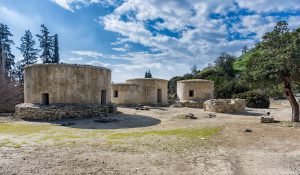
Choirokoitia Settlement is a remarkable Neolithic village on Cyprus's southern coast, dating back to around 7000 BC, where early humans first built permanent homes and formed communities. Recognized as the most important site of its kind in the eastern Mediterranean, it reveals how people shifted from wandering hunters to settled farmers, laying foundations for civilization. This ancient spot whispers stories of innovation and survival, sparking interest in humanity's shared journey toward organized life. turbinatravels-com A Window into Early Human Life Choirokoitia stands as one of the earliest and best-preserved examples of a settled Neolithic community in the region, offering a detailed look at the transition from nomadic existence to village life. Located in the Larnaca District on a hillside overlooking the Maroni River Valley, the site's strategic position provided natural defenses, access to water, and fertile soil for early agriculture. Spanning about 3 hectares, it housed up to 300 people in circular dwellings, marking a pivotal shift in human history known as the Neolithic Revolution. This change involved domesticating plants like emmer wheat, barley, lentils, and animals such as sheep, goats, and pigs, which were introduced to the island by the first settlers from the Levantine mainland around 8500 BC. topwar-ru The settlement's layout reflects emerging social organization, with houses clustered in a semi-circular pattern around a central open space,…

Read more
Traditional Cypriot Rural Life

Traditional Cypriot Rural Life

Cyprus's rural economy developed around livestock farming for thousands of years before modern tourism. Goats, sheep, and donkeys formed the backbone of village life, providing milk, meat, wool, transportation, and labor. These animals adapted perfectly to the island's hot, dry climate and rocky terrain. commons-wikimedia Families raised small herds using methods passed through generations, with women typically managing milk production and cheese making while men handled field work and shepherding. The livestock fit naturally into Cyprus's agricultural cycle, grazing on wild plants during rainy months and consuming crop residues during summer. aces-edu This system created self-sufficient communities where nearly every household maintained animals. Archaeological evidence shows Cypriots domesticated these species during the Aceramic Neolithic Period around 7000 BCE, making livestock farming one of the island's oldest continuous traditions. Ancient Origins of Cypriot Animal Husbandry Prehistoric settlers brought domesticated animals to Cyprus during the early Bronze Age around 2500 BCE. These people possessed navigation skills that allowed them to transport household goods and livestock across the Mediterranean. They introduced pigs, sheep, goats, and cattle to the island. Evidence from Bronze Age sites like Politiko Troullia shows communities consumed sheep, goat, cattle, and pig while also hunting fallow deer for ritual feasts. The indigenous Cyprus Fat-tailed sheep developed over millennia of breeding in local conditions. This triple-purpose breed produced milk, coarse wool,…

Read more
Traditional Cypriot Dances Spoke Without Words

Traditional Cypriot Dances Spoke Without Words

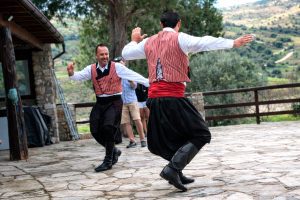
Long before dating, private meetings, or casual conversation between young men and women were socially acceptable, Cyprus had another system. It happened in village squares (Omodos Village Square), at weddings, and during festivals. It used rhythm instead of language and movement instead of promises. Through paired dances such as the Sousta and Antikristos, Cypriot communities created a public, structured way for courtship to unfold, allowing interest, character, and respect to be displayed openly while remaining within strict social boundaries. These dances were never casual entertainment. They were carefully coded social encounters, understood by everyone watching. Face to Face, but Never Too Close At the heart of Cypriot courtship dancing is a simple idea: two people facing one another. The Antikristos, whose name literally means “opposite” or “face to face,” places dancers across from each other rather than in a circle or line. This positioning mattered. It allowed eye contact, acknowledgement, and interaction, but always at a controlled distance. pinterest.com2 In traditional village life, direct interaction between unmarried men and women was limited. The dance floor became one of the few socially accepted spaces where such interaction could occur in public, under the gaze of the community. Nothing was hidden. Everything was observed. The Sousta follows a similar logic but adds energy. Its springing, hopping steps introduce vitality and momentum, turning…

Read more