Explore Cyprus with Our Interactive Map

Explore our top stories and discover ideas worth your time.

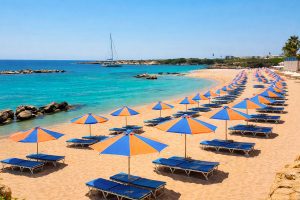
Coral Bay Beach, Paphos, Cyprus

Coral Bay Beach, Paphos, Cyprus

The beach stretches approximately 500 meters along a horseshoe-shaped bay. Two limestone headlands flank the shoreline and create natural protection from strong winds and waves. This geographical formation keeps the waters remarkably calm even when other beaches experience rough conditions. cyprusbylocals-com The sand at Coral Bay is fine and golden, considered among the best examples of sandy beach terrain in Cyprus. Unlike many Mediterranean beaches that feature pebbles or coarse sand, Coral Bay offers soft sand that remains comfortable for barefoot walks and beach activities. The waters are shallow and clear enough to see the seabed, which makes the beach particularly suitable for children and less confident swimmers. Cyprus recognized Coral Bay as its ninth plastic-free beach, part of a broader environmental initiative to reduce plastic waste along the island's coastlines. This designation reflects ongoing efforts to maintain the beach's natural beauty and protect marine ecosystems. Historical Background At the northern end of Coral Bay sits the Maa-Paleokastro archaeological site, where the first Mycenaean Greeks settled in 1200 BC. These settlers arrived on Cyprus after the fall of the Mycenaean kingdoms in mainland Greece. The site marks the beginning of the Hellenization of Cyprus, the process through which Greek language and culture spread across the island. The settlement takes its name from its imposing defensive walls, which were always visible…

Read more
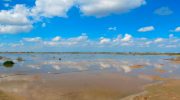
Famagusta Salt Lake Formations & Flamingos

Famagusta Salt Lake Formations & Flamingos

The Famagusta district hosts several seasonal salt lakes and wetlands that transform dramatically between summer and winter. Paralimni Lake, a natural seasonal wetland in the Famagusta district, is one of the few remaining wetlands of its kind in Cyprus. Facebook-comDimitris-Vetsikas This shallow water body covers approximately 350 hectares and represents the largest natural inland lake on the island. North of the city of Famagusta Glapsides Salt Lake, a smaller coastal salt lake favored by migrating birds. These wetlands share common geological origins and ecological functions despite their different locations within the district. Ancient Seas and Modern Salt Lakes The formation of Cyprus's salt lakes connects to both recent geological history and ancient Mediterranean events. Around 5.96 to 5.33 million years ago, the Mediterranean Sea underwent the Messinian Salinity Crisis when the Strait of Gibraltar closed, cutting off water from the Atlantic. The entire Mediterranean basin experienced extreme evaporation, depositing thick layers of salt and gypsum across the seafloor. When the strait reopened, seawater flooded back and covered these deposits. Cyprus's current salt lakes formed much more recently through different processes. Paralimni Lake is a slightly brackish, shallow temporary water body with an average depth of 15 centimeters during the wet period. The lake occupies a natural depression that collects rainwater runoff during winter months. In 1893 due to excess humidity…

Read more
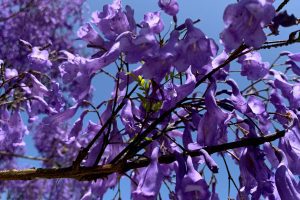
Jacaranda Plant In Cyprus

Jacaranda Plant In Cyprus

Drive through the avenues of Limassol or Nicosia in late April and you may feel you have stepped into a dream: entire streets and parks vanish beneath a shimmering canopy of lavender-blue. The source of this magic? The jacaranda – a South-American beauty whose clouds of trumpet-shaped flowers turn ordinary city corners into places of pure wonder every spring. Konstantin-Solovev The Trumpet-Tree Family Jacaranda belongs to the Bignoniaceae family the same group that gives us the African tulip tree and the catalpa. This family is famous for its showy, tubular flowers and woody pods. The genus Jacaranda contains about 49 species, nearly all native to tropical and subtropical South America. In Cyprus the star is Jacaranda mimosifolia, the blue jacaranda, sometimes still listed under the older name J. acutifolia. Locally it is known as Τζακαράντα (Tzakaránta), a direct adoption of the scientific name. The word comes from the Tupi-Guarani languages of Brazil and means “fragrant” (or, in some translations, “hard core”, referring to its durable heartwood). A Long Journey to the Mediterranean Native to the foothills of the Andes in north-western Argentina, southern Bolivia and parts of Brazil and Paraguay, jacaranda first travelled to Europe in the early 19th century as an ornamental curiosity. Like many warm-climate exotics, it reached the Mediterranean via botanical gardens and private collectors. In Cyprus…

Read more