Explore Cyprus with Our Interactive Map

Explore our top stories and discover ideas worth your time.

Daily Village Life in Cyprus – Community and Support

Daily Village Life in Cyprus – Community and Support

Daily village life in Cyprus revolved around close-knit family networks, communal labor, religious observances, and social gatherings that defined rural existence. Villages functioned as extended families where relatives lived in adjacent compounds, sharing courtyard spaces, agricultural tools, and economic responsibilities across generations. nano-banana The rhythm of days followed agricultural cycles, with sunrise fieldwork interrupted by midday meals and coffee breaks, followed by afternoon labor and evening social gatherings in village squares. Women drew water from communal fountains where they exchanged information while washing clothes and filling vessels, creating female social networks parallel to male coffee shop culture. Children grew up supervised by grandparents, aunts, and neighbors who collectively ensured safety and transmitted traditional knowledge through daily interaction. This interconnected social structure provided economic security through mutual aid, emotional support during hardships, and collective celebration during festivals and life milestones. Morning Routines and Agricultural Work Village days began before sunrise, when women woke to prepare breakfast before men and children left for fields. The meal typically consisted of bread, olives, halloumi cheese, and yogurt with honey, supplemented by seasonal vegetables from kitchen gardens. Coffee brewed in long-handled pots called briki accompanied breakfast, providing caffeine for the day's physical labor ahead. nano-banana Men departed for fields by 6:00 or 7:00 AM, carrying simple tools including hoes, sickles, and pruning shears. Donkeys transported…

Read more

Royal Tombs of Tamassos In Cyprus

Royal Tombs of Tamassos In Cyprus

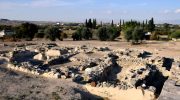
Southwest of Nicosia, near the modern village of Politiko, stand two monumental burial chambers that tell the story of ancient Cyprus's wealthiest inland kingdom. The Royal Tombs of Tamassos represent the height of 6th century BCE Cypriot architecture and demonstrate the immense prosperity that copper mining brought to this ancient city-kingdom. These tombs, carved from limestone blocks and built to resemble wooden houses, remain among the most impressive examples of pre-Hellenistic burial architecture on the island. googleusercontent-com The Royal Tombs of Tamassos are two monumental burial chambers constructed in the mid-6th century BCE. They belonged to the local rulers or elite aristocrats of the ancient city-kingdom of Tamassos, one of the ten major kingdoms of ancient Cyprus. The tombs were built using massive ashlar blocks of limestone and feature architectural details that imitate wooden construction techniques, including carved representations of roof beams and door locks. googleusercontent-com Historical Background Tamassos was strategically positioned near rich copper deposits in the northeastern foothills of the Troodos Mountains. The area had been inhabited since the Chalcolithic Age (around 3900 BCE), but population growth accelerated dramatically during the Late Bronze Age when copper mining intensified. By the 8th century BCE, Tamassos had developed into a major city-kingdom. The kingdom is mentioned in the Assyrian Prism of Esarhaddon from around 673-672 BCE, where it appears as…

Read more
British Colonial Cyprus

British Colonial Cyprus

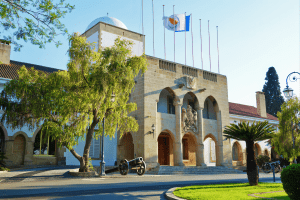
British colonial architecture in Cyprus reflects 82 years of British rule from 1878 to 1960. Unlike other colonies where British builders copied English designs directly, architecture in Cyprus followed a different path. British planners created a local style that combined European ideas with Cypriot building traditions. shutterstock-com During this period, around 700 colonial buildings were constructed across the island. These included government offices, hospitals, post offices, courthouses, schools, and police stations. Most of these buildings were planned and built by the Public Works Department, which employed architects and engineers from Britain, other British territories, and Cyprus. Historical Background Cyprus came under British control in 1878 when the Ottoman Empire leased the island to Britain. At that time, the island was economically weak. Most towns and villages had an appearance closer to Middle Eastern settlements than European cities. tripadvisor-com The contrast between Cyprus and Britain was clear. Britain was a major industrial power with global influence, while Cyprus remained largely rural. When World War I began and the Ottoman Empire joined Germany, Britain canceled the lease and formally annexed Cyprus in 1914. In 1925, Cyprus became an official crown colony. This change marked a turning point in British construction policy. Early colonial buildings were simple and practical, showing Britain’s limited interest in long term investment. After full colonial status was established,…

Read more