Explore Cyprus with Our Interactive Map

Explore our top stories and discover ideas worth your time.

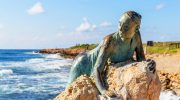
Cyprus Favored by Gods

Cyprus Favored by Gods

In the ancient Mediterranean imagination, Cyprus held a reputation that extended beyond its physical size or political power. Myths and historical traditions alike described the island as uniquely blessed, a land favored by the gods for its fertility, natural resources, and sacred associations. Its geographic position at the crossroads of Asia, Africa, and Europe made it a meeting place of cultures, but it was the perception of divine favor that elevated Cyprus into a symbolic landscape within mythology. Ancient writers often portrayed the island as a place where divine presence was especially strong, where natural abundance and spiritual significance were closely connected. This mythological reputation did not arise from imagination alone. The island’s fertile plains, forested mountains, and productive coastline supported agriculture, trade, and settlement from early times. Such visible prosperity encouraged the belief that Cyprus was under the protection or blessing of powerful deities. In myth, natural abundance was rarely seen as accidental; it was interpreted as a sign of divine approval. Thus, geography and spirituality became intertwined, shaping Cyprus’s identity as a sacred land. Fertility and Agricultural Abundance One of the most important aspects of Cyprus’s divine reputation was its fertility. The island’s climate and soil supported the cultivation of grain, olives, grapes, and fruit, sustaining local communities and contributing to trade networks. Ancient societies depended heavily on…

Read more

Women Roles in Cyprus Rural Life

Women Roles in Cyprus Rural Life

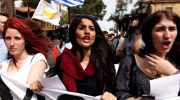
Traditional women's roles in Cyprus rural life centered on agricultural work, textile production, food processing, household management, and child-rearing within extended family structures. Women participated heavily in field labor, with the rural female workforce comprising 51 percent of agricultural workers in the mid-20th century before shifting to urban occupations. vkcyprus-com Textile manufacturing represented a crucial economic activity, with British period censuses documenting thousands of Cypriot women earning income from weaving for local markets and export traders. The village of Lefkara became internationally famous for its intricate white embroidery called lefkaritiko, which brought more wealth to the village between 1900 and 1930 than reached most other Cypriot communities. Women's social lives occurred primarily within gender-separated spaces including courtyards, village fountains where they drew water and washed clothes, and communal textile work sessions that created female networks parallel to men's coffee shop culture. Agricultural Labor and Field Work Women provided essential labor for Cyprus agriculture across all farming activities. They participated in planting, weeding, harvesting, threshing, and processing crops alongside male family members. During olive harvest season from October through January, women and children gathered fallen olives while men climbed trees to shake branches. The grape harvest in September brought entire families to vineyards, with women carrying heavy baskets and sorting fruit by quality. Women handled most vegetable cultivation in kitchen gardens…

Read more
Strawberry Tree In Cyprus

Strawberry Tree In Cyprus

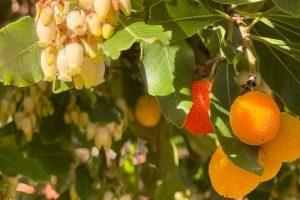
High on rocky, sun-scorched hillsides where pine meets maquis, a graceful evergreen catches the eye with branches glowing like polished copper. Each summer its smooth bark peels away in thin, papery sheets, revealing fresh layers of vivid orange-red and pistachio-green beneath – a living canvas of renewal. This is the Cyprus strawberry tree, one of the island’s most elegant natives and a quiet sentinel of the Mediterranean wildlands. www.inaturalist.org A Graceful Member of the Heath Family Known scientifically as Arbutus andrachne, this evergreen shrub or small tree belongs to the genus Arbutus within the Ericaceae family (the heath or heather family) in the order Ericales, part of the asterid group of flowering plants. In Cyprus it grows alongside its close relative Arbutus unedo (the common strawberry tree) and is a classic component of maquis shrublands and pine-forest understories. Roots Deep in Ancient Mediterranean Landscapes Arbutus andrachne has been part of Cyprus since prehistoric times, forming an integral element of the original maquis vegetation. The ancient Greek botanist Theophrastus (4th–3rd century BC) described it as “Andrachni” in his History of Plants. It was noted by 19th-century explorers and in the 2007 Cyprus “Tree of the Year” campaign by the Department of Forests. Today it remains widespread and secure, listed as Least Concern on the IUCN Red List thanks to its broad…

Read more