Explore Cyprus with Our Interactive Map

Explore our top stories and discover ideas worth your time.

Stavros tou Agiasmati

Stavros tou Agiasmati

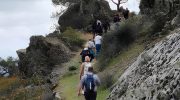
Stavros tou Agiasmati, near Platanistasa in the eastern Troodos, is one of Cyprus's most complete late-medieval painted churches, with frescoes dated to 1494 covering the interior and parts of the exterior. Its steep timber roof and sheltered mountain setting protected the paintings, so the church still reads as a coherent visual program rather than scattered fragments. This article explains how the Holy Cross dedication shaped the imagery, why the painter Philippos Goul matters, and what makes Agiasmati’s Last Judgment and village-facing messages unusually powerful. i-pinimg-com A Painted Church Near Platanistasa Stavros tou Agiasmati stands a few kilometres outside the village of Platanistasa, surrounded by forested slopes and mountain air that feels deliberately removed from the coast. Its location was not accidental. In medieval Cyprus, mountain churches offered protection, isolation, and continuity at times when the lowlands were exposed to political change and external threat. cyprusiana-ru The building itself follows the distinctive Troodos tradition of timber-roofed churches. A steep wooden roof with deep eaves wraps around the stone core, shielding the walls from rain and snow. This practical solution turned out to be a gift to history. It protected the paintings not only inside the church, but also on its exterior walls, allowing them to survive with exceptional clarity. Why This Church Matters What makes Stavros tou Agiasmati remarkable is not…

Read more
Cypriot Mouse (Mus cypriacus)

Cypriot Mouse (Mus cypriacus)

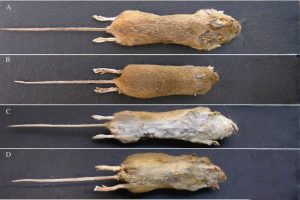
One of the rare photos of a Cyprus mouse from the original paper describing it as a new species © Cucchi, T., Orth, A., Auffray, J.-C., Renaud, S., Fabre, L., Catalan, J., Hadjisterkotis, E., Bonhomme, F., & Vigne, J.-D. (2005). FIGURE 3 in A new endemic species of the subgenus Mus (Rodentia, Mammalia) on the Island of Cyprus. In Zootaxa (Vol. 1241, pp. 1–36). Zenodo. https://doi.org/10.5281/zenodo.172876, CC0, https://commons.wikimedia.org/w/index.php?curid=168764163 Hidden among the vineyards and dry stone walls of the Troodos foothills lives a mouse that science almost overlooked entirely. Smaller than your hand, rarely seen by day, it had been sharing the island with humans for thousands of years before anyone realised it was something genuinely new to science. When they finally did, the discovery made headlines around the world. Introducing the Island's Secret Rodent The Cypriot mouse is a small mammal, no bigger than your palm, belonging to the vast family of mice known as Muridae. Think of it as a cousin to the common house mouse, but with its own unique Cypriot twist – part of the broader rodent order that includes everything from squirrels to beavers. It's a nocturnal nibbler that thrives in the island's varied landscapes, from rocky hillsides to cultivated fields, quietly going about its business without much fanfare. A Tale from Cyprus's Ancient Shores Millions…

Read more

Vavla Village

Vavla Village

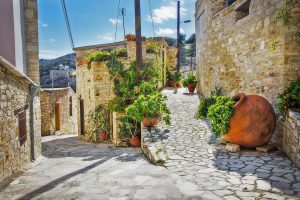
Vavla is a small mountain village situated in the Larnaca district of Cyprus, approximately 38 kilometers west of Larnaca city and 450 meters above sea level. The village lies in the foothills of the Troodos mountains, positioned between the major cities of Larnaca, Limassol, and Nicosia, each within 25 to 40 minutes by car. visitcyprus-com With fewer than 100 permanent residents, Vavla has been officially declared a Preserved Village by the Cyprus authorities due to its traditional white stone architecture built from local Lefkara limestone. The village stands on the geological boundary between Lefkara limestone formations and the volcanic earth of Troodos, creating a unique microclimate that supports rich vegetation, including three rare species and 18 endemic plant varieties. Historical Origins The exact founding date of Vavla remains unknown, though archaeological evidence confirms human settlement in the area since ancient times. The village appears on a French map from 1367 as "Vala" or "Vaules" and on another from 1423 as "Vaula." Two competing theories explain the village name. One suggests it derives from a feudal lord named De Vavyla who controlled the area including Vavla, Kato Drys, and Lefkara during the Lusignan period in the 14th century. The alternative theory claims the name comes from a plant that grew along the Nile River banks in Egypt, which village residents brought…

Read more