Explore Cyprus with Our Interactive Map

Explore our top stories and discover ideas worth your time.

Orthodox Churches in Cyprus Villages

Orthodox Churches in Cyprus Villages

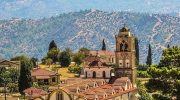
Orthodox churches stand as the defining architectural and spiritual features of Cyprus villages, occupying central positions that both physically and symbolically anchor community life. In the center there was a church or a mosque or both, as in Malia or Melandra, surrounded by village squares where social life unfolds. Shutterstock-com These sacred structures range from humble single-room chapels in remote mountain settlements to elaborate multi-domed complexes in prosperous towns. The Church of Cyprus secured its autocephalous status at the Council of Ephesus in 431 AD, allowing it to operate independently of any patriarchal authority, making it one of the oldest self-governing Orthodox churches. This independence shaped how churches developed across the island, creating distinctively Cypriot architectural and liturgical traditions that persist today. From Apostolic Times to Byzantine Grandeur The Christian history of Cyprus traces back to apostolic times when Paul the Apostle converted Roman proconsul Sergius Paulus around 45 AD, making him the first Christian ruler and Cyprus the first country ruled by a Christian leader. Saint Barnabas, a native Cypriot from Salamis, became the first bishop of Cyprus and established the island's early Christian community. In 478, Archbishop Anthemius claimed that following a vision he found the grave of Barnabas with a copy of Matthew's Gospel resting on his chest, providing evidence of the church's apostolic foundation. kipr-excursions-com A…

Read more

Finikoudes Beach Larnaca

Finikoudes Beach Larnaca

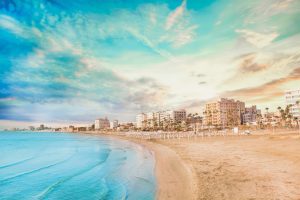
Finikoudes Beach stretches 600 meters along Larnaca's central seafront, backed by a palm-lined promenade that serves as the city's main social gathering space. The beach takes its name from the Greek word for small palm trees, referring to the baby palms planted along the promenade in 1922. expedia.co Those original trees have now reached full height and stand as defining features of Larnaca's coastal identity. This urban beach offers direct access to the Mediterranean from the heart of Cyprus's third-largest city, with shallow waters that extend 25 to 30 meters from shore before reaching deeper zones. From Fishing Village to Tourist Destination Larnaca sits on the site of ancient Kition, established in the 13th century BC as a Mycenaean settlement. The city served as a copper trading hub and maintained continuous habitation for over 3,000 years. The modern Finikoudes area developed much later as Larnaca transformed from a modest coastal town into an international gateway. Historical records from the 16th and 17th centuries describe Larnaca as containing only around 300 houses, most built from stone and mud brick. expedia.co The promenade's development fundamentally changed the relationship between Larnaca's old town and its waterfront. The reconstruction and improvement of Piale Pasha Avenue, which connects Finikoudes with the Mackenzie tourist area, was completed on July 29, 2014. This project unified Larnaca's entire…

Read more
Cape Greco Natural Arch

Cape Greco Natural Arch

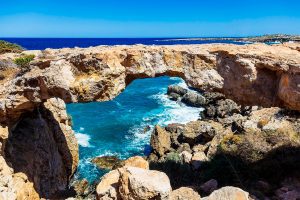
Cape Greco's natural arch, known locally as Kamara tou Koraka or "Crow's Arch," stands as one of Cyprus's most remarkable geological features. Located within Cape Greco National Forest Park on the southeastern tip of the island, this limestone bridge stretches over the Mediterranean Sea between the resort towns of Ayia Napa and Protaras. getyourguide-com The arch sits alongside a coastal road that winds through the park, where visitors can observe this natural wonder without difficulty. The bridge was formed over millennia by the erosive forces of wind and water, creating a structure that appears both delicate and enduring. How Ancient Seas Created This Natural Bridge The geological story of Cape Greco's natural arch begins millions of years ago when Cyprus was submerged beneath ancient oceans. During the Cretaceous period, Cyprus was situated near the equator and the region was characterized by a warm, shallow sea where the deposition of marine sediments led to the formation of limestone and marl. These calcium carbonate deposits accumulated layer by layer as countless marine organisms died and settled on the seafloor. Cyprus sits near the boundary between the Eurasian and African tectonic plates, a position that has shaped the island's dramatic geology. The collision of these plates triggered gradual uplift, eventually pushing the ancient seabed above water. This uplift continues today at a measurable…

Read more