Explore Cyprus with Our Interactive Map

Explore our top stories and discover ideas worth your time.

Avakas Gorge Cave

Avakas Gorge Cave

Avakas Gorge is a 3-kilometer-long limestone canyon located in the Akamas Peninsula, 16 kilometers west of Paphos. The gorge was created by the Avgas River, a seasonal stream that flows only in winter and spring. Over countless thousands of years, this modest river carved through layered limestone and created walls that reach 30 meters high in some sections. visitpafos-org The gorge is part of the Natura 2000 protected area network and attracts roughly 100,000 visitors per year according to forestry authorities. What makes it special isn't just the height of the walls but how narrow the passage becomes. In places, the gorge squeezes down to only 4 meters wide with cliffs towering on both sides and a strip of sky visible overhead. This creates dramatic light effects as sun filters down through the gap. Historical Background The rock that forms Avakas Gorge is limestone from the Mamonia Complex and was deposited in warm seas during the Mesozoic era millions of years ago. This limestone contains layers of reef formations, shell fragments, and marine sediments that hardened into stone. When Cyprus rose from the ocean and these rocks emerged on land, they became vulnerable to erosion. Limestone is soft enough that water can dissolve it chemically and carve it physically. During the Pleistocene era, roughly 2 million to 12,000 years ago,…

Read more
Kourion Archaeological Museum

Kourion Archaeological Museum

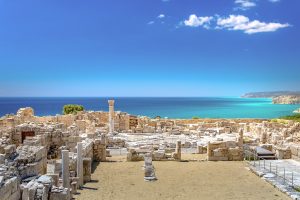
The Kourion Archaeological Museum stands as a small but powerful window into one of Cyprus's most important ancient city-kingdoms. The museum occupies a traditional building that once served as the private residence of George McFadden, who worked as Assistant Director of the University of Pennsylvania and led archaeological research at Kourion from 1934 to 1953. cyprusalive-com McFadden built this two-story house in 1938-39 to serve both as his home and as the excavation headquarters. After his death in 1953, the Cypriot government took ownership of the property. The building was renovated and opened as a museum in December 1969. The museum consists of two exhibition halls that showcase artifacts recovered from the ancient city of Kourion, the Sanctuary of Apollo Hylates, and surrounding communities. Despite its modest size, the collection offers visitors a comprehensive look at life in this ancient city-kingdom from the Early Bronze Age through the Roman period. Historical background George McFadden was not a trained archaeologist when he arrived in Cyprus in 1934. He was a wealthy Philadelphian who financed the excavations and enjoyed playing archaeologist. He brought his 90-foot yacht, the Samothrace, which was a Dutch pilot schooner built in Rotterdam and purchased in 1933. His financial support made the University of Pennsylvania's excavations possible. The expedition studied the conditions under which people lived in ancient…

Read more
Astarte Cyprus Religion

Astarte Cyprus Religion

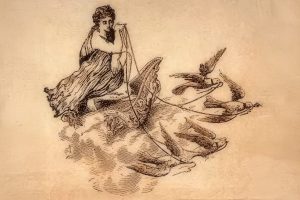
Origins and Divine Character Astarte was one of the most prominent goddesses of the ancient Near East, worshipped across regions such as Phoenicia, Syria, and Mesopotamia long before her influence reached the Mediterranean islands. She embodied a complex divine character, associated with fertility, sexuality, political power, and war. Unlike deities confined to a single sphere, Astarte represented a broad spectrum of life forces, from generative vitality to martial strength. Her worship reflected societies in which reproduction, protection, and sovereignty were inseparable concerns. Over time, her cult traveled westward through trade networks and cultural exchange, eventually reaching Cyprus, where it played a decisive role in shaping the island’s religious landscape. In Near Eastern tradition, Astarte was linked to celestial symbolism, often associated with the planet Venus and the cycles of the sky. This connection reinforced her dual nature as both a life-giving and powerful deity. Her attributes included protection of cities, legitimacy of rulers, and oversight of fertility in both human and agricultural contexts. These features made her cult adaptable to new cultural environments, allowing her identity to merge with local traditions while retaining core symbolic elements. Arrival and Establishment in Cyprus Cyprus’s position between the Levant and the Aegean made it a natural point of contact for eastern religious influences. Trade between Phoenician cities and Cypriot settlements facilitated not only…

Read more