Explore Cyprus with Our Interactive Map

Explore our top stories and discover ideas worth your time.

Mediterranean Work Culture and Daily Life

Mediterranean Work Culture and Daily Life

Cyprus combines Mediterranean traditions with European business practices to create a work culture centered on relationships, balance, and quality of life. The standard work week runs 38 to 40 hours, but the rhythm of daily life follows patterns shaped by climate, family values, and ancient hospitality customs. Unsplash-com Work is important to Cypriots, yet it occupies a specific place in life rather than dominating it. Family gatherings, long meals, and social connections receive equal priority. This approach reflects a philosophy where professional success and personal wellbeing exist in harmony rather than competition. How Work Patterns Developed on the Island Cyprus sits at the crossroads of Europe, Asia, and Africa. Its position made it a vital trading hub for millennia. Ancient Phoenicians, Greeks, Romans, Byzantines, Venetians, Ottomans, and British all ruled Cyprus at different times. Each culture influenced how Cypriots approach work and daily routines. wikimedia-org The British colonial period from 1878 to 1960 introduced structured office hours and formal business practices. English became widely spoken in professional settings. After independence in 1960, Cyprus maintained these European business standards while preserving Mediterranean social customs. Climate shaped work patterns significantly. Summer temperatures can exceed 40 degrees Celsius. Historically, people worked early mornings when it was cooler, took long midday breaks during peak heat, then returned to work in the late afternoon. This…

Read more

Church of Panagia tou Moutoulla

Church of Panagia tou Moutoulla

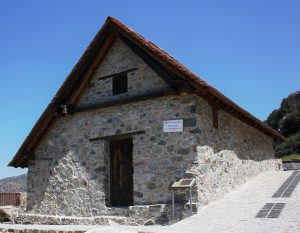
The Church of Panagia tou Moutoulla, located in the village of Moutoullas in the Marathasa Valley of the Troodos Mountains, holds a special place among the Painted Churches of Cyprus recognized by UNESCO. Built in 1280, according to an inscription preserved within the building, the church represents the earliest securely dated example of the steep-pitched wooden roof style that became characteristic of mountain churches in Cyprus. kiprguru-com Its importance lies not only in its artistic decoration but also in its architectural form, which demonstrates how local communities adapted Byzantine religious architecture to the demanding climatic conditions of the highlands. This combination of artistic heritage and environmental adaptation makes the church a key monument for understanding the development of medieval Cypriot ecclesiastical architecture. Historical Background and Regional Context During the late Byzantine period, Cyprus experienced both political transition and continued religious vitality. Rural mountain communities maintained strong ties to Orthodox Christian traditions, even as the island came under Lusignan and later Venetian rule. In such regions, churches often served as the focal point of community life, functioning as places of worship, social gathering, and cultural continuity. Panagia tou Moutoulla emerged within this context, reflecting a society that valued religious devotion while responding practically to local environmental realities. Its survival offers insight into how architecture, climate, and spiritual life were closely connected…

Read more
Orthodox Churches in Cyprus Villages

Orthodox Churches in Cyprus Villages

Orthodox churches stand as the defining architectural and spiritual features of Cyprus villages, occupying central positions that both physically and symbolically anchor community life. In the center there was a church or a mosque or both, as in Malia or Melandra, surrounded by village squares where social life unfolds. Shutterstock-com These sacred structures range from humble single-room chapels in remote mountain settlements to elaborate multi-domed complexes in prosperous towns. The Church of Cyprus secured its autocephalous status at the Council of Ephesus in 431 AD, allowing it to operate independently of any patriarchal authority, making it one of the oldest self-governing Orthodox churches. This independence shaped how churches developed across the island, creating distinctively Cypriot architectural and liturgical traditions that persist today. From Apostolic Times to Byzantine Grandeur The Christian history of Cyprus traces back to apostolic times when Paul the Apostle converted Roman proconsul Sergius Paulus around 45 AD, making him the first Christian ruler and Cyprus the first country ruled by a Christian leader. Saint Barnabas, a native Cypriot from Salamis, became the first bishop of Cyprus and established the island's early Christian community. In 478, Archbishop Anthemius claimed that following a vision he found the grave of Barnabas with a copy of Matthew's Gospel resting on his chest, providing evidence of the church's apostolic foundation. kipr-excursions-com A…

Read more