Explore Cyprus with Our Interactive Map

Explore our top stories and discover ideas worth your time.

Nymphs and Nature Spirits in Cypriot Mythology

Nymphs and Nature Spirits in Cypriot Mythology

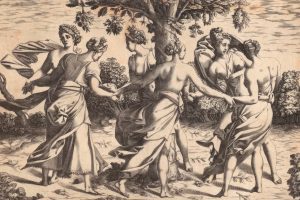
Cyprus is an island with a long memory. Long before cities were built and kingdoms were named, the people who lived here believed that the land around them was alive. Springs, forests, rivers, mountains, and the sea itself were not just features of the landscape. athensaf.eu They were home to spirits. These spirits had names, roles, and personalities. The Greeks called them nymphs, and on Cyprus, they took on a life of their own, shaped by the island's unique mix of Greek, Phoenician, and local traditions. Nymphs were not gods. They sat below the major gods in rank, but they were present everywhere, and the people of Cyprus respected them for it. Historical Background The belief in nature spirits on Cyprus goes back a long way, well before the Greeks arrived. The island was a meeting point for cultures from Greece, Egypt, Phoenicia, and Anatolia. Each of these brought its own ideas about the natural world. The Greeks had a detailed system for classifying nymphs by the type of nature they were tied to: water, trees, mountains, or the sea. When Greek ideas reached Cyprus, they mixed with local beliefs that already existed on the island. The result was something distinct. Cypriot nymph traditions were not a simple copy of Greek mythology. They were a blend, shaped by the land…

Read more

Cyprus Commandaria Wine and Its Heritage

Cyprus Commandaria Wine and Its Heritage

Commandaria is an amber-colored sweet dessert wine made exclusively in the Commandaria region of Cyprus on the southern slopes of the Troodos Mountains. It represents an ancient wine style documented back to 800 BC and holds the distinction of being the world's oldest named wine still in production. needpix The wine is made from sun-dried grapes of two indigenous varieties, Xynisteri and Mavro. Production takes place only in 14 designated villages at altitudes between 500 and 900 meters within the Limassol District. The name Commandaria dates to the Crusades in the 12th century when Knights Templar and Knights Hospitaller controlled the region. From Ancient Nama to Medieval Commandaria The Greek poet Hesiod first described a dried grape wine from Cyprus in 800 BC in his work "Works and Days." He detailed how harvested grapes were dried in the sun for ten days and nights, then covered for five more before fermentation. Ancient people originally called this wine Nama or Cypriot Manna. Roman physician Dioscorides and geographer Strabo praised Cypriot wine for its excellence in the first century AD. Bishop Synesius of Ptolemais in the 5th century described it as resembling thick honey. mungfali The wine gained its current name during the Crusades. King Richard the Lionheart captured Cyprus in 1191 and celebrated his marriage to Berengaria of Navarre in Limassol…

Read more
Cypriot Syrtos Island Dance

Cypriot Syrtos Island Dance

If there is one dance that captures how Cyprus moves, remembers, and gathers, it is the Syrtos. Performed in an open circle, grounded rather than leaping, it has survived centuries of occupation, division, and social change without losing its core rhythm. The Syrtos is not a performance meant to impress from a distance. It is a shared action, designed to include rather than exclude, where the movement matters less than the connection it creates. To understand the Syrtos is to understand how Cypriots express identity without words. A Dance Built on Contact with the Ground The word Syrtos comes from the ancient Greek verb meaning “to drag” or “to pull,” and the name describes the movement precisely. Feet stay close to the earth. Steps glide rather than jump. The dance progresses sideways in a steady, unhurried flow that feels deliberate rather than showy. This grounded quality sets the Syrtos apart from the energetic, leaping dances found in mountainous parts of Greece. In Cyprus, where life historically revolved around agriculture and coastal settlements, the movement reflects stability and continuity rather than display. The body stays upright, the rhythm remains even, and the emphasis is on collective motion rather than individual flair. The Circle That Makes Everyone Equal The Syrtos is almost always danced in an open circle or gently curved line,…

Read more