Explore Cyprus with Our Interactive Map

Explore our top stories and discover ideas worth your time.

Cyprus Kleftiko Dish

Cyprus Kleftiko Dish

Kleftiko is one of the most recognisable dishes in Cyprus, yet its importance has little to do with flavour alone. This slow-cooked lamb, sealed away from air and fire, tells a story of survival, patience, and rural ingenuity. themediterraneandish-com More than a recipe, Kleftiko reflects how Cypriots adapted to hardship and turned necessity into tradition. Understanding it means understanding why time, restraint, and shared meals still matter deeply on the island. A Dish Built on Secrecy and Time At its core, Kleftiko is lamb or goat cooked slowly in a sealed environment. The defining feature is not the meat itself, but the method. By trapping steam and heat, the meat softens gradually, breaking down until it can be pulled apart with little effort. This approach was developed for practical reasons. Cooking openly created smoke and scent that could travel far. Sealing the meat allowed it to cook invisibly, protected from wind, flame, and unwanted attention. Over hours, sometimes an entire day, the process transformed tough cuts into something rich and deeply aromatic. Kleftiko’s slowness is not incidental. It is the point. Time is the primary ingredient, and patience is the main technique. Why It Is Called Kleftiko The name Kleftiko comes from the Greek word kleftis, meaning “thief.” During periods of Ottoman rule, groups of mountain fighters and shepherds relied…

Read more

Early Seafaring Shipbuilding Traditions

Early Seafaring Shipbuilding Traditions

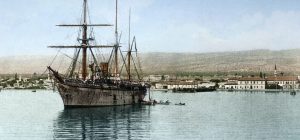
Cyprus did not become connected to the Mediterranean world by chance. Long before written records, its inhabitants learned to cross open water, build reliable vessels, and read the sea as a route rather than a boundary. These early seafaring and shipbuilding traditions allowed the island to turn geographic isolation into advantage, shaping Cyprus into a place of exchange, movement, and outward connection. To understand Cyprus’s early history is to understand how deeply it was shaped by boats, timber, and the confidence to sail beyond the horizon. facebook-com An Island That Learned to Look Outward For early communities, water often marked the edge of the known world. In Cyprus, it became the opposite. Surrounded entirely by sea, the island’s survival depended on crossing it. The coastline offered food, shelter, and access, but it was seafaring that allowed Cyprus to participate in wider networks rather than remain self-contained. This outward orientation emerged early. The sea was not treated as hostile territory to be avoided, but as a practical extension of daily life. Travel by boat became normal long before roads or written maps shaped movement on land. Crossing the Sea Before History Was Written The earliest evidence of seafaring connected to Cyprus dates back more than 11,000 years. Humans reached the island during the Late Epipalaeolithic period, crossing open water from nearby…

Read more
Tourism-Driven Mobility Patterns Across Cyprus

Tourism-Driven Mobility Patterns Across Cyprus

Cyprus welcomed over 4 million tourists in 2024, marking a 5.1% increase from the previous year. This surge in visitors creates distinct movement patterns across the island, from concentrated coastal resort areas to scattered mountain villages. The way tourists navigate Cyprus differs dramatically from how residents travel, shaped by seasonal preferences, transportation choices, and destination priorities. dom-com-cy Tourist arrivals cluster heavily in specific zones rather than spreading evenly across Cyprus. Paphos dominates visitor accommodation with 31.5% of tourists choosing to stay there, followed by Ayia Napa at 15.9%, Larnaca at 14.2%, Limassol at 12.4%, and Paralimni at 11.4%. This concentration reflects both infrastructure development and marketing efforts directed at international markets. The United Kingdom supplies 34% of all tourist arrivals, maintaining its position as Cyprus's primary source market. Israel follows with 10.5%, Poland contributes 8.3%, Germany adds 5.7%, Greece accounts for 4.5%, and Sweden provides 3.7%. Each nationality displays different movement preferences once on the island. British tourists tend toward longer stays in established resort areas, while Israeli visitors often favor shorter, more intensive trips. Travel purpose data reveals that 81.1% of tourists visit for leisure, 11.9% come to see friends and relatives, and 6.9% arrive for business. These different motivations create varied mobility patterns. Leisure tourists typically remain in coastal zones with occasional day trips, while those visiting friends…

Read more