Explore Cyprus with Our Interactive Map

Explore our top stories and discover ideas worth your time.

Cyprus Village Square Programs

Cyprus Village Square Programs

In Cyprus, summer does not fully arrive until the village square comes alive. As daylight softens and the heat loosens its grip on stone, quiet plateias begin to change character. Chairs appear as if by instinct. A few strings of lights are lifted overhead. Someone tests a violin line that hangs in the warm air for a second, then returns, clearer the next time. Little by little, the square becomes what it has been for centuries: a place where people gather not because they were told to, but because the evening feels incomplete without it. These village cultural programs are not staged spectacles designed for crowds. They are communal summer evenings shaped by habit, hospitality, and rhythm, where locals and visitors briefly share the same space, the same food, and the same dance floor. If you want to understand Cyprus beyond beaches and brochures, you do it here, in the square, when the night is still young, and the music has just begun. The Square as the Heart of Village Life For centuries, the village square has been the social centre of rural Cypriot life. Churches, coffee shops, and stone houses face inward, forming a natural stage where daily routines and special occasions intersect. Even in the quietest months, the square holds a kind of readiness. It is where greetings…

Read more

Avakas Gorge Cave

Avakas Gorge Cave

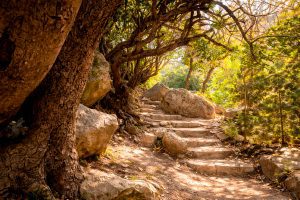
Avakas Gorge is a 3-kilometer-long limestone canyon located in the Akamas Peninsula, 16 kilometers west of Paphos. The gorge was created by the Avgas River, a seasonal stream that flows only in winter and spring. Over countless thousands of years, this modest river carved through layered limestone and created walls that reach 30 meters high in some sections. visitpafos-org The gorge is part of the Natura 2000 protected area network and attracts roughly 100,000 visitors per year according to forestry authorities. What makes it special isn't just the height of the walls but how narrow the passage becomes. In places, the gorge squeezes down to only 4 meters wide with cliffs towering on both sides and a strip of sky visible overhead. This creates dramatic light effects as sun filters down through the gap. Historical Background The rock that forms Avakas Gorge is limestone from the Mamonia Complex and was deposited in warm seas during the Mesozoic era millions of years ago. This limestone contains layers of reef formations, shell fragments, and marine sediments that hardened into stone. When Cyprus rose from the ocean and these rocks emerged on land, they became vulnerable to erosion. Limestone is soft enough that water can dissolve it chemically and carve it physically. During the Pleistocene era, roughly 2 million to 12,000 years ago,…

Read more
Salamis Bathhouse Mosaics

Salamis Bathhouse Mosaics

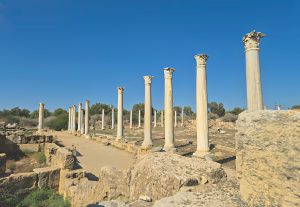
The Salamis bathhouse mosaics show how Roman Cyprus combined leisure, engineering, and civic identity inside one of the island’s most ambitious public complexes. These floors were designed to shape movement and atmosphere, pairing mythic scenes with technical skill, imported materials, and heated rooms that made bathing a daily performance of status. This article explains how the mosaics worked within the bathhouse system, what their imagery signalled, and why their survival still matters for understanding Roman urban life on Cyprus. googleusercontent-com A Capital Built to Be Seen Salamis was not an ordinary provincial town. For long periods, it functioned as the administrative and commercial heart of Cyprus, benefiting from trade routes that linked the Aegean, the Levant, and Egypt. When the city was rebuilt after a devastating earthquake in the first century AD 76/77 and a later insurrection in AD 116, Roman emperors invested heavily in its public architecture. googleusercontent-com The gymnasium and bathhouse complex became one of the most imposing structures in the eastern Mediterranean. Its scale alone communicated status. Wide colonnades, marble-clad halls, and carefully planned water systems transformed bathing into a public performance of Roman order and prosperity. Bathing as a Social Ritual In Roman cities, baths were not private spaces for cleanliness. They were communal environments where physical care, leisure, and social interaction blended into a daily…

Read more