Explore Cyprus with Our Interactive Map

Explore our top stories and discover ideas worth your time.

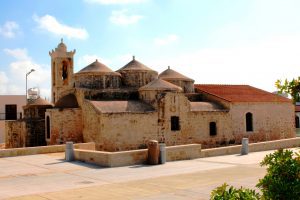
Agia Paraskevi Necropolis

Agia Paraskevi Necropolis

The Agia Paraskevi necropolis is an extensive Bronze Age burial ground located approximately half a mile north of the Church of Agia Paraskevi in the Nicosia district. The site occupies the edge of a plateau southwest of Cyprus's modern capital. It takes its name from the nearby Byzantine church. This cemetery was used continuously throughout the Early and Middle Bronze Age periods, roughly from 2400 BCE to 1100 BCE. The site contains hundreds of rock-cut chamber tombs where ancient communities buried their dead along with pottery, tools, jewelry, and other grave goods. These artifacts provide detailed information about how Cypriots lived, traded, and organized their societies during prehistoric times. The necropolis is particularly important because it represents the burial ground for ancient Ledra, one of the early kingdoms mentioned in Assyrian records. While the settlement itself lies buried beneath modern Nicosia, the cemetery on the plateau has survived and offers the most complete picture of life in central Cyprus during the Bronze Age. Historical Background The Agia Paraskevi necropolis came to archaeological attention in the late 19th century. In 1883 and 1884, German archaeologist Dr. Max Ohnefalsch-Richter conducted extensive excavations at the site. His work uncovered numerous tombs and established the cemetery's importance for understanding Cypriot prehistory. cyprusisland.net Ohnefalsch-Richter arrived in Cyprus in 1878 as a journalist but quickly shifted…

Read more
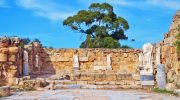
The Gymnasium of Salamis

The Gymnasium of Salamis

The ancient city of Salamis on Cyprus holds some of the Mediterranean's most remarkable Roman architecture. Among its treasures, the Gymnasium stands out as a testament to how Romans blended physical training, social interaction, and luxury bathing into a single sprawling complex. Located on the eastern coast near modern Famagusta, this site offers visitors a direct connection to daily life in Roman Cyprus. worldhistory-org The Gymnasium traces its roots to the Hellenistic period, when Greek colonists first established athletic training facilities in Salamis. However, the structure visible today belongs to the 2nd century AD, specifically during the reigns of emperors Trajan and Hadrian. The transformation came after a devastating Jewish revolt in 116 AD that left much of Salamis in ruins. Rather than simply repairing the damage, Roman engineers rebuilt the Gymnasium on a grander scale. The new complex featured a colonnaded palaestra, a large open courtyard surrounded by covered walkways on all four sides. This provided athletes with shaded areas for training and spectators with comfortable viewing spots. The Romans added sophisticated bathing facilities that transformed the Gymnasium from a simple training ground into a complete social center. An inscription found in the pavement credits Trajan with constructing the roof over one of the swimming pools, while multiple honorific decrees mention Hadrian as a benefactor and savior of the…

Read more
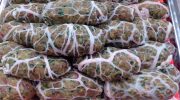
Sheftalia Cypriot Street Food

Sheftalia Cypriot Street Food

Sheftalia is a traditional Cypriot sausage made from ground meat wrapped in caul fat, a thin membrane that surrounds animal organs. The mixture uses pork, lamb, or a combination of both, along with finely chopped onions, fresh parsley, and basic seasonings. trskinfo-ru The meat is formed into oval shapes and encased in the lacy caul fat before grilling over charcoal. Unlike standard sausages that use casings, sheftalia relies on this natural membrane that melts during cooking. This creates a crispy exterior while the fat bastes the meat from the outside, keeping it tender and moist inside. The name comes from the Turkish word "şeftali," which means peach, likely referring to the texture or appearance of the finished product. Historical Context Sheftalia appeared in Cyprus during the 19th century, when meat was expensive and cooks found ways to maximize every part of the animal. The caul fat, which might otherwise go unused, became the perfect wrapper to preserve moisture and enhance flavor. Two theories explain the name's origin: The first connects it to "şeftali kebabı," meaning peach kebab in Turkish, possibly describing the texture. The second attributes it to a Turkish Cypriot street vendor called Şef Ali, or Chef Ali, who supposedly created "Şef Ali kebabı," which eventually became known as sheftali or sheftalia. The dish reflects Ottoman influence on Cypriot…

Read more