Explore Cyprus with Our Interactive Map

Explore our top stories and discover ideas worth your time.

Leventis Municipal Museum

Leventis Municipal Museum

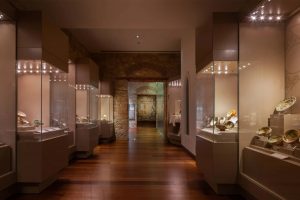
The Leventis Municipal Museum tells the story of Europe's last divided capital through over 10,000 objects collected across five thousand years. Within two years of opening in 1989, it won the European Museum of the Year Award for bringing modern museum standards to Cyprus. shutterstock-com The museum occupies a complex of three historic buildings on Ippokratous Street in the Laiki Geitonia neighborhood within the Venetian walls of Nicosia. The main building at number 17 once served as the clinic of Dr. Themistocles Dervis, who was mayor of Nicosia for 27 years between 1929 and 1959. The building at number 15 operated as the Victoria Hotel. The third structure at 18 Solonos Street is a small traditional house from the late 18th century, where Nikolaos Tsikkinis, one of the city's best-known teachers, was born and lived. Historical Background In the early 1980s, the Dervis family mansion stood in ruins and faced demolition. Lellos Demetriades, who served as mayor of Nicosia from 1971 to 2001, saw an opportunity. He wanted to create a civic history museum as part of his broader effort to revitalize the old city within the walls. Although demolition work had already begun, the Municipality of Nicosia managed to purchase the building. leventismuseum-org Demetriades approached the A.G. Leventis Foundation with his vision. Constantine Leventis, the first chairman of the…

Read more
Akamas Peninsula Microclimate

Akamas Peninsula Microclimate

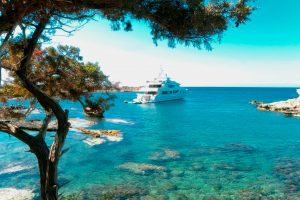
Akamas Peninsula Microclimate is defined by a unique blend of coastal and upland conditions, fostering rare ecological niches with exceptional biodiversity on Cyprus's northwest tip. This microclimate combines Mediterranean seaside warmth with cooler, moister hill zones, creating diverse habitats from sandy beaches to rocky gorges. It supports over 600 plant species and unique wildlife, making Akamas a natural treasure that highlights how small-scale climate variations can drive ecological richness on an island. akamasboattrip.com A Distinctive Blend of Coast and Upland The Akamas Peninsula's microclimate arises from its geography - a rugged 230-square-kilometer area where low coastal plains meet uplands rising to 600 meters at peaks like Smigies. Coastal zones experience typical Mediterranean patterns: hot summers (30-35°C) with sea breezes keeping humidity moderate, and mild winters (15-20°C) with 500mm annual rain. Uplands, however, create orographic effects, where winds lift moisture from the sea, leading to cooler temperatures (5-10°C lower) and higher precipitation (up to 700mm), often as mist or fog that sustains unique niches. chooseyourcyprus.com1 This combination forms isolated ecosystems: coastal dunes with salt-tolerant halophytes, gorges with perennial streams hosting freshwater crabs, and maquis scrub on hills with aromatic shrubs. Biodiversity thrives in these pockets, with 168 bird species migrating through and 39 endemic plants adapted to the gradient. Geological features, like limestone cliffs from Miocene uplift, trap moisture in crevices,…

Read more

Bosea Cypria

Bosea Cypria

High on a sun-bleached limestone cliff in the Akamas or along a rocky gulley near Paphos, you might spot a graceful evergreen shrub with deep-green leaves cascading like a living curtain. In late summer its branches glow with clusters of bright red berries that shine like tiny rubies against the rock. This is Bosea cypria, a quiet but extraordinary survivor that has clung to the island’s rugged edges for millions of years. www.inaturalist.org An Ancient Shrub from the Amaranth Family Bosea cypria belongs to the Amaranthaceae family – the same group that gives us spinach, beetroot and colourful garden amaranths. Unlike most of its relatives, which are soft-stemmed herbs, this species is a woody evergreen shrub, one of only three living members of the genus Bosea worldwide. In Cyprus it grows 1–2 metres tall, highly branched, often pendulous, seeming to drape dramatically from cliffs, old stone walls or even tree trunks. A Living Fossil from the Ancient Tethys Sea This plant is a true botanical relic. Its ancestors once grew along the shores of the vast Tethys Sea during the Tertiary period, long before the Mediterranean took its present form. As continents drifted and the sea shrank, most Bosea species disappeared; today only three remain — one in Cyprus, one in the Canary Islands and one in the north-west Himalayas.…

Read more