Explore Cyprus with Our Interactive Map

Explore our top stories and discover ideas worth your time.

Kourion Mosaics Apollo To Basilicas Guide

Kourion Mosaics Apollo To Basilicas Guide

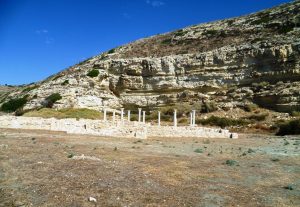
Kourion’s mosaics record Cyprus’s shift from a classical city organised around temples and civic life to an early Christian centre rebuilt under episcopal authority after mid-fourth-century earthquakes. In villas and basilicas, floors and inscriptions became a visual language that guided movement, reinforced belief, and redefined what power looked like in public space. wikimedia-org This article explains how disaster opened the ground for change, how the Episcopal Complex reshaped the city’s core, and how mosaic imagery at sites like the House of Eustolios shows a community rebuilding identity as well as architecture. Apollo Hylates and Old Order For centuries, Kourion thrived as a Greco-Roman city, complete with temples, baths, theatres, and elite villas. Public life revolved around civic institutions and traditional religious cults, most notably the Sanctuary of Apollo Hylates. Christianity was present early, introduced to Cyprus in the first century, but in Kourion it remained largely private and unobtrusive. Everything changed in the mid-fourth century. A catastrophic earthquake, most notably the one in 365 CE, devastated the city. Entire neighbourhoods collapsed, public monuments were abandoned, and the old religious landscape effectively ended. The destruction was not symbolic. It was physical, sudden, and comprehensive. When rebuilding began, it followed a new logic. wikimedia-org Instead of restoring pagan sanctuaries, Kourion was reorganised around Christian authority. The centre of gravity shifted from temples…

Read more

Easter Traditions in Cyprus

Easter Traditions in Cyprus

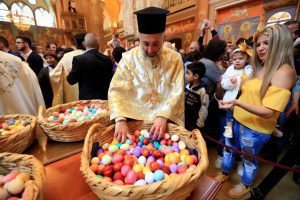
Easter represents the most important religious celebration in Cyprus, surpassing Christmas in spiritual significance and cultural observance. Known as Pascha in Greek, the Orthodox Easter follows the Julian calendar, often falling weeks after Western Easter. The celebration spans Holy Week with solemn church services, candlelit processions through village streets, and the midnight Resurrection liturgy when bells ring and fireworks light the sky. facebook.com Families gather for elaborate feasts featuring roasted lamb, traditional flaounes cheese pastries, and red-dyed eggs. The festivities blend Byzantine religious ritual with distinctly Cypriot customs like bonfire lighting and the tsougrisma egg-cracking game. For both devout believers and secular Cypriots, Easter functions as the primary family reunion occasion and cultural identity marker, bringing together generations to maintain traditions passed down through centuries of Orthodox faith. The 40 Days of Lenten Preparation Orthodox Lent begins on Clean Monday, called Kathara Deftera, exactly 48 days before Easter Sunday. This day marks a dramatic shift from the excess of carnival to the austerity of fasting. Cypriots traditionally spend Clean Monday outdoors with countryside picnics, flying kites and consuming only fasting foods like tahini, olives, beans, flatbreads, and shellfish. The outdoor gathering symbolizes spiritual renewal and connection with nature before the solemn weeks ahead. During the 40-day Lenten period, observant Orthodox Christians abstain from meat, dairy products, eggs, fish with backbones,…

Read more
Fig Tree Bay: Cyprus’s Most Famous Beach

Fig Tree Bay: Cyprus’s Most Famous Beach

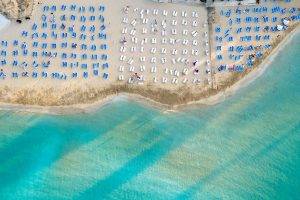
Fig Tree Bay is one of Cyprus’s most recognizable beaches, yet its appeal has never depended on novelty or spectacle. Located in the heart of Protaras on the island’s eastern coast, the bay combines clear, shallow water, soft sand, and a naturally sheltered shape that makes it easy to enjoy without effort. It is popular without feeling overwhelming, developed without feeling artificial, and familiar without becoming dull. This balance explains why Fig Tree Bay continues to attract visitors year after year and why it remains just as important to local life as it is to tourism. Adobe Stock A Beach Defined by Shape, Not Hype At its core, Fig Tree Bay is a gently curved, sandy bay facing the Mediterranean Sea. Unlike long, exposed coastlines, the bay is semi-enclosed by low rocky edges that soften incoming waves and create consistently calm conditions. The shoreline slopes gradually into the sea, allowing people to wade far out before reaching deeper water. Adobe Stock This physical shape is the bay’s greatest asset. It creates a swimming environment that feels predictable and safe rather than dramatic or demanding. The water rarely feels aggressive, and strong currents are uncommon close to shore. These conditions are not accidental they are the result of geography rather than engineering, and they explain why the bay has always been…

Read more