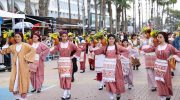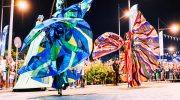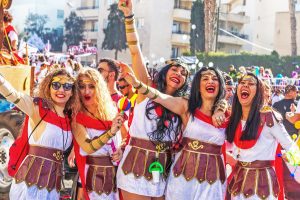
For more than a century, Limassol Carnival has transformed Cyprus’s most vibrant coastal city into a living theatre of sound, colour, and movement. For eleven days each year, folk melodies drift through narrow streets, masked dancers fill public squares, and spontaneous celebrations blur the boundaries between tradition and spectacle. The carnival is not simply entertainment. It is one of Cyprus’s most enduring expressions of community identity, cultural memory, and joyful defiance of everyday routines.
- A City That Moves to Its Own Rhythm
- From Ancient Rituals to Urban Festivity
- The Sound of Limassol: Music at the Heart of Carnival
- Dance as Freedom and Collective Performance
- The City as a Stage
- Masks, Costumes, and the Art of Becoming Someone Else
- A Festival of Community and Cultural Memory
- The Children's Parade and Family Tradition
- The Grand Parade and Satirical Expression
- Experiencing the Carnival Today
- Why Limassol Carnival Still Matters
A City That Moves to Its Own Rhythm
Limassol has long been known for its outward-looking character. As Cyprus’s main coastal trading hub, the city absorbed influences from Greece, Venice, the Middle East, and beyond. Carnival became the moment when these influences merged into a shared urban identity, expressed most vividly through music and dance.
Unlike many European carnivals that focus primarily on visual spectacle, Limassol’s celebration is driven by sound and motion. The city becomes kinetic and audible, with mandolins echoing in alleyways, percussion groups pulsing through neighbourhoods, and folk dancers sharing streets with samba troupes. For a brief period each year, Limassol does not host the carnival. Limassol becomes the carnival.
From Ancient Rituals to Urban Festivity
Carnival traditions in Cyprus trace their roots to pre-Christian spring rituals associated with renewal, fertility, and the Dionysian cycle of life. Masks, role reversal, and theatrical performances allowed communities to temporarily step outside social hierarchies and celebrate transformation.
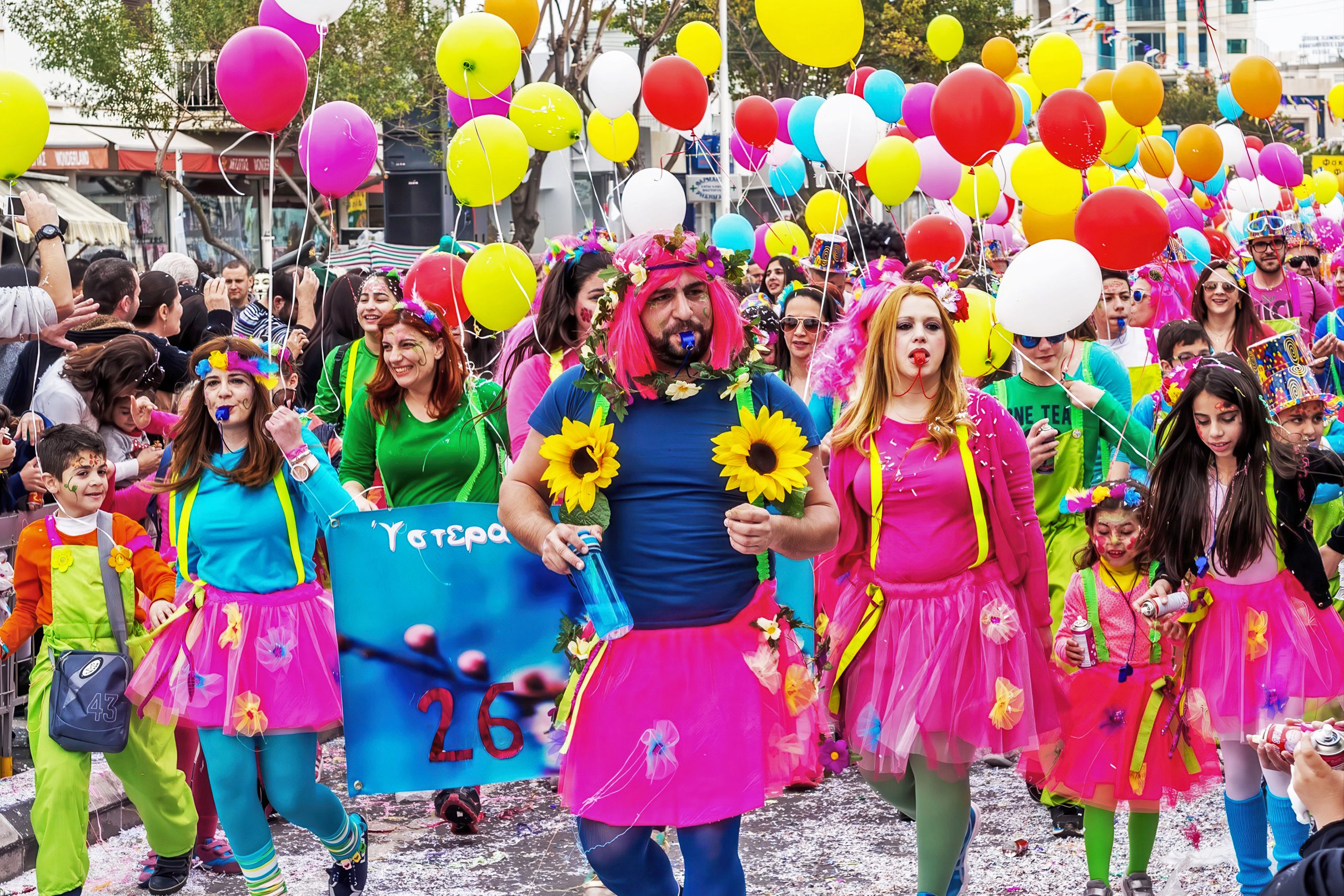
Medieval Venetian influence introduced masked balls and organised parades, reshaping carnival into a more structured urban celebration. During British administration in the late nineteenth century, Limassol formalised these gatherings into a municipal festival, laying the foundation for the modern event. Despite wars, political upheavals, and global crises, the carnival endured, adapting through generations while preserving its musical and social core.
The Sound of Limassol: Music at the Heart of Carnival
Music is the connective tissue of Limassol Carnival, linking ancient ritual to contemporary global culture.
The Serenaders and Urban Folk Tradition
One of the most distinctive sounds of Limassol Carnival is the Cantadori, male choral serenades accompanied by mandolin and guitar. These groups wander through the old town at night, singing romantic and satirical songs beneath balconies. For many locals, the serenades are an emotional archive, connecting past and present through shared melodies and collective memory.
Traditional Instruments and Folk Heritage
Carnival also preserves rural Cypriot musical traditions through instruments such as the pithkiavli (reed flute), tamboutsia (frame drum), and laouton (Cypriot lute). These instruments accompany folk dances and communal gatherings, anchoring the festival in centuries-old Mediterranean musical practice.
Modern Rhythms and Global Influence
As Limassol evolved into a cosmopolitan city, carnival absorbed global sounds. Brass bands, samba percussion troupes, DJs, and pop performances now coexist with folk musicians. Latin choreography and electronic music energise nighttime celebrations, creating a layered soundscape where tradition and modernity coexist rather than compete.
Dance as Freedom and Collective Performance
If music is the heartbeat of the carnival, dance is its physical expression. Movement fills the city, from rehearsed choreography to spontaneous street dancing.
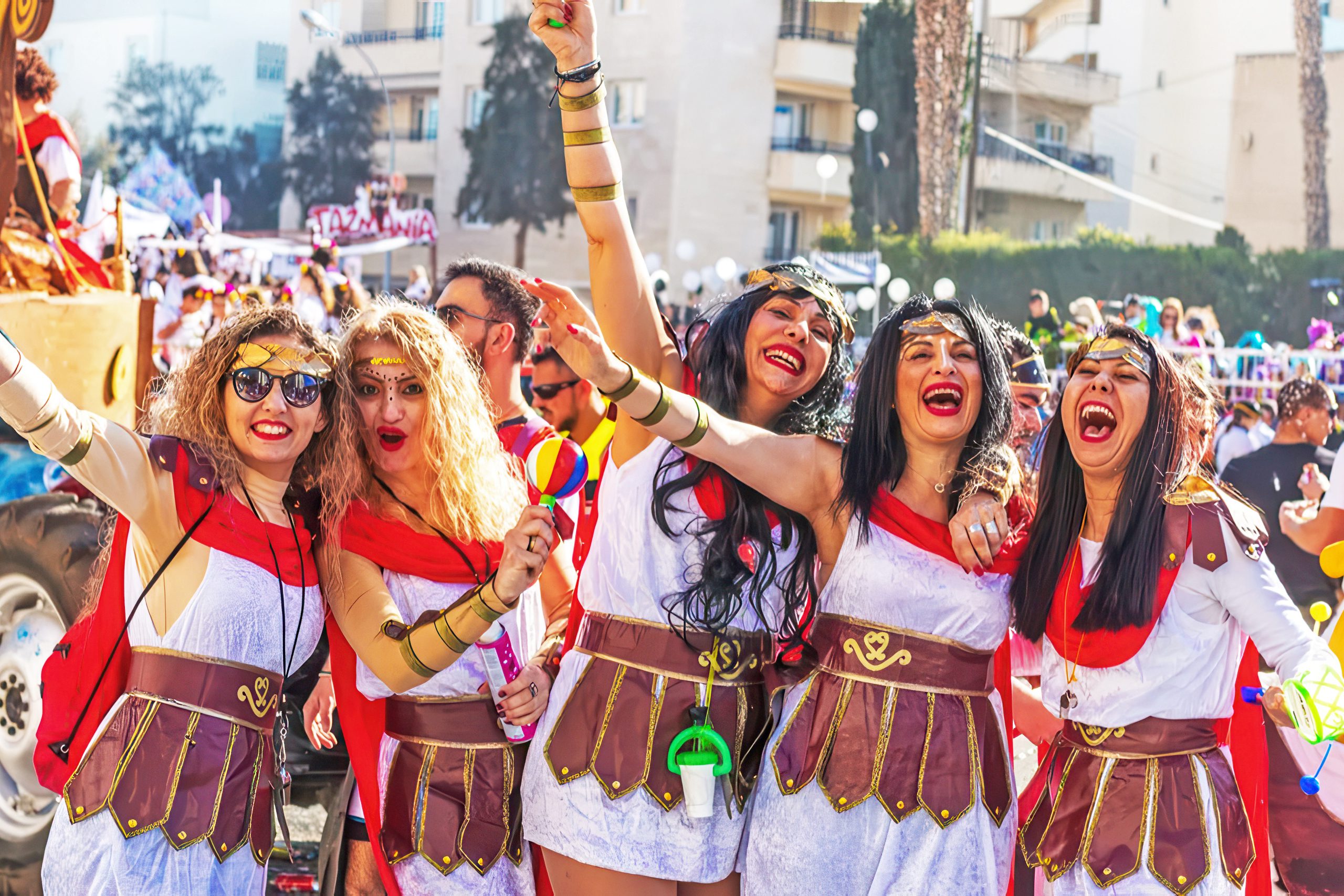
Traditional Cypriot Folk Dances
Cultural groups perform classical dances such as Antikristos, Sousta, and Balos, each with distinctive rhythms and social meanings. These dances are not museum artefacts, but living practices passed through families, schools, and community associations, ensuring intergenerational continuity.
Parade Choreography and Samba Schools
Modern parades feature large dance troupes inspired by Brazilian carnival traditions, with hundreds of performers moving in synchronised routines. Jazz, hip-hop, and Latin steps blend with Cypriot motifs, while spectators often join dancers, dissolving the boundary between performer and audience.
The City as a Stage
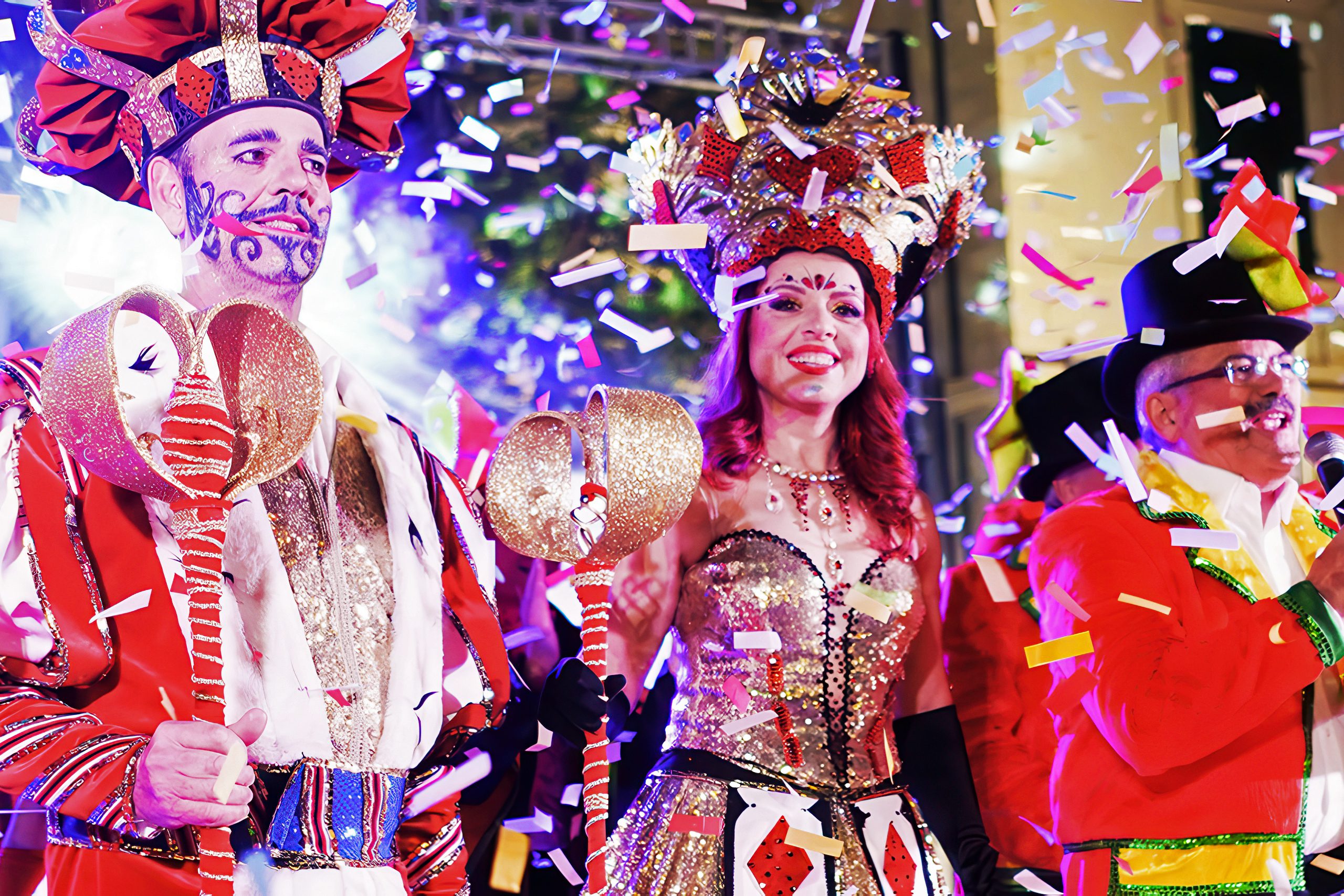
Carnival unfolds in a rhythm of events that transform Limassol into an open-air performance space. The ceremonial entry of the Carnival King or Queen opens celebrations with satire and spectacle. Children’s parades introduce younger generations to tradition through fantasy costumes and music, while the Grand Parade fills Makarios Avenue with floats, dancers, and confetti.
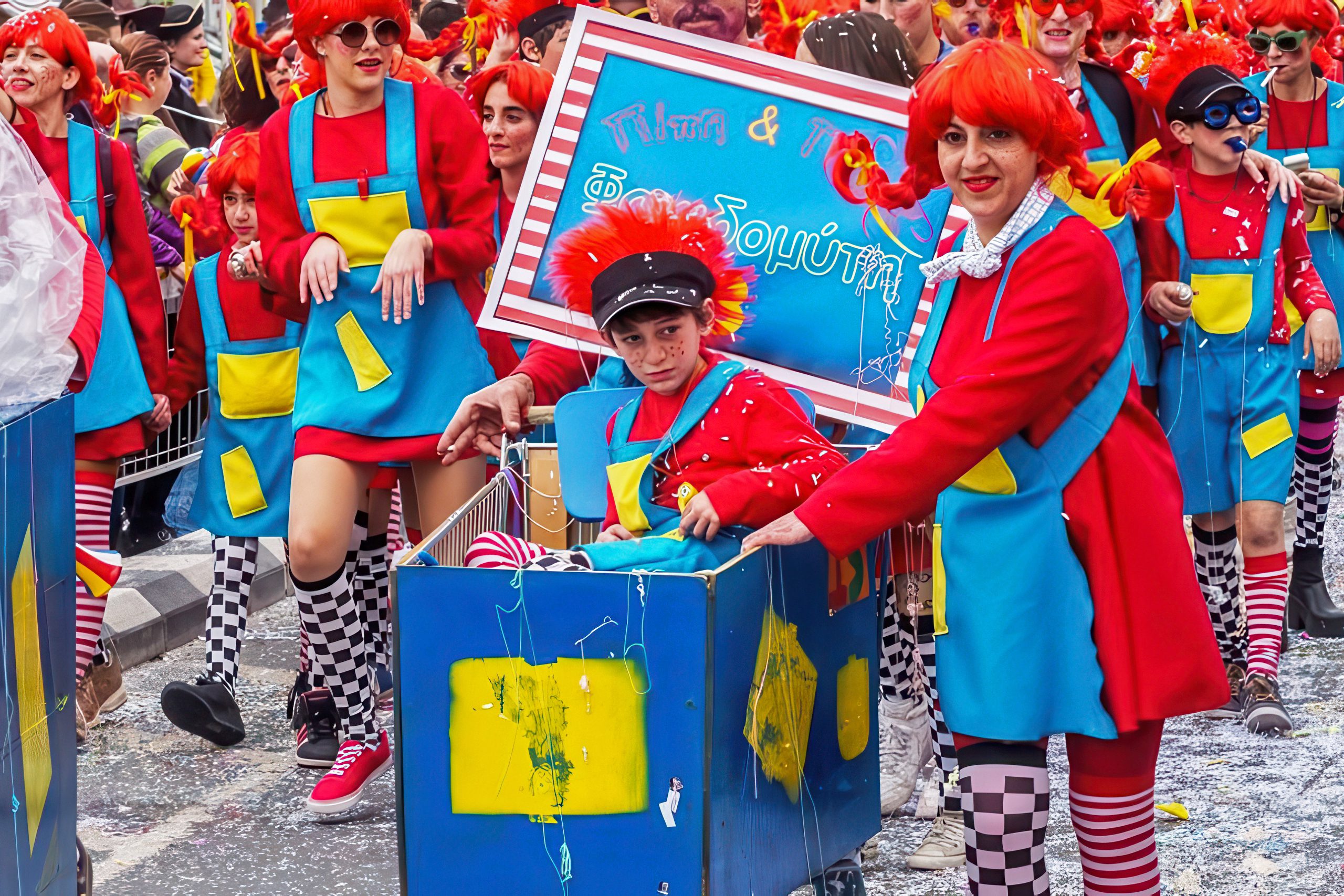
Daytime events are family-friendly and visually spectacular, while nighttime celebrations intensify with percussion battles, masked dances, and citywide street parties. The transition from structured parade to spontaneous celebration reflects the carnival’s dual nature as both an organised festival and a social release.
Masks, Costumes, and the Art of Becoming Someone Else
Historically, carnival masks allowed social boundaries to dissolve. People improvised disguises from scraps, cloth, and soot, mocking elites and authorities without consequence. Costumes were a form of social commentary and temporary liberation.
Today, costumes range from political satire to elaborate themed outfits and pop culture characters. Floats function as mobile theatres, carrying musicians, dancers, and visual narratives through the city. The tradition of disguise remains symbolic, allowing participants to step outside everyday identities and explore collective imagination.
A Festival of Community and Cultural Memory
Limassol Carnival is not only a celebration but a social institution that reinforces community bonds. Children learn traditions through parades and dance schools, older residents preserve serenades and folk songs, and local artisans build floats and costumes months in advance.
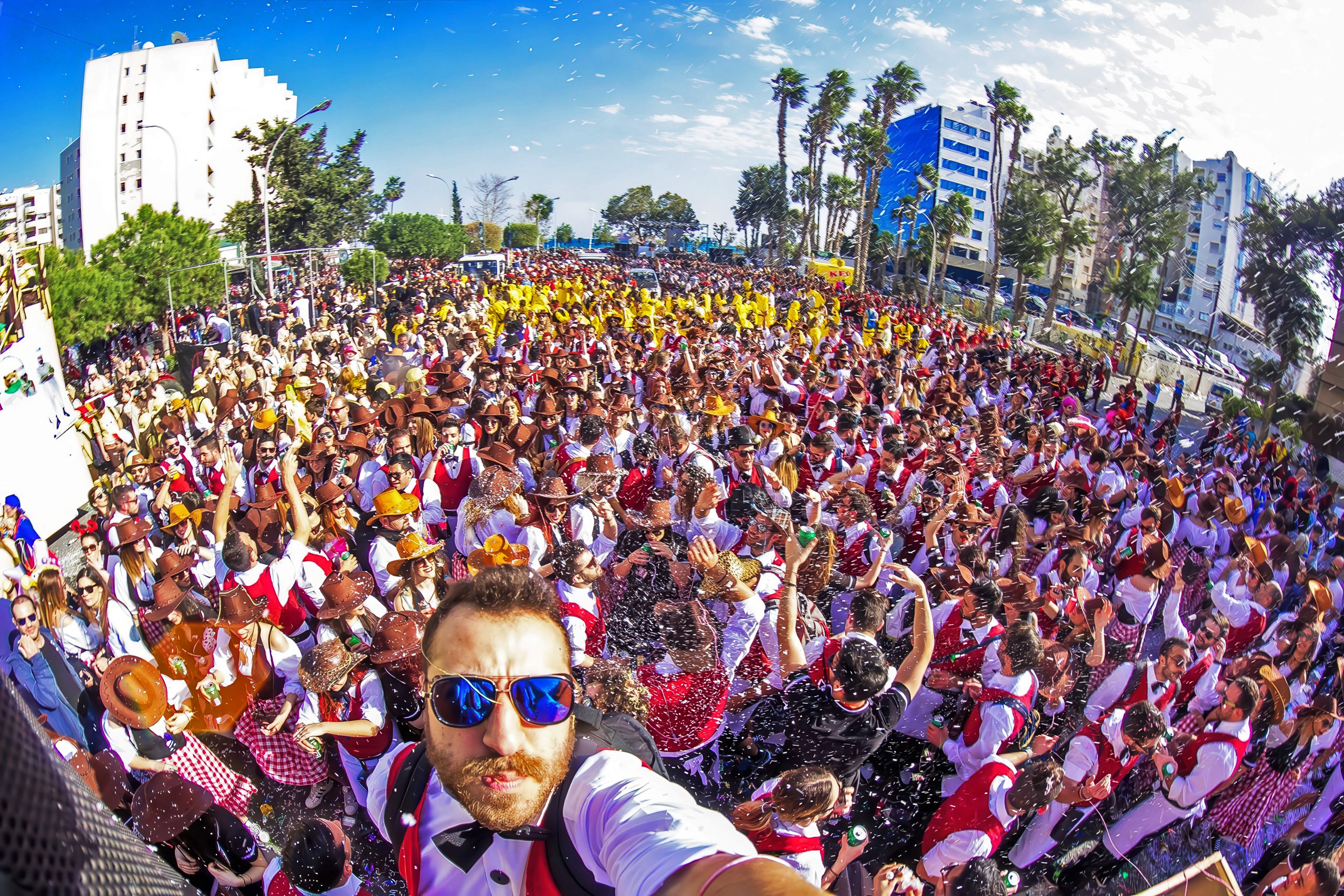
Economically, the festival is one of Limassol’s busiest tourism periods, filling hotels and restaurants with visitors. Socially, it acts as a yearly reset, renewing connections among residents and reinforcing shared identity through collective participation.
The Children’s Parade and Family Tradition
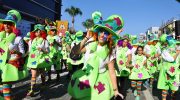
The first Sunday features a children’s parade considered one of carnival’s most important events. Thousands of costumed children march through central Limassol accompanied by parents and teachers. Costumes range from traditional characters to contemporary pop culture figures. Schools often coordinate group themes, with entire classes dressed as pirates, fairy tale characters, or cartoon heroes.

The children’s parade demonstrates carnival’s role as family tradition passed across generations. Parents who participated as children now bring their own offspring, maintaining continuity. For many Limassol families, carnival represents identity itself, a marker of what distinguishes their city from the rest of Cyprus. The municipality ensures free participation in all events, allowing families regardless of economic status to take part.
The Grand Parade and Satirical Expression
The Grand Parade on the final Sunday represents carnival’s climax. Over 150 floats traverse the seven-kilometer route along Archbishop Makarios III Avenue, Limassol’s main street. Approximately 50,000 people participate as parade marchers or spectators. Teams spend months designing and constructing elaborate floats, costumes costing between 40 and 70 euros per person.
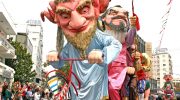
Satire dominates the parade. Floats mock politicians, lampoon government policies, criticize economic conditions, and parody international figures. This satirical tradition allows public criticism of authority in exaggerated, humorous forms without direct confrontation. The temporary inversion of social hierarchies means ordinary citizens can ridicule the powerful, a safety valve for political frustration.
Recent parades have featured floats addressing Cyprus’s economic crisis, Turkish occupation of Cyprus, European Union policies, and local corruption scandals. Groups dress as specific politicians, exaggerating their physical features and mannerisms. Others create allegorical representations of abstract concepts like economic hardship or political division. The parade functions as both entertainment and social commentary.
Experiencing the Carnival Today
Visitors can participate in multiple ways. Purchasing or renting costumes from specialized shops allows joining parade groups or simply walking costumed through carnival crowds. Most municipal events offer free admission, including outdoor concerts, children’s activities, and street performances. Reserved seating for the Grand Parade requires early arrival as prime viewing locations fill quickly.
Carnival balls occur nightly at hotels and cultural centers, with themes ranging from traditional Cypriot to 1980s nostalgia. These ticketed events include live music, buffets, unlimited drinks, and prizes for best costumes. The atmosphere combines elegance with irreverence as formally dressed attendees wear elaborate masks.

Food plays a central role. Tsiknopempti barbecues happen in historic center squares with free meat for participants. Cheese Week features dairy tastings and traditional sweets. Taverns create special carnival menus emphasizing indulgence before fasting begins. The sensory experience of carnival includes not just visual spectacle but aromatic and gustatory pleasures.
Why Limassol Carnival Still Matters
Limassol Carnival matters because it is not a frozen tradition but a living cultural negotiation between history and modernity. Music and dance keep the festival dynamic, allowing each generation to reshape it without losing its roots.
In a rapidly changing Mediterranean city, the carnival remains a moment when Limassol reconnects with itself. Mandolins, drums, masked dancers, and laughing crowds repeat a cycle older than the modern skyline, reminding residents and visitors that culture lives not only in museums and texts, but in voices, footsteps, and shared movement through the streets.