Cyprus sits at the heart of one of the four major migration flyways between Europe and Africa. This strategic location makes the island a critical stopover point for millions of birds traveling between continents each year. The position roughly 50 miles south of Turkey and 60 miles west of Syria places Cyprus directly in the path of birds moving between breeding grounds in Europe and wintering areas in Africa. Among the most spectacular visitors are greater flamingos, multiple heron species, and the elusive black stork.
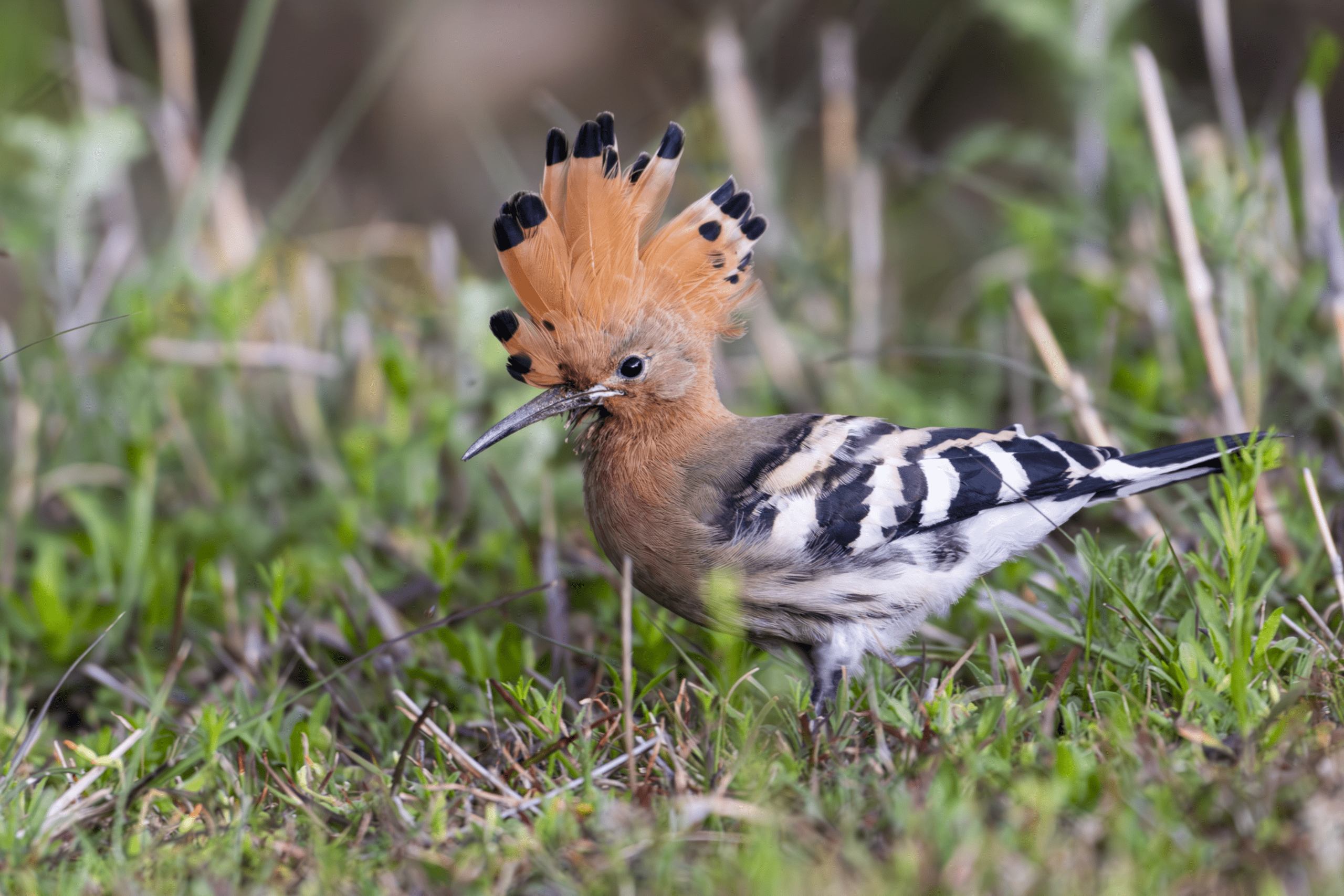
These rare birds depend on Cyprus’s wetlands, salt lakes, and coastal areas for rest and feeding during their long journeys. The island’s network of protected sites provides essential habitat that supports not just individual birds but entire populations of species that face threats throughout their range. More than 400 bird species have been recorded in Cyprus, with the majority occurring as regular passage migrants.
Salt Lakes and Ancient Routes
Cyprus’s salt lakes hold special importance for migratory birds. The Larnaca Salt Lake complex consists of four interconnected lakes with a total surface area of 2.2 square kilometers, making it the second largest salt lake system in Cyprus after Limassol’s Akrotiri Salt Lake. These lakes have been declared Ramsar Wetlands of International Importance, EU Natura 2000 sites, Special Protected Areas under the Barcelona Convention, and Important Bird Areas by BirdLife International.
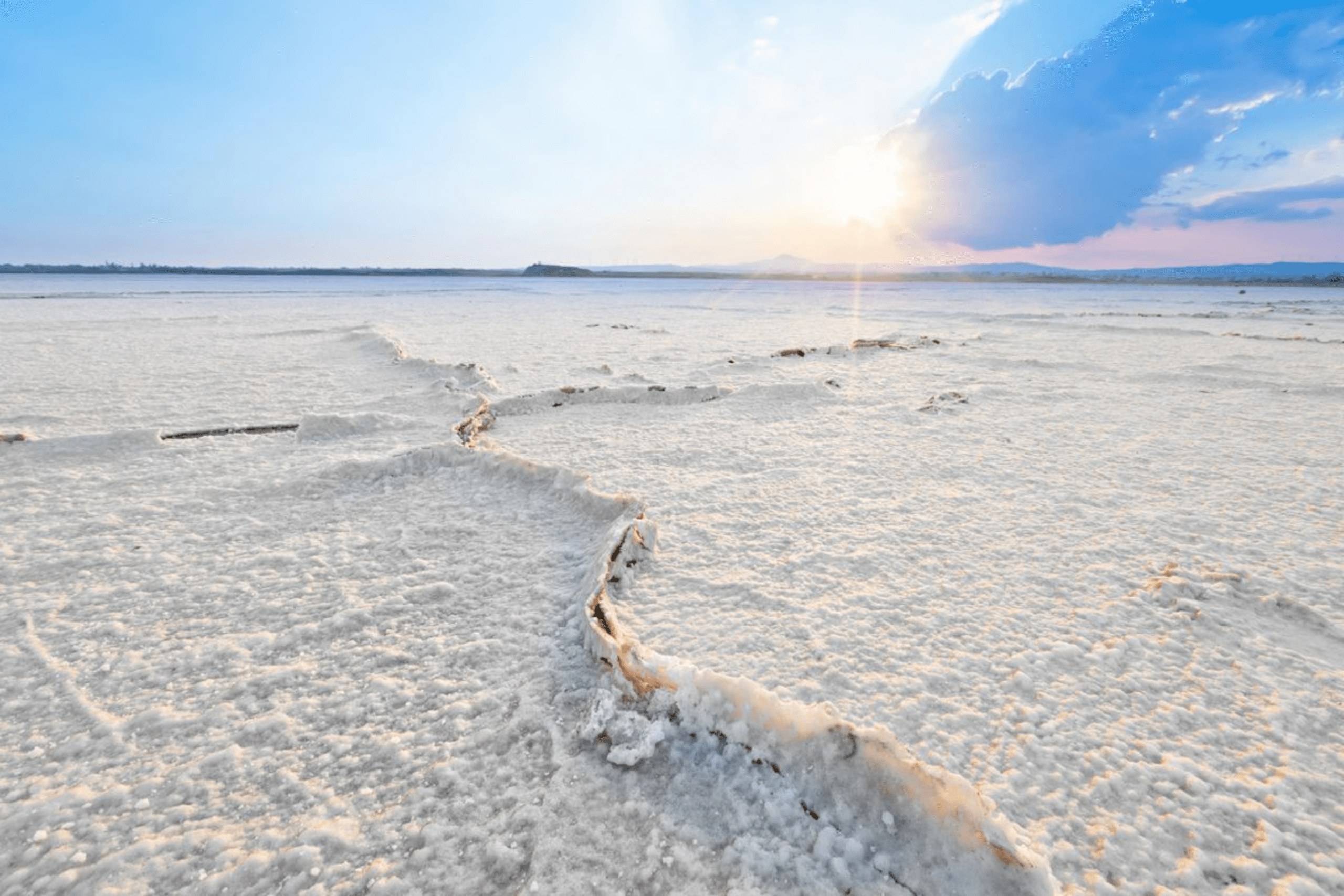
During summer, the lakes dry completely, leaving only crusts of salt and grey dust. The winter rains transform them into vital wetlands. Fresh water inflow maintains the ecological balance necessary to support brine shrimp populations. These tiny crustaceans feed on dark red algae that grows in the saline water, creating the foundation of the food chain. The shrimp attract thousands of waterbirds that rely on this concentrated food source during migration and winter stays.
Flamingos have visited Cypriot salt lakes for millennia, following routes established long before human civilization developed on the island. Archaeological evidence and historical records confirm that these migration patterns remained stable through ancient Greek, Roman, and Byzantine periods. The birds navigate using multiple cues including magnetic fields, star patterns, and the ability to detect distant rainstorms through changes in atmospheric pressure.
Greater Flamingos and Their Pink Presence
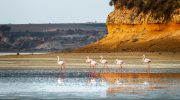
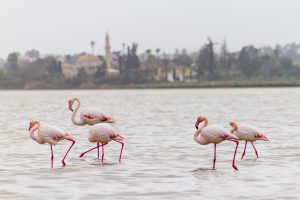
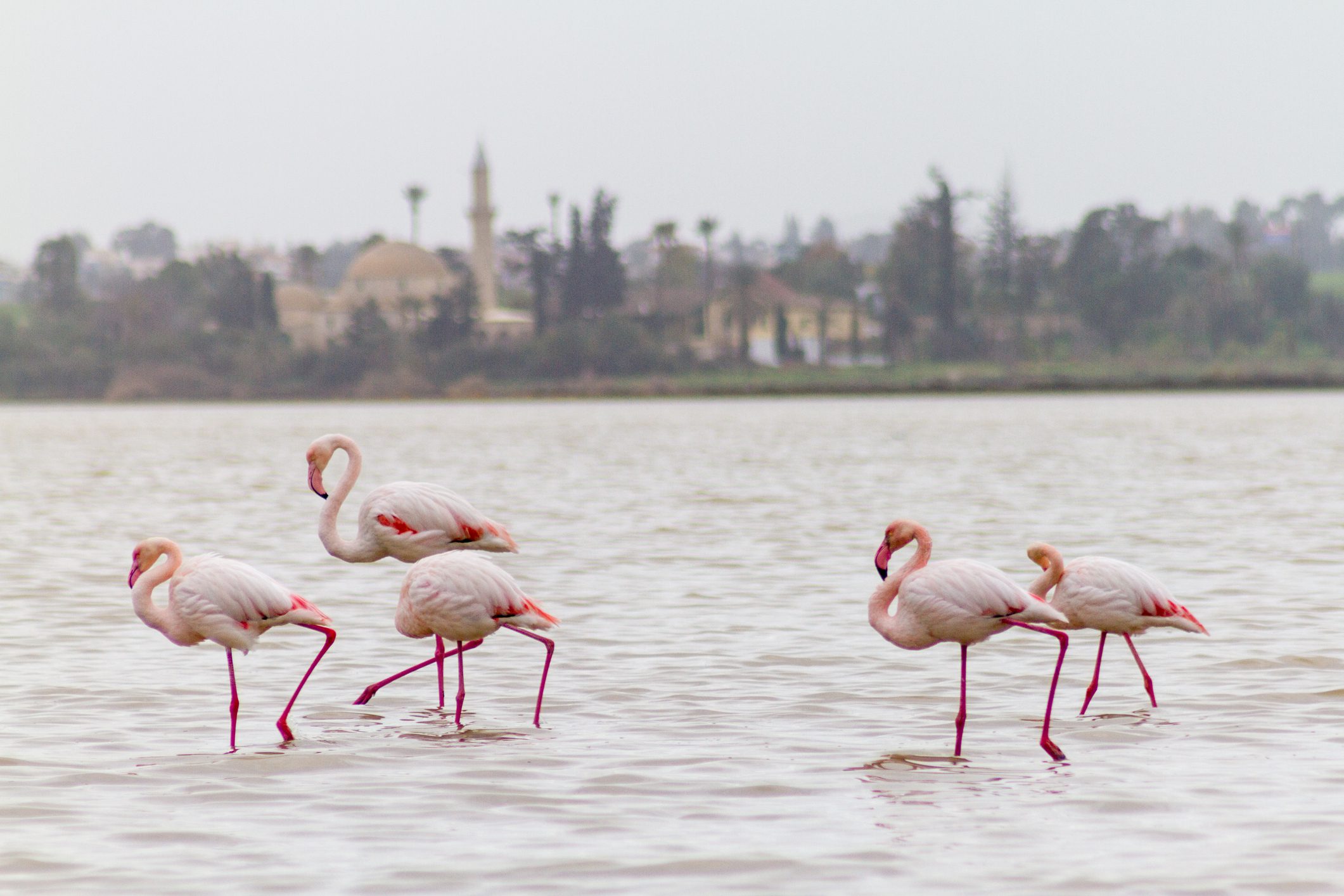
The greater flamingo represents the most iconic winter visitor to Cyprus. Between 2,000 and 12,000 flamingos spend winter months on the island, arriving typically in November with the first substantial rains and departing by March. The 2024 season saw first arrivals in mid-November at Larnaca Salt Lake. In exceptional years, populations can reach 20,000 individuals across all wetland sites.
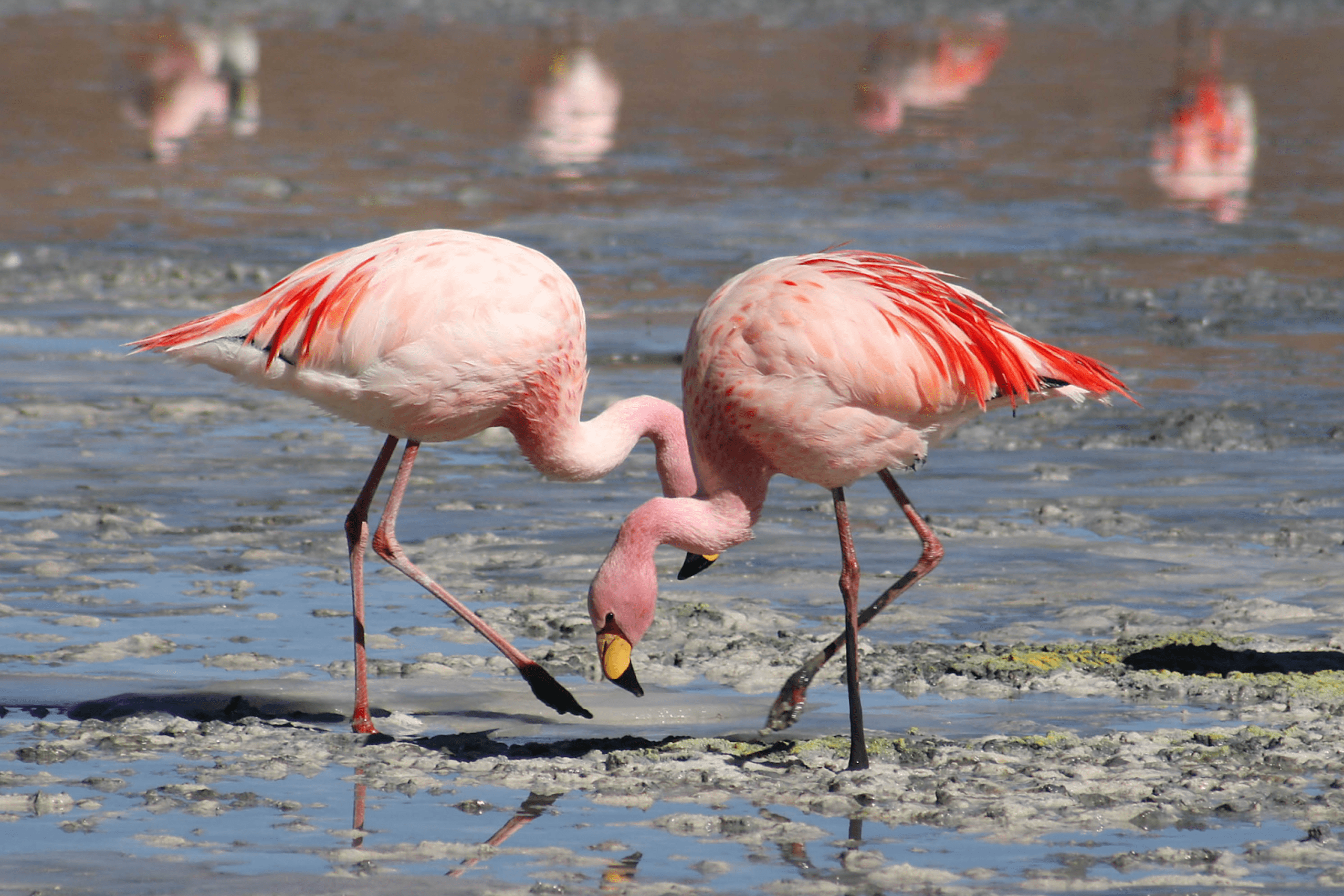
These birds stand up to 150 centimeters tall, making them the largest flamingo species in the world. Their distinctive pink coloration comes from carotenoid pigments in their diet of brine shrimp and algae. The intensity of pink varies among individuals based on diet quality and health. Males are slightly larger than females, though both sexes share the same plumage patterns featuring white with pink tones and bright red flight feathers visible when wings spread.
Flamingos communicate through honking and cackling calls that echo across the lakes. They feed by holding their specialized curved bills upside down in shallow water, using comb-like filters to strain tiny organisms. The birds can filter up to 20 beakfuls of water per second when feeding actively.
Herons in Cypriot Wetlands
Multiple heron species visit Cyprus during migration periods and winter months. The grey heron is among the most commonly observed, standing up to one meter tall with ash-grey plumage, white head and neck marked by a black stripe extending from the eye to a black crest. These birds hunt by standing motionless in shallow water before striking rapidly at fish, amphibians, and small mammals. They fly with necks curved in an S-shape, a characteristic shared by all herons and egrets.
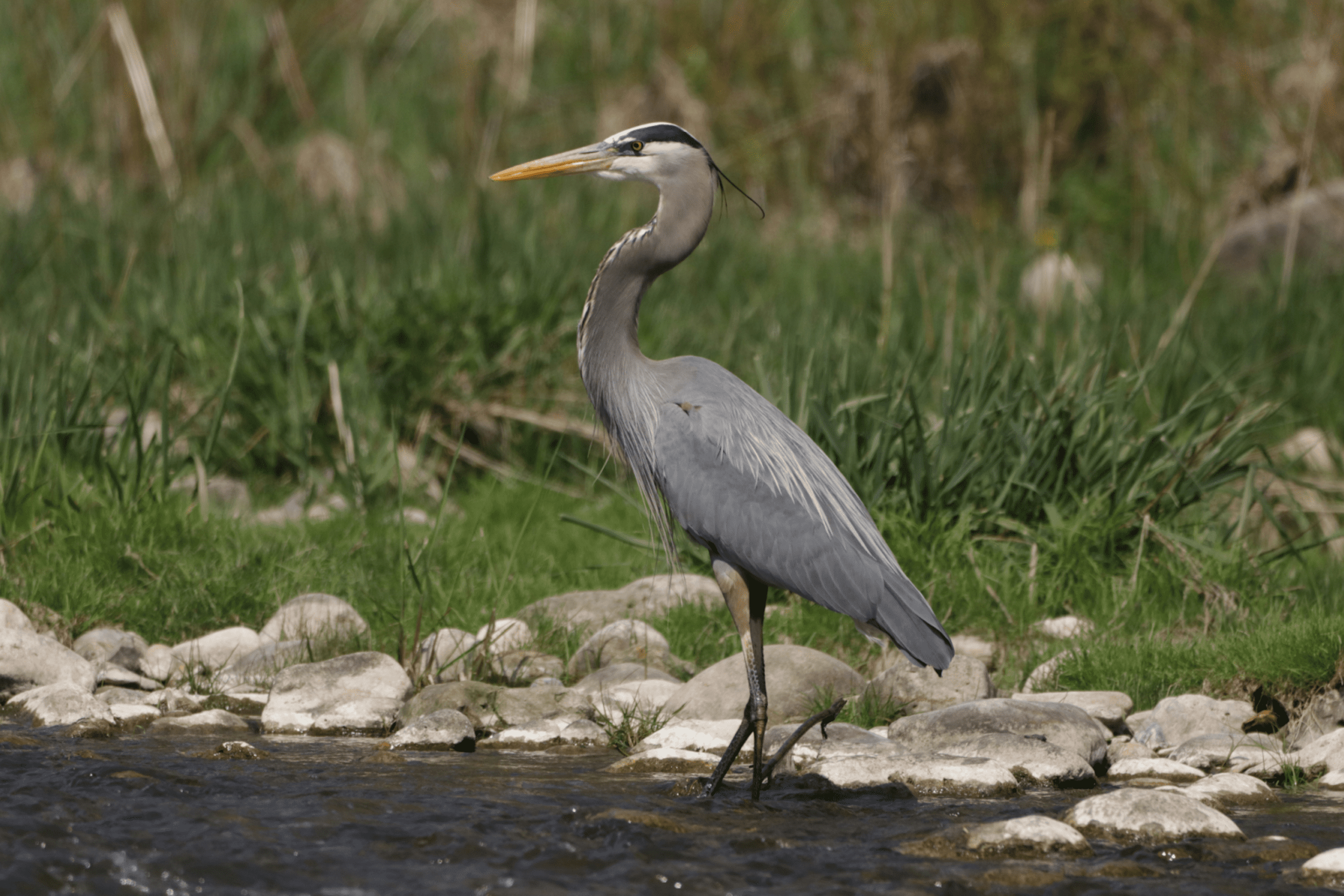
Grey herons can be observed at wetlands including Oroklini Lake, Akrotiri Marsh, and Athalassa Park. They breed in colonies called heronries, typically in tall trees near water bodies. The same nests are used year after year, expanding into bulky platforms as more material is added each breeding season.
The purple heron also passes through Cyprus during migration. This species features rich purple plumage during breeding season, particularly visible on the head, neck, and thighs. Purple herons prefer dense reed beds and marshy areas with good cover. They demonstrate more solitary behavior than grey herons and show exceptional skill at moving through dense vegetation.
Black Storks on Migration
The black stork ranks among the most elusive large birds passing through Cyprus. This species measures 95 to 100 centimeters from beak to tail with a wingspan of 145 to 155 centimeters. Adults display glossy black plumage on the head, neck, back, and wings with iridescent green and purple sheens in sunlight. The underparts are white, creating stark contrast. Long red legs and a pointed red bill complete the distinctive appearance.
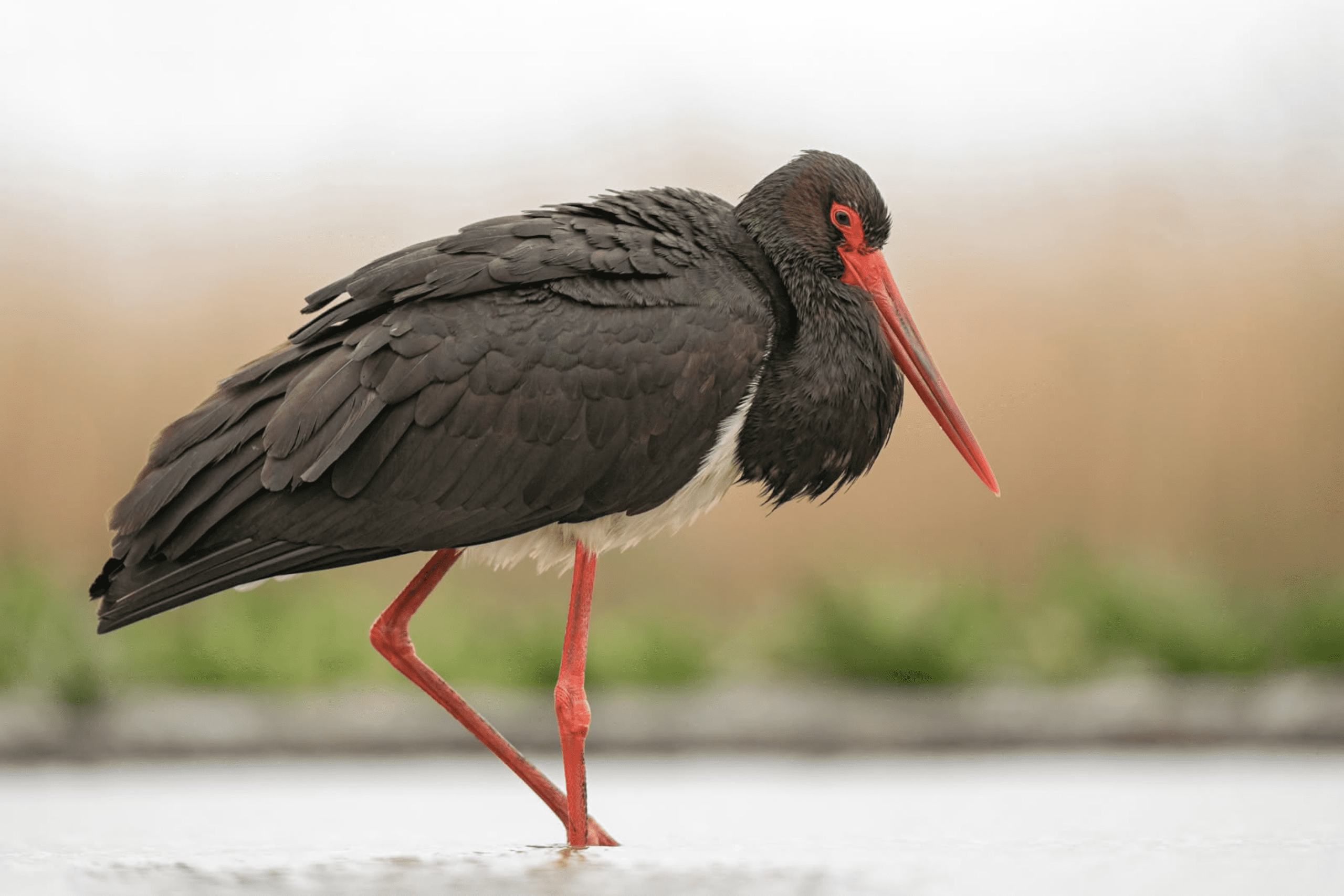
Unlike the gregarious white stork, black storks are shy and wary. They avoid human contact and prefer remote forested areas near water. The species breeds across scattered locations in Europe and east through the Palearctic to the Pacific Ocean. European populations migrate to tropical Sub-Saharan Africa for winter, while Asian populations winter in the Indian subcontinent.
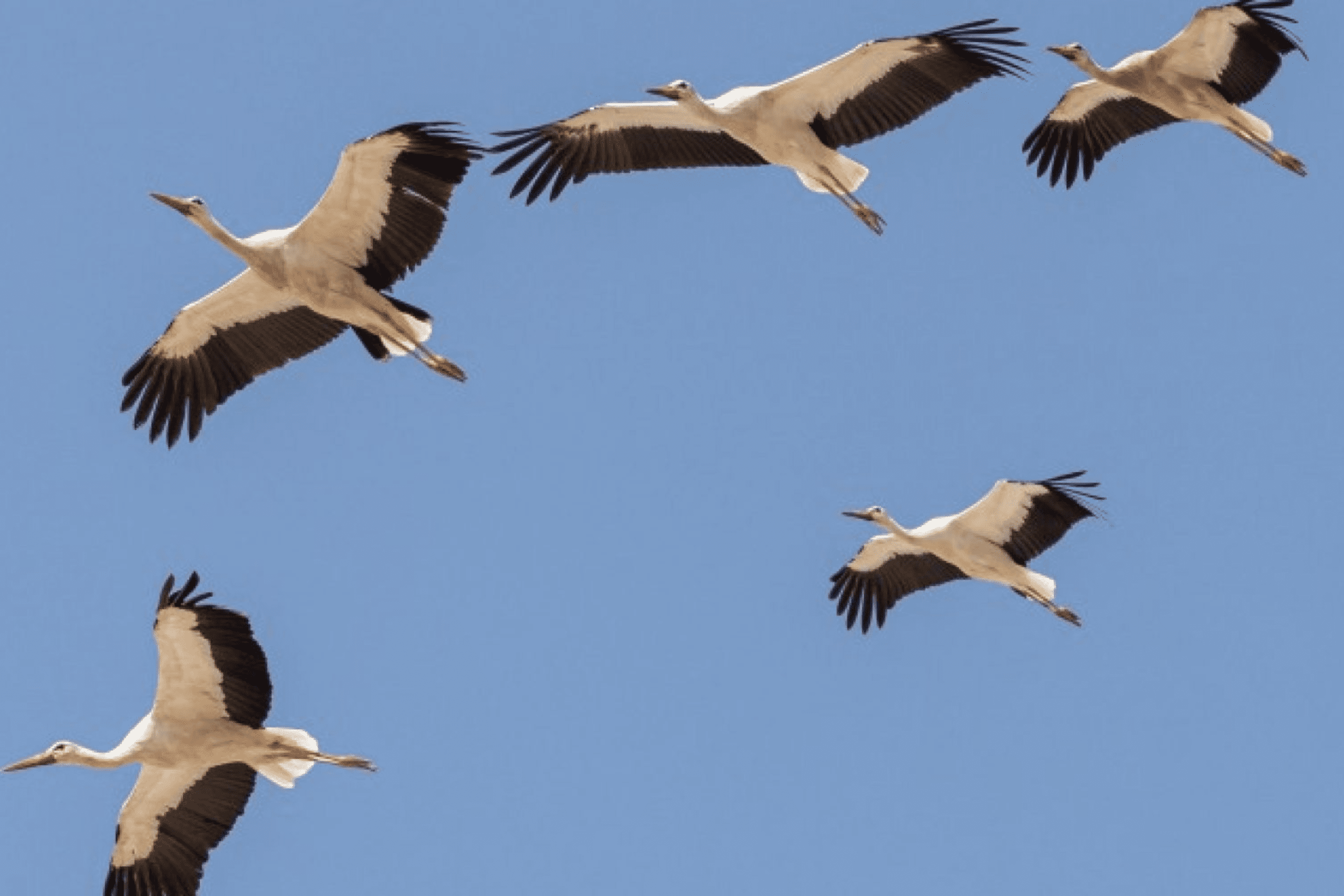
Black storks appear in Cyprus during autumn migration from August through October, with peak passage in September. They also pass through during spring migration in March and April. The birds avoid crossing broad expanses of the Mediterranean Sea, instead detouring via narrow crossing points. Eastern populations typically route through Turkey and the Levant, making Cyprus a natural stopover location.
Conservation Challenges
All three bird groups face significant threats during migration and on wintering grounds. Habitat loss from coastal development destroys critical wetland areas. Water pollution from agricultural runoff and urban sources degrades water quality and reduces prey populations. Climate change affects rainfall patterns, potentially altering the timing and reliability of wetland flooding.
Human disturbance poses particular problems for flamingos. The birds are extremely sensitive to approach, and visitors who wade into salt lakes or fly drones overhead cause flocks to flee, wasting precious energy reserves needed for migration. Educational campaigns emphasize the importance of maintaining distance and observing from designated viewing areas.
Illegal bird trapping and hunting continues despite legal protections. Cyprus has implemented stronger enforcement measures and public awareness campaigns, but some mortality still occurs. Power lines create collision risks for large soaring birds including storks, though marking programs are reducing this threat.
Birdwatching Opportunities
Several locations offer excellent opportunities to observe rare migratory birds. Larnaca Salt Lake provides the most accessible flamingo viewing, particularly along the four-kilometer nature trail with starting points at Kamares Aqueduct and near the old airport. Peak viewing occurs from December through February when flamingo numbers reach maximum levels. An observatory provides elevated views without disturbing the birds.
Akrotiri Salt Lake near Limassol hosts the largest wetland in Cyprus. The Akrotiri Environmental Education Centre offers free entry with viewing areas and telescopes for observing flamingos and other waterbirds. Staff can advise on recent sightings and best viewing locations.
Oroklini Lake near Larnaca features a dedicated bird hide elevated above the wetland, providing excellent vantage points for observing flamingos, herons, and numerous other species including black-winged stilts and spur-winged lapwings. The smaller size means fewer birds but quieter observation conditions.
Protecting Migration Routes
The rare birds that visit Cyprus connect the island to vast ecological networks spanning continents. Flamingos, herons, and black storks depend on intact chains of wetland habitats from breeding grounds to wintering areas. Protecting Cyprus’s salt lakes and wetlands contributes to conservation efforts across entire migration routes.
The island’s commitment to maintaining these stopover sites through protected area designations, active management, and public education helps ensure that future generations will continue to witness thousands of pink flamingos transforming winter salt lakes and elegant herons stalking prey in shallow waters. These spectacular birds remind us that nature operates at scales far larger than national boundaries, requiring international cooperation to safeguard shared natural heritage.