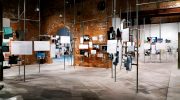
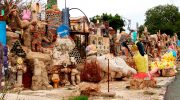
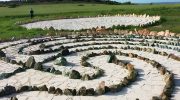
vThe Limassol Municipal Art Gallery stands as one of the most significant cultural institutions in Cyprus. This gallery houses over 600 works of modern Cypriot art, with pieces that span painting, sculpture, pottery, and mixed media. Located on the seafront of Limassol, the gallery offers visitors a comprehensive view of how Cypriot art developed throughout the 20th century and continues to evolve today.
The collection represents the artistic journey of Cyprus from early naturalistic trends to contemporary approaches. The gallery features both the foundational works that shaped Cypriot modern art and the innovative pieces created by emerging artists who continue to push boundaries.
Historical Background
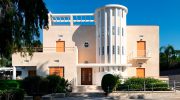
The story of the Limassol Municipal Art Gallery begins with a beautiful building designed by German-Jewish architect Benjamin Ginsburg in 1938. The structure reflects European modernism, particularly the influence of the Bauhaus movement, which was unusual for Cyprus at that time. Its clean lines and functional design made it one of the first modernist buildings on the island.
The building originally served as a private residence for the Pavlidis family. It remained in private hands until 1984, when the family donated it to the municipality of Limassol. The donation was officially announced on January 30, 1984. Four years of preparation followed before the gallery opened its doors to the public on June 26, 1988, under Mayor Antonis D. Chadgipavlou.
The gallery expanded in 1996 with the addition of modern ground halls. This extension allowed the institution to display more contemporary works and provide space for rotating exhibitions of emerging artists.
The Collection and Its Masters
The historic building showcases works by the pioneers of Cypriot modern art. Three names stand out as particularly influential: Adamantios Diamantis, Christophoros Savva, and Telemachos Kanthos. These artists are considered the pillars of modern Cypriot art.
Adamantios Diamantis studied at the Royal College of Art in London from 1921 to 1923, where he shared the First Prize for Drawing with his fellow student Henry Moore, who would later become one of Britain’s most famous sculptors. Diamantis focused much of his work on Greek Cypriot peasantry, capturing ordinary people in their daily lives. His painting “The Planters” became one of his most celebrated works, showing rural workers fixed in time and place, becoming one with the landscape.

Telemachos Kanthos was born in 1910 in Alona, a mountain village in the Pitsillia region. He developed a deep connection with the Cypriot landscape, particularly the hills surrounding his birthplace. He worked with multiple media, including oil painting, watercolor, and wood engraving. Kanthos studied the works of the Barbizon School and the Impressionists, particularly Cézanne, but adapted these influences to capture Cypriot light and color in his own way. He also served as an art teacher at Famagusta High School and the Pancyprian Gymnasium in Nicosia, inspiring many younger artists.

Christophoros Savva brought a different energy to Cypriot art. After fighting in World War II, he studied at St Martin’s School of Art in London and spent time in Paris before returning to Cyprus in 1959. Despite his short career (he died in his forties), Savva played a crucial role in connecting Cypriot art to global movements. His work “Stymphalian Birds” from 1960, inspired by the sixth labor of Hercules, shows his interest in mythology and abstraction. He represented Cyprus at the 1968 Venice Biennale.
The collection also includes significant works such as “Chariot drawn by two donkeys” by M. Kashalos, “Woman looking at the sea” by A. Diamantis, “The bargain” and “At the monastery” by V. Ioannides, and “The storm” by G. Kotsonis.
Notable Features of the Collection
The basement of the gallery houses the National Liberation Revolution tribute collection, maintained by the Historical Remembrance Council. This collection focuses on works that document Cyprus’s struggle for independence and features pieces that address the nation’s political history, including the events of 1974.
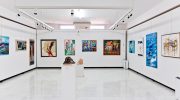
The first floor includes the Marios Vasiliades collection, which represents another important chapter in Cypriot art history. The contemporary ground halls display works by newer generations of Cypriot artists, showing how artistic traditions continue and change.
The gallery has a particular focus on artists from Limassol and those who have lived and worked in the city since 1974. This local connection gives the collection special significance for the community while maintaining a broader view of Cypriot art development.
Connection to Cyprus Today
The Limassol Municipal Art Gallery serves multiple functions in contemporary Cypriot society. It acts as an educational resource for schools throughout the region. High school students from Limassol and other cities regularly visit, as do students from both Greek-speaking and English-speaking schools. Even kindergarten classes make trips to the gallery, introducing art appreciation at an early age.
The gallery continues to acquire new works, following both established artists whose careers have developed over time and emerging talent. This active collection policy ensures that the gallery remains relevant and reflects current artistic practice in Cyprus.
The building itself stands as a monument to a particular moment in Cypriot architectural history. Its modernist design from 1938 represents the island’s connection to European cultural movements even during the colonial period. The structure has become an important landmark on the Limassol seafront.
Visiting the Gallery
The gallery occupies a prime location on 28th October Street, directly on the seafront. The building’s architecture provides an attractive setting for the art, and its position offers views of the south coast through its windows.
Entry to the gallery costs 2 euros. The facility typically opens on weekdays until 2:30 PM. Visitors should note that photography is not permitted inside the gallery to protect the artworks.
The scale of the collection means that a thorough visit requires several hours. The gallery spans three floors in the historic building plus the modern extension. Art enthusiasts often recommend setting aside at least half a day to properly appreciate the full collection.
The staff at the gallery are knowledgeable and willing to help visitors understand the context of different works. While not all pieces have detailed written descriptions, the staff can provide additional information about the artists and their significance to Cypriot art history.
A Window Into Cypriot Culture
The Limassol Municipal Art Gallery matters because it preserves and presents the visual story of modern Cyprus. Through paintings, sculptures, and mixed media works, visitors can see how Cypriot artists responded to their changing society, from rural traditions through colonial rule to independence and conflict. The gallery shows how local artists absorbed international influences while maintaining their distinct perspective on Cypriot life and landscape. It stands as evidence of the island’s rich cultural production and its ongoing contribution to Mediterranean and European art. For anyone wanting to understand Cyprus beyond its beaches and ancient ruins, this gallery provides essential insight into the creative spirit that has flourished on the island throughout the past century.