Both men’s and women’s traditional outfits consisted of an inner layer called poukamisso. For men it resembled a white cotton long sleeved chemise, whilst women usually wore a longer underdress. These multilayered garments developed from practical necessity in Cyprus’s Mediterranean climate while also serving to distinguish between daily work attire and festive occasions.

The Cypriot costume in the past was an entire ensemble with each layer serving its own purpose. The inner layers were plain and made out of cotton or linen, whilst outer layers were lavishly decorated with ornaments and embroidery, with decoration, fabric quality, and color signaling social status, wealth, and regional origin.
The Distinctive Vraka Pants
Known for their distinctive silhouette, vraka trousers are more than just a piece of clothing, they are an integral part of the national identity and culture. In fact, vraka is the key element that separates Cypriot men’s attire from the Greek national costume. These loose baggy trousers, made out of hand-made cotton, are the highlight of the men’s traditional garment.
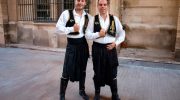
Typically, vraka trousers are made from a large single piece of cotton fabric dyed in black. The fabric is folded into pleats and gathered at the top and at the bottom and secured with a cord called vrakozoni around the waist. Despite what we think today, Cypriot men were not wearing black vrakes in their everyday life but during summer they wore lightweight white vrakes and the rest of the year more stiff and in blue color. Black vraka was the official costume of the Cypriot man and was only worn during festivities and at Sunday’s church liturgy.
In the cities and in big villages in the lowlands, the vraka had to have as many pleats as possible because as much fabric someone was using, it was a sign of being wealth. In the rural areas, vrakes were shorter. There were variations to the line of vraka and to the size depending on the age and the area. These diacritical traits used to be indicative of the wearer’s origin.
In the past, vraka trousers were not only an indispensable part of daily wear, they were also a status symbol for a Cypriot man. A looser silhouette with more pleats indicated a high financial standing of the wearer, since hand-made cotton was quite expensive back in the day.
Women’s Sayia and Regional Variations
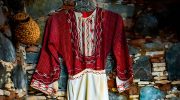
On top of it, the women wore a special dress called sayia or foustania, accompanied by a decorative apron called podia and an embroidered waistcoat called sarca or gilekki. The sayia, a long-sleeved coat open down the front, was worn over pantaloons decorated with woven embroidery. The dress itself is called sayia, which is essentially a long tunic with beautiful embroidery, usually worn with an apron, a belt and a waistcoat on top.

Often referred to as a living artifact, sarca vest is probably the most recognizable and the most visible element of a women’s traditional attire. Made out of luxurious fabrics like fine wool, velvet, and sometimes silk, sarca serves as a decorative element of the garment. The existence of sarca in sayia type of costume should question those who support that sarca was imported to Cyprus at the times of Queen Amalia of Greece. The urban sarka must have taken its final form from fashion influences from abroad whereas it remained in its original form in the areas of Karpasia and Pafos.
In some regions, women traditionally wore knee-length dresses combined with white shirt and underpants. The shirt peeked from under the dress at the chest and cuffs while the pants, embroidered at the bottom, were visible from the knee down. The dress was belted with a kerchief.
The Unique Karpasia Doupletti
A peculiar local garment in Karpasia, the northeast part of Cyprus, is the doupletti, a white densely pleated skirt cast double over the shoulders like a cape. The standing collar, which is actually the skirt waistband, is embroidered in white with colored beads. This skirt was originally part of the bridal costume, worn with the sarka, making it one of Cyprus’s most distinctive regional variations.

The foustani, a one-piece waisted and pleated dress, was the preferred overgarment in the rural areas of Cyprus, particularly the plain and the mountains, well into the 1950s. The festival foustani was worn with an embroidered apron while the everyday one came with a plain apron. In Paphos the sayia was retained alongside the foustani since it was considered easier to wear.
Urban Versus Rural Distinctions
In the past there was a strong distinction between daily or working attire and festive costumes. Both versions were multilayered, however the everyday garments were made out of sturdy fabrics like cotton and wool and tended to be quite modest in decoration and color. The festive outfits, on the other hand, featured luxurious silks and velvet textiles, which were lavishly decorated with complex patterns and embroidery.
The waistcoats were different for different occasions. Simple daily vests were plain and dark without any embellishments. The most ornate waistcoats were made from velvet or fine wool and adorned with embroidery created with the help of metallic wire or thread.
Why Traditional Dress Defines Identity
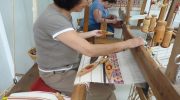
Even though Cypriots do not usually wear their traditional costumes in their daily life, you can still see those garments during festivals, fairs and events both in cities and local villages. Materials like cotton and silk were locally cultivated and crafted into distinctive garments, embellished with embroidery, lace and jewelry reflecting social status and occasion.

Regional costumes display local variations in style, materials and details while maintaining a shared Cypriot identity. Overall, Cypriot costumes demonstrate the island’s assimilation of foreign influences within its own conservative folk artistic traditions.