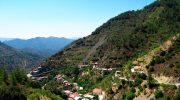
When most people think about Cyprus, they think sun, sand, and sea. That’s a fair starting point, but it misses a whole other side of the island that honestly deserves its own spotlight. Tucked into the folds of the Troodos range and the rolling hillsides of Limassol and Paphos are villages that have been quietly sitting here for centuries, holding onto their limestone architecture, their vine-covered courtyards, their handmade traditions, and their unhurried pace of life. These aren’t polished tourist setups.
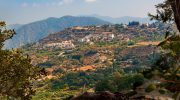
They’re real, working communities that happen to look extraordinary through a lens. Whether you’re shooting professionally, running a content channel, or just someone who loves finding genuinely beautiful places with a camera in hand, these ten villages give you material that holds up. This guide covers what makes each one visually unique, where to point your camera, and when to visit for the best results.
- Why Cyprus Villages Are Perfect for Photoshoots
- Vasa Koilaniou – Stone Lanes and Wine Village Character
- Laneia Village – The Village of Painters
- Lofou Village – Traditional, Quiet, and Architectural Detail
- Fikardou Village – Preserved in Time
- Tochni Village – Little Tuscany of Cyprus
- Pedoulas Village – Cherry Orchards and Mountain Heritage
- Arsos Village – High Altitude and Vineyard Views
- Pelendri Village – Mountain Winemaking and Medieval Architecture
- Fyti Village – Color, Craft, and Stone Architecture
- Steni – Hilltop Charm Near Chrysochous Bay
Why Cyprus Villages Are Perfect for Photoshoots
Cyprus sits at a crossroads of civilizations, and the visual evidence of that is everywhere in its villages. Byzantine churches, Venetian stone bridges, Ottoman-era architecture, and British colonial influences all left their mark, and in these mountain communities, much of it has survived intact.
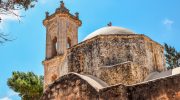
Add the Mediterranean light, which stays warm and directional for a good portion of the day during spring and fall, and the natural backdrop of the Troodos mountains, and you have an environment that does a lot of the compositional work for you. Most of these villages are small, traffic is minimal, and the early morning hours feel genuinely still. That kind of access is hard to find in more popular European destinations.
Vasa Koilaniou – Stone Lanes and Wine Village Character
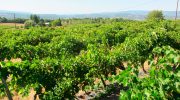
Vasa Koilaniou sits at an altitude of 750 metres on the Troodos mountain range, just 35 km from Limassol. The village is one of the wine-producing villages of the Troodos area, famous since ancient times for its vineyards and high-quality wines. Its name comes from the ancient Greek word “vassa,” meaning “wooded area,” a reference to its surrounding landscapes. Over 40 percent of its surrounding lands are still planted with grapes and harvested annually, and some homes still retain centuries-old winemaking tools including wine presses and distillers used for producing local spirits.
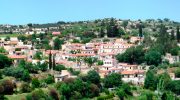
The imposing Evangelismos Church at the center of the village created a beautiful paved square surrounded by coffee shops. Combined with the narrow streets and stone-built houses, many of which have been renovated, it contributes to the image of a richly traditional village. The charming traditional architecture is preserved even today, featuring carved limestone as the main building material. The double-decked bridge at the entrance of the village, built in the late 19th century, is one of the most distinctive single subjects in the area and works well in both wide and close-up shots.
The grape harvest in mid-September is when the village is most alive. Vineyards turn gold, harvest activity fills the streets, and the afternoon light on limestone walls during the festival period is exceptional. Spring also delivers strong results when the surrounding vegetation is at its fullest and the air is clear.
Laneia Village – The Village of Painters
Laneia is called the village of painters because it has attracted artists from Cyprus and abroad for decades. Many creative people who come to the island choose this village as their retreat, mesmerized by the beauty of the surrounding mountainous landscape, the small streets of outstanding beauty, and the picturesque views. The village is located at an altitude of 575 meters just 30 minutes away from Limassol, surrounded by vineyards and wild vegetation, and is considered one of the most picturesque and photographed villages on the route to Troodos.
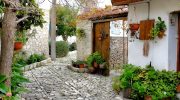
The village is defined by narrow streets, bright facades of houses decorated with clay figures, and ancient doors at the entrances to courtyards and houses. Several community-run museums are available for free, including a wine press museum, a shoemaker’s workshop museum, and a Commandaria museum of village history. The community park built around the stream that crosses through the village provides a green, natural backdrop that contrasts well with the village’s stone walls. Old photographs of villagers printed as posters on exterior walls essentially turn the whole village into an outdoor photography exhibition.
March is particularly good when almond trees bloom around the village edges. The vineyards surrounding the village also hold their color well into October, and the soft autumn light makes the stone facades glow. Early morning in any season gives you the streets almost entirely to yourself.
Lofou Village – Traditional, Quiet, and Architectural Detail
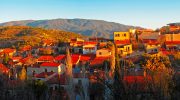
Lofou has very few permanent inhabitants, just 50 in total, but the village is busy with life throughout the year as a much-sought-after agrotourism destination. It is an area of fresh air, winding nature trails, and scenic panoramas. The traditional taverns, restaurants, wine bars, and shops all exemplify traditional architecture, offering moments of genuine Cypriot hospitality. Because the permanent population is so small, you genuinely get quieter streets and less disruption during shoots than at more populated Troodos villages.
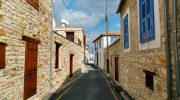
The stone-built exteriors in Lofou have a particularly consistent architectural character, with terracotta tiled roofs, carved limestone facades, and wooden details that reward close-up photography. The panoramic hillside view from the edge of the village looking out over the Troodos wine country is one of the cleanest landscape compositions in the Limassol district. The several wineries within a short drive, including Vlassides and Argyrides, also provide vineyard landscapes that pair well with the village architecture.
Autumn gives you the best combination of vineyard color and soft light. October weekdays are the strongest window because the weather is stable, the harvest-related activity adds life to the streets, and the golden light lasts well into the late afternoon.
Fikardou Village – Preserved in Time
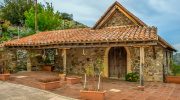
Fikardou is one of the most genuinely untouched villages on the island. Protected as an ancient monument, the village has been recognized for its preservation of traditional Cypriot rural architecture dating back several centuries. Two fully restored homes, the House of Katsinioros and the House of Achilleas Dimitris, function as small museums showing traditional family life. The village sits in the Nicosia district at an altitude of around 900 metres and receives very few visitors on any given day, which means you often have the lanes completely to yourself.
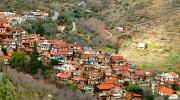
The uneven cobblestone lanes, weathered wooden balconies, and crumbling stone facades are the main draw. The contrast between fully restored buildings and partially weathered ones gives you interesting texture variety without walking more than 100 meters. Old wooden doorways with rusted iron hardware photograph beautifully in late afternoon raking light. The hillside just outside the village gives you an elevated view of the red tiled roofs with the mountain landscape behind them.
Autumn and winter work particularly well here because the sparse activity makes the village feel genuinely still, which suits the architectural subject matter. Overcast winter light removes harsh shadows and lets the stone textures read clearly without blown highlights.
Tochni Village – Little Tuscany of Cyprus
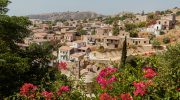
Tochni is widely regarded as one of Cyprus’s finest agrotourism destinations, often called the “Little Tuscany of Cyprus.” The village enchants visitors with its golden-hued stone houses draped in bougainvillea, narrow cobbled alleys, and a serene Mediterranean pace that modern life seems to have left largely untouched. The majority of its properties use “Tochni Stone,” quarried nearby, giving the whole village a consistent warm golden tone that makes it visually unified in a way few villages can claim.
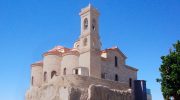
The Church of Saints Constantine and Helena, built directly over a medieval bridge, is virtually unique in the world as an architectural subject. A 2.8 km circular nature trail from the village gives panoramic views across the valley toward the coastline and passes through rich wild flora including sage, thyme, rockrose, and endemic Cypriot orchids. The cascading bougainvillea against the warm gold of Tochni stone is one of the most photographically rewarding color combinations on the whole island. Shoot from the tavern terrace above the village looking down over the rooftops and valley for the most classic composition.
Spring from March to May when the wildflowers are blooming on the nature trail and the bougainvillea is at its fullest. Early morning in summer also works well when the village is cool and empty and the golden stone glows in the first hour of light.
Pedoulas Village – Cherry Orchards and Mountain Heritage
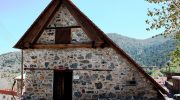
Pedoulas sits high in the Marathasa valley, one of the most mountainous regions of Cyprus. The village is most famous for its cherry production, which draws visitors every spring and turns the surrounding hillsides pink and white with blossoms. The Church of Archangel Michael in the village contains 15th-century frescoes and is a UNESCO World Heritage Site, giving Pedoulas a genuine cultural anchor beyond its natural beauty. Cobbled streets wind through a village full of traditional character, with the sun-covered hills providing a scenic backdrop throughout the year.
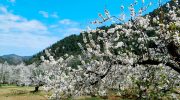
The cherry orchards in April and early May are the most seasonally unique photography subject on the entire island. Wide-angle shots of the flowering trees with the mountain village behind them are compelling in a way that almost no other location in Cyprus can replicate. The main church courtyard in soft morning light gives strong architectural compositions. The valley view from above the village, looking north toward the Marathasa range, is one of the widest and most dramatic in the Troodos region.
April to early May is the single best window for the cherry blossoms. Outside of that, September through October delivers warm valley light and considerably quieter streets than the summer season.
Arsos Village – High Altitude and Vineyard Views
Arsos is one of the largest wine villages of Cyprus, located 40 kilometers west of Limassol and built at an altitude of 1,092 meters, with an open horizon toward the valley of the Diarizos river. Its name may derive either from the sacred grove of the goddess Aphrodite, which was located in the area, or from the ancient city of Arsinoe founded by King Ptolemy of Egypt during the Hellenistic period. At over 1,000 meters, it is one of the highest inhabited villages in the Limassol district and the altitude shows in both the air quality and the clarity of the light.
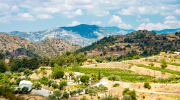
The panoramic views toward the Diarizos River valley and the sea of Paphos from the upper edges of the village are genuinely exceptional. On clear days the view reaches all the way to the coast. The traditional distillery in the village square, where grape broth is still kept in large traditional jars, provides authentic local detail shots. The old church in the village center contains a wood-carved iconostasis from the 19th century that is worth photographing for architectural detail. The Diarizos Valley wine route hiking trail that begins near the village also opens up vineyard landscape photography across a wide natural corridor.
September through October during harvest is the strongest window. The vineyards turn from green to gold and amber, the valley below takes on a warm autumn haze, and the village activity associated with wine production adds a lively documentary element to whatever you’re shooting.
Pelendri Village – Mountain Winemaking and Medieval Architecture
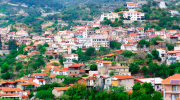
Pelendri sits in one of Cyprus’s key wine-growing areas, where nearby vineyards produce excellent bottles, especially from the native Mavro and Xynisteri grapes, which are famously used together to produce Commandaria. Tsiakkas Winery, located near the village, offers the chance to learn more about these varieties and taste how well they adapt to the cooler mountain climate. The Church of Timios Stavros in Pelendri is a 14th-century Byzantine church with well-preserved frescoes and is listed as a UNESCO World Heritage Site, making it one of the most significant cultural subjects in the entire Troodos region.
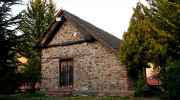
The Timios Stavros church exterior, with its distinctive painted facade and ancient stone construction, is the strongest single architectural subject in the village. The surrounding vineyards and mountain landscape behind the church create a layered composition that works well with a short telephoto lens. The village square and traditional stone houses surrounding it provide classic street photography material, and the Tsiakkas Winery grounds add a modern contrast to the medieval heritage nearby.
Autumn is ideal for Pelendri. The Commandaria vineyards show their best color from late September through October, and the combination of medieval architecture and harvest-season landscapes in a single frame is something you won’t find easily anywhere else.
Fyti Village – Color, Craft, and Stone Architecture
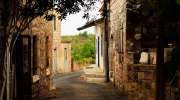
Fyti has existed since medieval times and preserves its traditional folkloric architecture and local handicrafts, including weaving. As the main weaving center of the Paphos region, the hand-woven pieces are known locally as “fythkiotika,” distinguished both for the variety of their patterns and their rich, vibrant colors. Fyti is situated on a plateau 25 km northeast of Paphos and 20 km southeast of Polis, with several small villages within a 3 km radius. Due to altitude and surrounding landscape cover, Fyti enjoys a pleasant climate all year round. The houses are built of local stone and have changed little since the village was created in the 19th century.
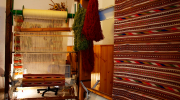
The village square with its large millstone, water feature, and memorial is a well-composed central subject. The Museum of Weaving and Traditional Art, built in 1947, displays bold geometric textiles in vivid blues, reds, greens, and oranges that make strong color photography subjects. The 19th-century Church of Saint Dimitris in the square has a beautifully preserved interior altar screen from 1854, with colors still described as fresh and vivid. The old preserved olive press in the garden adjacent to the memorial provides excellent rustic detail photography.
Spring and autumn are the most rewarding seasons. The village’s elevated position means it gets good cloud formations in spring that create dramatic sky backgrounds for architecture shots. The cool, dry summers also make midday shooting more comfortable than at lower altitude villages.
Steni – Hilltop Charm Near Chrysochous Bay
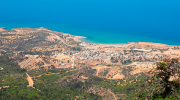
Steni is located in the northwestern part of Cyprus, just five kilometers from the clear blue sea of the Gulf of Chrysochous. The fertile soil produces an abundance of fruits and vegetables, and beautiful, colorful flowers and plants bloom all year round. The view from the eastern hill of the village toward Polis Chrysochous Bay and Paphos Forest is truly magnificent. The Steni Museum of Village Life pays homage to the residents of Steni who endured life from the town’s establishment until the end of World War II, covering the period 1800 to 1945.
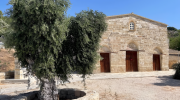
The eastern hill viewpoint looking out over Chrysochous Bay with the Paphos Forest behind it is one of the most underrated landscape compositions in the Paphos district. You get sea, forest, and hillside farmland all in a single frame. The village’s flower-filled gardens, which bloom year-round due to the mild microclimate, add foreground color to architectural shots. The ruins of the 13th-century Monastery of Chrysolakhourna just outside the village provide a medieval stone subject with the surrounding countryside as backdrop. The Steni Museum of Village Life and its authentic surrounding streetscape make for strong documentary-style photography.
Spring from March to May is the best overall window, when the flowers are at their most abundant and the Chrysochous Bay view is framed by the greenest possible foreground. The 3rd Sunday of each month also hosts a village farmers market that adds local color and candid portrait opportunities.