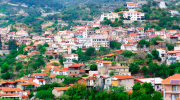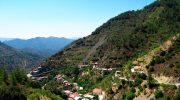
Cyprus is one of those places that keeps rewarding you the longer you stay. Most visitors spend their time on the beaches, and the beaches are genuinely great, but the real landscape photography potential of this island goes way beyond the coastline. From dramatic sea cliffs and ancient rock formations to mountain waterfalls, salt lakes full of flamingos, and untouched gorges carved out of limestone, Cyprus packs an extraordinary range of natural scenery into a relatively small island.
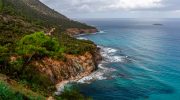
The whole country is about 3,500 square miles, which means in a single day you can shoot sunrise on a sea cliff, hike through a gorge in the afternoon, and still catch golden hour over a mountain valley. That kind of variety is rare, and photographers who know about it keep coming back. This guide breaks down 10 of the best landscape photography locations in Cyprus, starting with when to actually go.
Best Time of Year for Landscape Photography in Cyprus
Spring for Green Valleys and Flowers
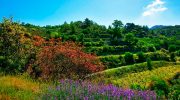
March through May is the strongest overall window for landscape photography in Cyprus. The winter rains have done their work and the island turns genuinely green, including the mountain interiors and valley floors that look parched by midsummer. Wildflowers cover hillsides and gorges, dam reservoirs hold their best water levels, and the light has a clean, clear quality that summer haze gradually takes away. Endemic plants bloom across the Troodos range, early morning mist sits low over valleys, and the air quality in the mountains is sharp enough to make long-distance viewpoints actually deliver on their potential.
Summer for Coastal Sunrises and Blue Water
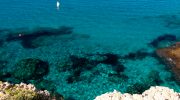
Summer brings real tradeoffs. The midday heat is intense, mountain haze reduces visibility for panoramic shots, and popular coastal locations fill up fast. But the water color at places like Konnos Bay and Pissouri Bay reaches its most saturated turquoise between June and August, the cliff tones along the south coast are at their most vivid, and the evening light on limestone and chalk produces warm golden tones that only come with long summer days. The strategy that works is arriving before 7am at coastal locations, which gets you clean compositions and the best early light before the crowds and the flat midday glare arrive together.
Autumn for Warm Tones and Vineyards

September through November is when the island comes back into full photographic range after the summer heat eases. The Diarizos Valley vineyards shift from green to amber and gold, dam water levels start recovering after the dry summer drawdown, and the light takes on a warmth that spring doesn’t quite match. Mountain viewpoints like Madari get dramatic cloud formations that sit low over the ridgelines in the early mornings. Tourist numbers also drop significantly in autumn, which means cleaner compositions at popular coastal spots and more freedom to shoot without managing people in the frame.
Winter for Misty Mountains and Snowy Peaks

December through February is the most underrated photography season in Cyprus. The Troodos peaks occasionally receive snowfall, and morning mist layers over mountain valleys in conditions that feel nothing like the Mediterranean island most visitors expect. Dam reservoirs fill with winter rain and the surrounding vegetation turns full and green. Overcast winter light removes harsh shadows from both architectural and landscape subjects and lets textures read clearly. The flamingos at Larnaca Salt Lake reach their peak numbers in February, adding a wildlife photography dimension that doesn’t exist at any other time of year.
1. Konnos Bay Viewpoint
Konnos Bay sits at the eastern edge of Ayia Napa, where it meets the Protaras region, forming part of the Cape Greco National Park, an area of outstanding natural beauty. The high rocky headlands on either side of the beach are fringed with pine trees, with various viewpoints on the winding road down to the beach from which spectacular photographs can be taken.
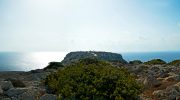
The bay is part of a Natura 2000 protected site covering 385 hectares of unspoiled natural landscape, and the beach itself is around 200 meters long with soft white sand with silver reflections due to its volcanic origins. The viewpoint above the bay is where the strongest photography happens.
Looking down over the curve of the beach with pine-covered slopes framing both sides and deep blue water filling the center gives you one of the cleanest natural compositions on the entire island.
The coastal trail connecting to Cape Greco heading south passes several secondary viewpoints where the cliff drops directly to the sea, giving you dramatic foreground-to-horizon shots with no beach infrastructure in the frame. Weekday mornings in May, June, or September give you the best combination of saturated water color and minimal crowd pressure
2. Asprokremmos Dam Viewpoint, Paphos
The Asprokremmos Dam is located near Kouklia village, around 16 kilometers from Paphos. It is the second largest dam in Cyprus after the Kouris Dam, built to a height of 52 metres with a length of 600 metres and a capacity of 51 million cubic meters of water. The dam is built over the Xeros River, which flows down from the Kykkos Mountains, and the reservoir it creates stretches back through a valley of rolling hills and scattered vegetation that photographs well at nearly any water level.
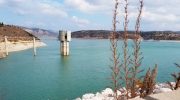
What makes Asprokremmos genuinely worth visiting for photographers is what sits at the waterline. Near the dam lies the abandoned Turkish-Cypriot village of Foinikas, whose deserted stone buildings, some partially submerged in the water, have earned the area the name “sunken village.”
The eerie atmosphere and unusual visual of architecture emerging from a reservoir makes it an ideal spot to explore and photograph. The dam wall itself is walkable and gives elevated views over the reservoir in both directions. In winter and early spring when the water level is high, the reflections of the surrounding hills on the reservoir surface make for strong symmetrical landscape compositions, and the submerged ruins visible at the shoreline add a layer of historical depth that no purely natural location can match.
The dam is also recognized as an important wetland for endemic and migratory birds, so wildlife photography is a secondary option throughout the year. January through March after a good rainy season is the strongest window, when the reservoir is full and the morning light hits the water surface cleanly before any wind breaks the reflections.
3. Governor’s Beach White Cliffs, Limassol
During the British colonial period, high-ranking British officials chose this beach for recreational activities, as the picturesque white chalk cliffs with fine gray sand probably reminded them of the Dover coast back home.
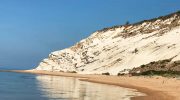
That comparison still holds visually, and it’s the color contrast that makes this location genuinely distinctive. Governor’s Beach is actually a series of small sandy coves separated by dramatic white chalk cliffs. The contrast between the white rock, dark volcanic sand, and blue water makes it one of the most visually distinctive beaches in Cyprus.
Each cove is small, between 50 and 100 meters wide, and the eastern coves have darker, coarser sand from volcanic material mixed with chalk while the western ones are lighter. No filtration or significant post-processing is needed to make the contrast dramatic. The three-tone palette of chalk white, dark volcanic sand, and deep blue Mediterranean water is just what this place looks like.
Shooting from the clifftop path gives graphic, overhead compositions, while getting down to beach level and pointing upward at the chalk faces with sky behind them produces a completely different feeling in the frame. The grottoes carved into the cliff bases by wave action hold deep shadow even in bright sun, creating natural framing elements for mid-range shots.
4. Madari Viewpoint
The Madari fire lookout sits at 1,613 meters above sea level in the Troodos Mountains and promises a spectacular 360-degree panorama. The high-altitude trail to reach it offers panoramic views across nearly the entire island, and the panorama high trail offers optimal conditions for landscape photography with great views of the Troodos Mountains at almost every corner.
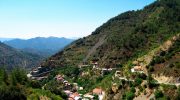
The path near the fire lookout tower gives hikers a chance to view endemic plant species including Troodos cat mint and Cyprus crocuses, and also provides a view of Morphou Bay to the north and the Mesaoria plain stretching out toward the coast. The Tishia tis Madaris, a cluster of tower-like geological rock formations scattered around the peak, adds a structural foreground element to the landscape that makes this viewpoint visually distinct from standard mountain panorama shots.
The trail passes golden oak, wild rose and mastic bushes, junipers, pine, strawberry trees, rock rose, sage, cedar, plane trees, and bracken, providing strong botanical photography subjects alongside the sweeping panoramic opportunities. The fire lookout tower at the summit is open to the public, giving an unobstructed 360-degree view across the Troodos range.
May and October tend to deliver the most consistently clear long-distance views, and sunset from the summit ridge is one of the stronger golden hour opportunities in the entire Troodos region.
5. Xyliatos Dam
Built in 1980, Xyliatos Dam sits nestled in the beautiful Troodos mountain range and has a capacity of 1.4 million cubic meters. Beyond its functional role in water management, it has evolved into a serene recreational spot surrounded by lush pine forests and tranquil waters, with the Xyliatos Nature Trail looping around the dam for 4 kilometers and offering scenic views of the water and surrounding forest.
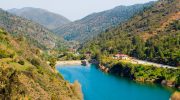
Early morning and late afternoon are the ideal times for photography as local birds are most active and the light is at its softest. Xyliatos is smaller and less well known than the island’s larger dams, and that relative obscurity works strongly in its favor for photography. On most weekday mornings, you genuinely have the shoreline to yourself.
The pine forest reflected in the completely still surface of the reservoir in the early morning is one of the most classically composed landscape shots available in the Troodos foothills. The trail’s elevated sections give you wide views over the reservoir with the surrounding ridgeline as a natural frame, and in spring, wildflowers push through the undergrowth beside the trail and add close-up botanical subjects to what is primarily a water and forest location.
The reservoir holds its winter water levels into April and May, the surrounding forest is at its greenest during this window, and the clear post-winter air gives sharp reflections that summer’s calmer, more stagnant surface sometimes can’t match. Arriving at 7am on a spring weekday when low mist sits in the valley below the dam gives you atmospheric conditions that won’t repeat in any other season.
6. Diarizos Valley
The Diarizos Valley is a lesser-known wine-producing region located east of Paphos. The route through the valley passes 14 hilly villages through beautifully unspoiled green landscapes dotted with picturesque vineyards, situated at a lower altitude than the other main winegrowing areas. Climbing upward through the valley you encounter 18 different types of vines, with the Mavro red grape being predominant.

Beyond the vineyards, the valley also contains a series of abandoned villages, medieval Venetian bridges, and the upper reaches of the Diarizos River where the valley eventually merges with the Paphos Forest. The abandoned villages scattered through the lower valley, particularly Souskiou and Gerovasa, provide crumbling stone architecture set against a backdrop of rolling vine-covered hillsides that no purpose-built location can replicate.
The Kelefos Venetian Bridge in the upper valley, one of the finest examples of medieval stone bridge construction on the island, photographs beautifully from the riverbed level with the stone arch framing the water and dense forest behind it. The valley road itself, winding between terrace-cut hillsides with the river visible below, delivers strong landscape compositions from several elevated pullout points along the route.
The valley includes various types of habitats in a relatively small area, with flora and fauna that include endemic and protected species, and the area has a relatively mild climate that is cool in winter and pleasant in summer. October is the strongest single month, when the Mavro grape vineyards turn deep gold and burgundy, the abandoned village ruins contrast against vivid autumn color, and the low-angled October light emphasizes the terraced topography.
7. Pissouri Bay Cliffs
Pissouri Bay sits on the south coast of Cyprus between Limassol and Paphos, and the cliff system flanking the bay is one of the most photographically compelling coastal landscapes on the island. The white limestone headland of Cape Aspro rises dramatically on the western side, dropping directly to the sea in vertical faces that catch the late afternoon sun at angles that turn the chalk almost luminous.
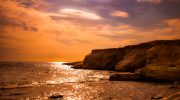
The trail along the Pissouri Bay cliffs takes you through an impressive white landscape with vertical limestone faces, covering 3.3 miles with an elevation gain of 606 feet in a moderately challenging out-and-back route that takes around 90 minutes. Stunning views and beautiful cliffs are the consistent highlights. The village of Pissouri itself sits on the hilltop above the bay, and the viewpoint from the village looking south gives you a classic wide-angle composition with terracotta rooftops in the foreground and open Mediterranean water beyond, a layered shot that works with a standard lens without needing any specialist equipment.
The sun descends over open water from most positions on the Cape Aspro headland and the chalk face turns orange and then deep red as the light drops. Autumn delivers the most reliable clean sunset colors without the haze that reduces the drama during the summer months, and the shoulder season also means the trail and viewpoint are nearly always empty when it matters most.