Explore Cyprus with Our Interactive Map

Explore our top stories and discover ideas worth your time.

Sanctuary of Aphrodite, Palaepaphos

Sanctuary of Aphrodite, Palaepaphos

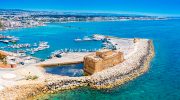
In the village of Kouklia, about 14 kilometers east of Paphos, stand the remains of what was once the most famous shrine dedicated to Aphrodite in the ancient world. For more than 1,600 years, pilgrims traveled from across the Mediterranean to worship at Palaepaphos, the place where the goddess of love was believed to have risen from the sea. Today, the site is a UNESCO World Heritage monument and one of the most important archaeological locations in Cyprus. The Sanctuary of Aphrodite at Palaepaphos was founded around 1200 BC during the Late Bronze Age. It remained in continuous use until 391 AD, when the Roman Emperor Theodosius I banned all pagan religions. Palaepaphos was among the most powerful city-kingdoms of ancient Cyprus and became the first site on the island to be added to the UNESCO World Heritage List in 1980. The sanctuary functioned as the main center of Aphrodite worship across the Aegean world, attracting visitors from Greece, Rome, Egypt, and other parts of the eastern Mediterranean. Unlike typical Greek and Roman temples, the sanctuary followed a very different architectural approach. Instead of a roofed building with columns and a statue, it featured an open-air layout influenced by Near Eastern traditions. Aphrodite was not depicted in human form but represented by a sacred conical stone, a practice that sets…

Read more
Sanctuary of the Great Mother (Avdimou)

Sanctuary of the Great Mother (Avdimou)

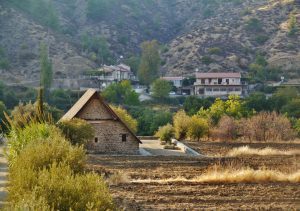
A cult site dedicated to the prehistoric fertility goddess, showing the continuity of worship from pagan fertility rites to later religious forms. The Sanctuary of the Great Mother in Avdimou represents a timeless spiritual hub in Cyprus, where ancient veneration of a fertility goddess evolved into Christian devotion to the Virgin Mary. Located in the rural village of Prastio Avdimou near the south coast, this site embodies the island's layered religious history, blending prehistoric fertility cults with Byzantine and medieval Christian practices. It highlights Cyprus's role as a crossroads of civilizations, where pagan rites centered on life, birth, and renewal transitioned seamlessly into the worship of Panagia, the "All-Holy" mother figure, fostering a enduring tradition of pilgrimage and miracle-seeking that persists today. A Cult Site of Continuity The Sanctuary of the Great Mother, embodied in the Church of Panagia Diakinousa in Prastio Avdimou, stands as a testament to Cyprus's spiritual evolution, nestled in a serene valley amid olive groves and rolling hills. This site, spanning less than a hectare but rich in symbolic depth, draws from prehistoric roots where fertility goddesses were honored for their power over life and nature. In ancient times, Cypriots revered a "Great Goddess" depicted in cruciform statues symbolizing childbirth, with hundreds of artifacts dating to 3000-2500 BC found across the island. The Avdimou area, with…

Read more
Copper Mountains Cyprus Heritage

Copper Mountains Cyprus Heritage

The copper-rich mountains of Cyprus, particularly the Troodos range, were seen by ancient inhabitants as divine gifts from the gods, providing not just vital metal for tools and trade but also spiritual protection and prosperity. These peaks, laced with reddish ore veins, blended natural bounty with sacred myths, making mining a reverent act and turning the island into a Bronze Age powerhouse. Exploring their story reveals how earth, faith, and human ingenuity intertwined to shape Cyprus's enduring legacy. A Sacred Backbone of the Island Step into the heart of Cyprus, and you'll find the Troodos Mountains rising like ancient guardians, their slopes cloaked in pine forests and dotted with villages that seem frozen in time. These aren't just any hills - they're the island's geological core, a rugged massif stretching across the center, reaching up to Mount Olympus at over 1,950 meters. For early Cypriots, the mountains weren't mere landscape; they were a holy endowment, teeming with copper that fueled life, from farming tools to ceremonial artifacts. This blend of raw power and divine favor made the Troodos a symbol of abundance, where the gods' touch was felt in every shimmering vein of ore. Today, they stand as a reminder of how nature's gifts can inspire awe, drawing hikers, historians, and dreamers alike to their misty paths. From Ancient Seas…

Read more