
History and Archaeology

Articles: History and Archaeology

Stories in this category and its subcategories.

Cyprus Metal Crafts Through Ages

Cyprus Metal Crafts Through Ages

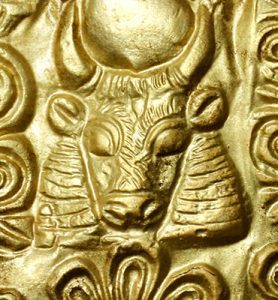
Cyprus holds a unique position in metalworking history. The island gave its name to copper itself, with the Latin term "cuprum" deriving from "Cyprus." For over 6,000 years, Cypriot artisans have shaped metals into tools, weapons, jewelry, and decorative objects. The tradition spans from simple Chalcolithic copper tools around 4000 BCE to Byzantine gold treasures and modern handcrafted silver jewelry. This heritage connects ancient mining operations in the Troodos Mountains with contemporary workshops where craftspeople maintain techniques passed down through generations. myfirstticket.com Historical Background The metal story in Cyprus begins during the Chalcolithic period when early settlers discovered native copper deposits. By 3000 BCE, Cypriots were already working copper to create artifacts of high quality that circulated throughout the Mediterranean.…

Read more
Famagusta Martinengo Bastion

Famagusta Martinengo Bastion

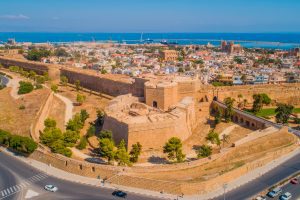
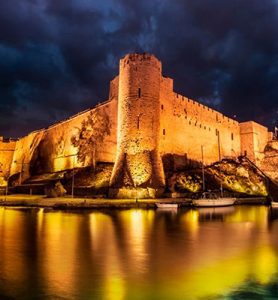
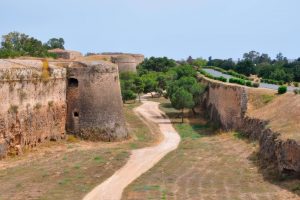
In the northwest corner of Famagusta's historic walled city stands one of the Mediterranean's most impressive examples of Renaissance military architecture. The Martinengo Bastion, also known as Tophane, represents a turning point in defensive technology and remains a testament to 16th-century engineering brilliance. visitncy.com When the Republic of Venice took control of Cyprus in 1489, military engineers quickly recognized a serious problem. The existing fortifications throughout the island were outdated and vulnerable to modern artillery. Medieval walls, built tall and thin to defend against siege towers and scaling ladders, could not withstand the devastating impact of cannon fire. Famagusta presented a particular challenge. As Cyprus's main port and commercial hub, the city required strong defenses. Yet its northwest corner remained…

Read more
Cyprus War Resistance Stories

Cyprus War Resistance Stories

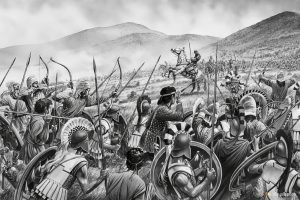
Cyprus has witnessed countless conflicts throughout its 10,000 years of human habitation. The island's position at the crossroads of three continents made it a prize worth fighting for, and its people developed a long tradition of resistance against foreign rule. dzeninfra-ru From ancient sieges to modern independence struggles, Cyprus has been repeatedly conquered, defended, and fought over by armies ranging from Persian emperors to British colonial forces. These conflicts left deep marks on the landscape and shaped the national character of both Greek and Turkish Cypriots who call the island home. Historical Background Cyprus experienced its first major conflicts during the ancient period when Persian forces conquered the island's city kingdoms in the 6th century BC. The Greek population survived…

Read more
Famagusta, Cyprus – History & Facts

Famagusta, Cyprus – History & Facts

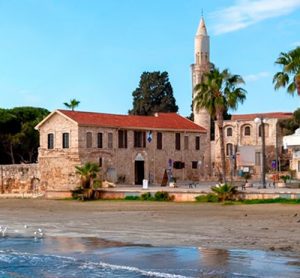
Famagusta sits on the eastern coast of Cyprus, surrounded by two miles of massive stone walls built when Venice controlled the Mediterranean. The old town contains ruins of over 300 churches from an era when the city rivaled Constantinople in wealth. During the Middle Ages, this port served as the gateway between Europe and the Levant, where merchants traded silks and spices in multiple languages. The deepest harbor in Cyprus made Famagusta essential for naval powers across eight centuries of occupation by Crusaders, Venetians, Ottomans, and the British. northcyprusinternational.com The city was founded around 274 BCE by Ptolemy II after an earthquake damaged nearby Salamis. Originally called Arsinoe after the Ptolemaic queen, the settlement grew from a small fishing village…

Read more
Ayia Napa Thalassa Museum

Ayia Napa Thalassa Museum

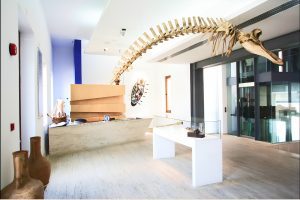
The Thalassa Municipal Museum stands in the center of Ayia Napa as the first museum dedicated entirely to maritime heritage in the Mediterranean region. Named after the Greek word for 'sea,' it opened in August 2005 to showcase the relationship between Cyprus and the surrounding waters. tripplanet.ru The museum operates under the direction of the Pierides Foundation, the Hellenic Institute for the Preservation of Nautical Tradition, and the Tornaritis-Pierides Marine Life Foundation. The building itself, constructed from marble, onyx, wood, and metal, features six levels where exhibits can be viewed from multiple angles, including underground display cases that visitors walk over. Maritime History Through the Ages The museum presents 7,000 years of Cypriot history, from the Neolithic period to Venetian…

Read more
​​Historic Cyprus Churches in Rural Landscapes

​​Historic Cyprus Churches in Rural Landscapes

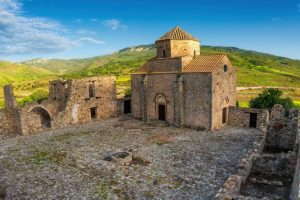
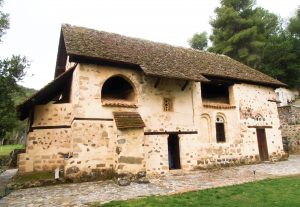
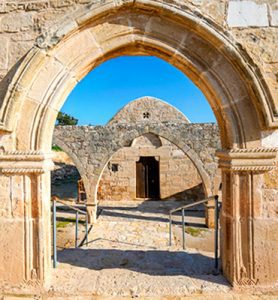
Historic churches scattered across Cyprus's Troodos Mountains preserve Byzantine and post-Byzantine frescoes within humble rural buildings, creating stark contrasts between simple exteriors and elaborate interior decorations. UNESCO recognized ten of these structures in 1985 and 2001 as the Painted Churches in the Troodos Region, acknowledging their outstanding testimony to Byzantine civilization and well-conserved examples of rural religious architecture. In-Cyprus They range from small churches whose rural architectural style is in stark contrast to their highly refined decoration, to monasteries such as that of St John Lampadistis. The churches date from the early 11th to early 16th centuries, spanning 500 years of artistic evolution influenced by Byzantine, Frankish, Venetian, and local Cypriot traditions. Steep wooden roofs with locally manufactured flat tiles…

Read more
Kyrenia Shipwreck Museum

Kyrenia Shipwreck Museum

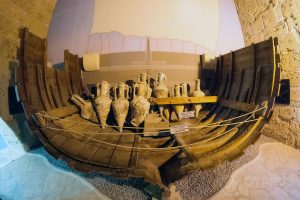
The Kyrenia Shipwreck Museum houses the oldest recovered Greek merchant ship in the world, located within Kyrenia Castle in the Turkish-occupied part of Cyprus. The vessel sank approximately one nautical mile off the coast around 300 BC during the era of Alexander the Great's successors. A local diving instructor named Andreas Cariolou discovered the wreck in November 1965 while collecting sponges at 33 meters depth during a storm. admiral-travel-com He lost the exact position and required over 200 dives before relocating it in 1967. The ship measures 15 meters in length and was constructed from Aleppo pine around 389 BC, sailing for about 80 years before its final voyage. visitncy-com The wreck represents a unique window into ancient Mediterranean trade,…

Read more
Agios Nikolaos tis Stegis

Agios Nikolaos tis Stegis

Agios Nikolaos tis Stegis, near Kakopetria in the Solea Valley, is one of Cyprus’s most important painted churches, preserving multiple phases of Byzantine frescoes inside a modest mountain building. Its steep timber roof, added for protection, helped these wall paintings survive centuries of harsh weather and shifting rule. This article explains how the church evolved, what the fresco layers show, and why the site remains a rare visual record of Byzantine life in Cyprus. Agios Nikolaos tis Stegis stands on the western bank of the Karkotis River, near the village of Kakopetria, at an elevation of roughly 700 meters. dreamstime-com This mountain setting explains one of the church’s most defining features. Unlike urban Byzantine churches, which display their domes openly,…

Read more
Ancient Amathus

Ancient Amathus

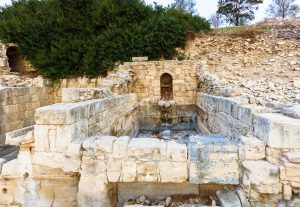
Amathus projected authority through stone: colossal vessels and carved reliefs that required skill, labour coordination, and long-term planning on a civic scale. wikimedia-org These monuments turned ritual spaces into political statements, using weight, repetition, and hybrid symbols to make royal legitimacy feel permanent and divinely protected. This article traces how vessels, reliefs, and funerary sculpture worked together to communicate power at Amathus without relying on lengthy inscriptions. Monumental Scale, Local Identity Located on Cyprus’s southern coast, Amathus developed as one of the island’s most distinctive city-kingdoms during the early first millennium BCE. Unlike other centres that aligned themselves quickly with Greek traditions, Amathus retained a strong indigenous identity, often described as Eteocypriot. This sense of cultural independence was not passive.…

Read more