Explore Cyprus with Our Interactive Map

Explore our top stories and discover ideas worth your time.

Cypriot Families Outdoors

Cypriot Families Outdoors

In Cyprus, outdoor family time is part of daily social life, with beaches, mountain picnic sites, and village squares functioning as extensions of the home. The island’s climate and geography make long, unhurried gatherings practical, and shared food, especially souvla, turns these outings into a routine that keeps generations connected. This article explains how the “siga-siga” rhythm shapes weekends and festivals, how sea and mountain settings create different kinds of togetherness, and why outdoor life remains one of Cyprus’s strongest family traditions. cyprus-com Family Comes First, Everywhere Cypriot society places family at its centre, and this is most visible when families gather outdoors. It is common to see grandparents, parents, children, and cousins arriving together at beaches or mountain picnic areas, setting up for a full day rather than a brief visit. These outings are rarely rushed. They are designed for presence, conversation, and shared time. Grandparents play an essential role. They are not passive observers but active participants, guiding children, preparing food, and sharing memories. Outdoor gatherings allow generations to mix naturally, reinforcing bonds that might otherwise weaken in a more individualised lifestyle. ikea-com The Meaning of “Siga-Siga” A defining feature of Cypriot outdoor life is the philosophy of “siga-siga”, meaning slowly, without hurry. Time outdoors is not organised around schedules or productivity. Instead, it follows the rhythm of…

Read more

Following Seasons of the Sea Cyprus Fishing

Following Seasons of the Sea Cyprus Fishing

Fishing in Cyprus has never been a matter of going out to sea and taking whatever is available. For centuries, coastal communities shaped their lives around the rhythms of the Mediterranean, fishing when conditions allowed, resting when they did not, and adjusting methods as fish moved, spawned, or disappeared. These seasonal patterns were not written rules but accumulated knowledge, refined through observation and necessity. Understanding traditional fishing in Cyprus means understanding how people learned to work with the sea rather than against it. fishingtourism.org A Relationship Built on Timing The Mediterranean is not a uniform or endlessly predictable environment. Around Cyprus, subtle seasonal changes in temperature, light, and currents strongly influence where fish gather and how active they become. Traditional fishers understood that the sea does not offer the same opportunities all year. Knowing when to fish mattered as much as knowing how. Fishing activity shifted with the calendar, but also with conditions that could not be reduced to dates alone. A warmer spring, an extended calm period, or a sudden change in wind could alter expectations. Over time, fishers learned to read these signs, developing an intuitive sense of timing that guided their decisions long before modern forecasting existed. Knowledge Passed by Observation, Not Instruction Seasonal fishing knowledge in Cyprus was never formalised in manuals. It was learned through…

Read more
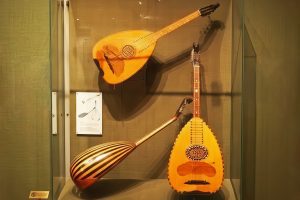
Laouto (Lute)

Laouto (Lute)

The Cypriot laouto is a plucked string instrument with a distinctive accompaniment style that plays a crucial rhythmic and harmonic role in the island's music, supporting both instrumental ensembles and vocal traditions while embodying strong regional identities. Its pear-shaped body and resonant tone allow for improvisation within ancient modal systems inherited from Byzantine and Ottoman influences, making it a cornerstone of Cypriot folk expression. This instrument not only preserves historical musical practices but also adapts to contemporary settings, raising interest in how such traditions endure in a modern world. nakas-com A Core Element of Cypriot Musical Heritage The laouto, a lute-like instrument central to Cypriot folk music, features a large pear-shaped body, long neck, and four strings tuned in a way that facilitates both melody and rhythm. Crafted from local woods like mulberry or walnut, with a soundboard often made from spruce or cedar for resonance, it produces a warm, bright sound that blends seamlessly with other instruments. In traditional settings, the laouto provides the backbone for dances, songs, and improvisations, its strings plucked with a plectrum to create driving rhythms and harmonic support. This role extends beyond mere backing; it shapes the music's texture, allowing vocalists or lead instruments like the violin to soar while maintaining a grounded, percussive foundation. Regional variations in playing styles—more ornate in the south,…

Read more