Explore Cyprus with Our Interactive Map

Explore our top stories and discover ideas worth your time.

How Infrastructure Overcomes Cyprus’s Rugged Terrain

How Infrastructure Overcomes Cyprus’s Rugged Terrain

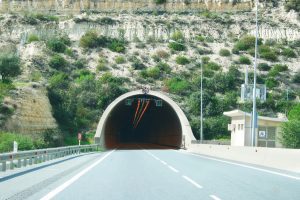
The Troodos Mountains cover roughly one-third of Cyprus, stretching across most of the western portion. Mount Olympus rises to 1,952 meters, making it the island's highest peak. These mountains formed through the collision of African and European tectonic plates, pushing ancient seabed rock formations skyward over millions of years. Climbfinder The landscape varies dramatically within short distances. Coastal areas sit at sea level while mountain villages perch at elevations exceeding 1,000 meters. Steep valleys cut through the terrain, with rivers carving gorges that modern roads must somehow cross. Wanderlog In 2011, heavy rainfall triggered 128 separate landslide incidents in Paphos, causing significant damage to roads and buildings. These geological realities force engineers to constantly assess slope stability when planning new infrastructure. The island's geology includes unstable clay-rich soils and fractured rock formations that shift during rainfall, creating ongoing maintenance demands. Building Motorways Through Mountains Cyprus developed its motorway network relatively recently compared to European neighbors. The A1, completed in October 1985, became the island's first motorway. Despite this late start, Cyprus now leads all European Union members with 36.8 kilometers of motorway per 100,000 inhabitants. The network totals approximately 7,206 kilometers of paved roads and 4,387 kilometers of unpaved routes. No toll roads exist anywhere on the island. The Public Works Department manages motorways and major roads, while municipalities handle…

Read more
Agricultural Landscapes of Cyprus

Agricultural Landscapes of Cyprus

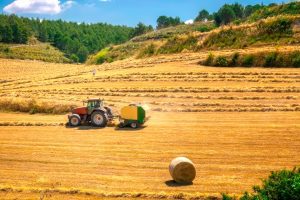
Olive Groves, Vineyards, and Citrus Orchards Acting as Semi-Natural Habitats for Birds, Insects, and Pollinators Agricultural Landscapes as Modified Ecosystems in Cyprus represent human-altered terrains where traditional farming practices blend with natural processes, creating semi-natural habitats that support diverse wildlife. These landscapes, dominated by olive groves, vineyards, and citrus orchards, cover significant portions of the island's rural areas, providing food, shelter, and breeding grounds for birds like the Sardinian warbler, insects such as wild bees, and pollinators including carpenter bees. They illustrate Cyprus's agricultural heritage, where centuries of cultivation have shaped ecosystems that balance productivity with biodiversity, offering resilience in a Mediterranean climate prone to drought and erosion. https://www.youtube.com/watch?v=EliOkuH_qcQ A Modified Agricultural Mosaic Agricultural landscapes in Cyprus form a patchwork of cultivated fields and groves that integrate human management with ecological functions, spanning lowlands and hillsides across the island. Olive groves, covering around 15,000 hectares, thrive on calcareous soils with trees spaced to allow undergrowth, while vineyards, approximately 7,300 hectares mainly in the Troodos Mountains, feature terraced slopes that prevent soil loss. Citrus orchards, concentrated in the Morphou and Famagusta areas, occupy about 3,000 hectares with dense plantings that create microclimates. These systems receive 300-500mm of annual rainfall, relying on irrigation from dams and boreholes, and support over 100 bird species, 200 insect taxa, and vital pollinators that enhance crop…

Read more

Solar Energy Projects in Cyprus

Solar Energy Projects in Cyprus

Cyprus has positioned itself as a European leader in solar energy adoption, capitalizing on one of the continent's strongest solar resources. The island receives between 2,500 and 3,500 sunshine hours annually, with coastal areas averaging 19 to 20 megajoules per square meter daily. This exceptional solar potential has driven two parallel developments: a world-leading adoption of solar thermal water heaters dating back to the 1960s, and a rapid expansion of photovoltaic installations over the past decade. Expedia-com By the end of 2024, Cyprus had installed 797 megawatts of solar photovoltaic capacity, with renewables generating approximately 25 percent of the island's electricity. These achievements demonstrate how geographic advantage combined with supportive policies can transform energy infrastructure, though serious challenges around grid management and energy storage threaten to undermine further progress. From Israeli Innovation to National Standard Solar water heating arrived in Cyprus in the late 1960s when Israeli companies introduced the technology to the island. The timing proved fortunate. Many rural areas lacked electricity infrastructure, and solar thermal systems offered a practical solution for hot water without requiring grid connections. The technology was remarkably simple: solar panels heat water that circulates through copper pipes into an insulated storage tank. Within two hours of installation, households had access to free hot water powered entirely by sunshine. This simplicity drove rapid adoption across…

Read more