Explore Cyprus with Our Interactive Map

Explore our top stories and discover ideas worth your time.

Lefkara Lace (Lefkaritika)

Lefkara Lace (Lefkaritika)

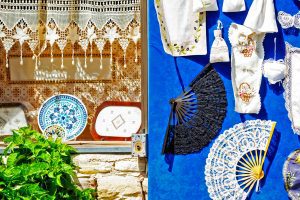
Lefkara Lace (Lefkaritika) is a world-renowned handmade lace tradition from Cyprus, distinguished by its geometric precision, white-on-white stitching, and centuries-old transmission through female artisans. Originating in the village of Lefkara, this craft blends intricate patterns that symbolize nature and life, creating delicate textiles prized for their elegance and cultural depth. Recognized by UNESCO as intangible cultural heritage in 2009, it represents Cyprus's enduring artisanal legacy, where women's hands have woven history into fabric for generations. unesco-org A Timeless Craft of Elegance and Skill Lefkara lace, known locally as Lefkaritika, embodies the island's rich textile heritage, a form of needlework where fine linen threads are drawn and stitched into intricate designs that appear almost ethereal against a white background. Produced exclusively in the villages of Pano and Kato Lefkara in the Larnaca District, this lace features geometric motifs inspired by nature, such as rivers, daisies, and almond blossoms, arranged in symmetrical patterns that require exceptional precision and patience. The craft's white-on-white aesthetic, using unbleached cotton or linen, creates subtle shadows and textures that play with light, giving pieces a luminous quality. This tradition not only produces beautiful items like tablecloths, doilies, and clothing but also serves as a cultural symbol of Cypriot ingenuity, where women's artistry has sustained communities through economic and social changes. The process begins with "dafna," a counted…

Read more
Cyprus Folk Dances And Weddings Festivals

Cyprus Folk Dances And Weddings Festivals

Cyprus folk dances represent living traditions that connect modern Cypriots to Byzantine heritage through choreographed movements, traditional costumes, and communal participation. These dances appear at weddings, religious festivals, harvest celebrations, and family gatherings, serving social functions beyond entertainment by reinforcing community bonds, facilitating courtship under supervision, and displaying cultural identity.  In-Cyprus The basic repertoire includes syrtos and kartzilaumas, performed as paired confrontational dances or circle formations, alongside specialty performances like tatsia where dancers balance wine-filled glasses on sieves, and drepani, the sickle dance demonstrating agricultural skills.  apetcher.wordpress.com Men and women traditionally danced separately, with social conventions restricting female dancing primarily to weddings while men performed at coffee shops, threshing floors, and festivals. The movements emphasize improvisation within communal constraints, with dancers competing to display skill while adhering to strict local standards that discourage excess or showiness that would violate collective norms. The Kartzilaumas Confrontational Tradition Kartzilaumas, the fundamental Cypriot dance from approximately 1910 through the 1970s, consists of six parts performed by confronted pairs of dancers, either two men or two women. The name derives from the Turkish word karşılama meaning greeting, reflecting the face-to-face positioning where dancers mirror and respond to each other's movements. The suite progresses through first, second, third, fourth, fifth or balos stages, with each part featuring slight variations in steps, tempo, and intensity. Between the…

Read more

Sheftalia Cypriot Street Food

Sheftalia Cypriot Street Food

Sheftalia is a traditional Cypriot sausage made from ground meat wrapped in caul fat, a thin membrane that surrounds animal organs. The mixture uses pork, lamb, or a combination of both, along with finely chopped onions, fresh parsley, and basic seasonings. trskinfo-ru The meat is formed into oval shapes and encased in the lacy caul fat before grilling over charcoal. Unlike standard sausages that use casings, sheftalia relies on this natural membrane that melts during cooking. This creates a crispy exterior while the fat bastes the meat from the outside, keeping it tender and moist inside. The name comes from the Turkish word "şeftali," which means peach, likely referring to the texture or appearance of the finished product. Historical Context Sheftalia appeared in Cyprus during the 19th century, when meat was expensive and cooks found ways to maximize every part of the animal. The caul fat, which might otherwise go unused, became the perfect wrapper to preserve moisture and enhance flavor. Two theories explain the name's origin: The first connects it to "şeftali kebabı," meaning peach kebab in Turkish, possibly describing the texture. The second attributes it to a Turkish Cypriot street vendor called Şef Ali, or Chef Ali, who supposedly created "Şef Ali kebabı," which eventually became known as sheftali or sheftalia. The dish reflects Ottoman influence on Cypriot…

Read more