Explore Cyprus with Our Interactive Map

Explore our top stories and discover ideas worth your time.

Cave of the 40 Martyrs Troodos

Cave of the 40 Martyrs Troodos

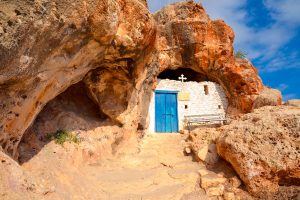
Hidden in the hills near Protaras, the Cave of the 40 Martyrs is a small chapel carved into limestone rock. This place brings together ancient faith, natural geology, and centuries of devotion in one simple, quiet space. blogspot-com The cave church, known locally as Ayioi Saranta, sits in a natural limestone formation on Fanou Hill. The name translates to the Forty Saints, a direct reference to the 40 Martyrs of Sebaste. This is not a grand cathedral with ornate decoration. It is a cave with a white wall, a blue door, and a stone dome above. Inside, rough rock walls hold a few icons and candles. The floor was paved, but otherwise the cave remains much as nature formed it. The Story of the 40 Martyrs The dedication of this cave connects to events that happened over 1,700 years ago. In 320 AD, forty Roman soldiers from the Legio XII Fulminata refused to abandon Christianity during the persecution under Emperor Licinius I. They were stationed near Sebaste in what is now Turkey. Their punishment was brutal. According to Bishop Basil of Caesarea, who documented the story in the 4th century, the soldiers were stripped naked and left to freeze on a frozen lake during a winter night. earlychristians-org One soldier gave in to the cold and ran to the warm…

Read more
Cyprus Carob Black Gold

Cyprus Carob Black Gold

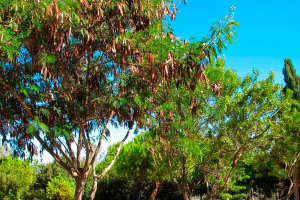
For centuries, the carob tree quietly underpinned life in Cyprus. Long before sugar, tourism, or modern industry reshaped the island, carob sustained rural families economically, nutritionally, and socially. Known locally as “black gold,” it was never glamorous, but it was dependable. In a land shaped by drought, invasion, and uncertainty, the carob tree endured, feeding people, funding villages, and anchoring tradition in the Cypriot landscape. A Tree Built for Hard Conditions The carob tree, Ceratonia siliqua, is perfectly adapted to Cyprus’s dry Mediterranean climate. Its deep roots draw moisture from far below the surface, allowing it to survive long summers without irrigation. Thick, leathery leaves reduce water loss, and slow growth produces a tree that can live for centuries. This resilience explains why carobs thrived where other crops failed. On rocky slopes and marginal land unsuitable for cereals, carob trees continued to produce reliable harvests. For rural communities, they were less a crop and more a form of insurance, offering stability in an unpredictable environment. Why It Was Called “Black Gold” The name "black gold" was not a poetic exaggeration. Ripe carob pods darken to a deep brown, almost black, and for generations, they ranked among Cyprus's most valuable exports. Even in years when wheat failed or rainfall was scarce, carob trees continued to bear fruit. For many families, a…

Read more

Lilac Clouds and Golden Berries

Lilac Clouds and Golden Berries

Imagine walking through a quiet Cypriot village in late April. The air carries a sweet, honey-like fragrance, and suddenly you notice a graceful tree covered in clouds of delicate lilac flowers. By autumn, the same tree hangs heavy with clusters of shiny yellow berries that glow like tiny lanterns against the green leaves. This is the chinaberry – a charming, fast-growing guest that has quietly become part of Cyprus’s everyday landscape. www.inaturalist.org The Bead-Tree in the Mahogany Family Chinaberry, Melia azedarach, belongs to the Meliaceae (mahogany) family – the same noble group that gives us true mahogany timber and the famous neem tree of India. The genus Melia is small, and this species is the most widely planted. Locally it is known as Μαυρομάτα (Mavromata – “dark eyes”, referring to the darker centres of the flowers) or Αγριοπασχαλιά (Agrio Paschalia – wild Easter lilac). The name perfectly captures its springtime beauty. From Asian Forests to Cypriot Gardens Native to southern Asia (from India and China to northern Australia), the chinaberry has been valued for centuries for its shade, fragrant flowers and useful seeds. It reached the Mediterranean as an ornamental in the 19th century and arrived in Cyprus probably during the British period, planted in gardens, villages and small-holdings. Today it is fully naturalised across the island but remains non-invasive…

Read more