Explore Cyprus with Our Interactive Map

Explore our top stories and discover ideas worth your time.

Salamis to Paphos Historic Routes

Salamis to Paphos Historic Routes

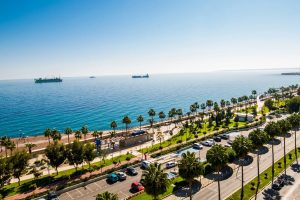
The story of Cyprus roads spans over 3,000 years, from Bronze Age trade routes to Roman highways and modern infrastructure. This network transformed the island from scattered settlements into a connected civilization, linking major cities and remote villages while facilitating trade across the Mediterranean. In-Cyprus-com The earliest roads in Cyprus date back to the Bronze Age, when the island served as a crucial trading hub between the Aegean, Egypt, and the Levant. Cyprus became the principal intermediary station for Mycenaean Greece in accessing Middle Eastern markets, largely due to its copper resources in the Troodos Mountains. By the end of the Hellenistic period, the road network encircled the entire island. During the Late Bronze Age between 1400 and 1150 BCE, trade with Minoan Crete and Mycenaean Greece increased dramatically. Archaeological evidence shows that Mycenaean pottery exports to Cyprus surged to over 3,500 vases across nearly two centuries. These goods traveled along established land routes that connected coastal ports to interior settlements. Historical Context The Romans transformed Cyprus's road infrastructure after annexing the island in 58 BCE. The first Roman roads were funded directly by the Emperor, though by the Severan dynasty the island had grown wealthy enough to finance its own construction. Roads converged on Salamis, the main economic center, with minor roads radiating outward to connect the surrounding agricultural…

Read more
Former Government House, Nicosia

Former Government House, Nicosia

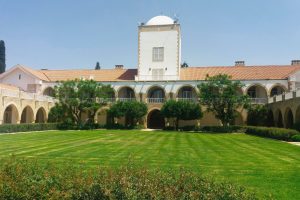
The Former Government House in Nicosia stands as a tangible reminder of British rule in Cyprus. Constructed during the colonial period, it served as the administrative center of British governance on the island. The building symbolized centralized control, colonial administration, and imperial authority during that era. While its function has changed over time, it continues to carry significant political and historical importance. Today, the building remains closely linked to state authority and modern governance. wikipedia-com Historical Background British administration in Cyprus began in 1878, when the island came under British control while remaining formally part of the Ottoman Empire. Cyprus was later annexed by Britain in 1914 and officially became a Crown Colony in 1925. During this period, British authorities worked to establish permanent administrative structures that reflected imperial governance and order. The Government House was constructed between 1933 and 1937 on the site of earlier Lusignan and Venetian fortifications, near the Cephane, or Quirini Bastion, of the Venetian walls. The location was chosen deliberately, placing colonial authority at the historic heart of Nicosia and asserting dominance over previous layers of rule. The building served as the residence of the British Governor and the administrative headquarters of the colonial government. Major political decisions, official ceremonies, and colonial policies were conducted here. It remained in use until British rule ended in…

Read more
Cyprus Youth Leadership Networks

Cyprus Youth Leadership Networks

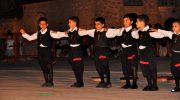
In Cyprus, civic life is often learned long before formal politics, through scouts, youth clubs, cultural groups, and community projects where responsibility has real consequences. These organisations teach leadership through practice, from organising festivals and rehearsals to running clean-ups and coordinating volunteers, so accountability becomes a habit rather than an idea. This article explains the main youth pathways into civic participation, how they build trust across communities, and why these structures remain one of Cyprus’s most resilient sources of social cohesion. vlagere-ru Civic learning outside the classroom Much of Cyprus's youth engagement happens through non-formal education. Unlike school curricula, these settings emphasise participation over instruction. Young people learn by organising events, managing groups, resolving disagreements, and working toward shared goals that have visible outcomes in their communities. cypruschessfederation-org Scout groups, youth clubs, and cultural associations function as practical training grounds. Leadership is learned by doing, whether that means coordinating a village festival, leading a patrol on a hike, or managing volunteers during a clean-up campaign. These experiences teach decision-making, accountability, and cooperation in ways that formal education rarely replicates. Scouting as a long-standing leadership pathway Scouting has existed in Cyprus for more than a century and remains one of the most structured systems for youth leadership development. Its model is built around gradual responsibility, where young members progress from participation…

Read more