Explore Cyprus with Our Interactive Map

Explore our top stories and discover ideas worth your time.

Sun-Chasing Yellow Blossoms of Cyprus

Sun-Chasing Yellow Blossoms of Cyprus

Springtime in Cyprus brings a splash of sunshine to rocky hills with Cyprus Rock-rose Helianthemum obtusifolium, a wildflower that's like a mini sunrose hugging the ground. This tough little plant, found only on the island, turns dry slopes into cheerful displays. But why does it follow the sun, and what ancient stories hide in its petals? www.inaturalist.org Just What Is This Sunny Cypriot Native? Helianthemum obtusifolium is a small, shrub-like wildflower from the rockrose family, the kind of plants that love sunny, dry spots around the Mediterranean. It's a perennial that pops up year after year, adding bright yellow touches to Cyprus's wild landscapes without needing much care. Roots in Cyprus's Ancient Earth and Botanical Tales Millions of years ago, as ancient seas dried up and tectonic shifts shaped Cyprus's rocky hills, plants like this one adapted to the island's isolation, evolving into unique species. First named in 1824 by French botanist Michel Félix Dunal, it draws from Greek words for "sun flower," reflecting how explorers in the 19th century uncovered Cyprus's floral secrets during Mediterranean expeditions. It's part of a broader story of how Cyprus, like a natural time capsule, preserved these gems from prehistoric times. A Fuzzy Bush with Crinkly Yellow Charms This low-growing plant reaches about 25-30 cm tall, with woody stems that spread out like a…

Read more
Cyprus Archaeological Museums

Cyprus Archaeological Museums

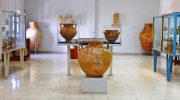
Most people think of museums as dusty repositories of old things, but Cyprus's archaeological museums are different - they're time machines that transform scattered ruins into coherent human stories. From Stone Age tools to sunken Roman ships, these institutions preserve not just artifacts but memory itself, showing how an island at the crossroads of three continents became a meeting place of cultures, faiths, and civilizations. Stepping inside, visitors encounter objects once held by real people whose lives weren't so different from the present day. Guardians of an Island's Memory Cyprus's archaeological museums form a network across the island, each one telling the story of its region while contributing to a larger narrative of continuity and change. These aren't just buildings with display cases - they're active archaeological institutions involved in excavations, conservation, research, and education. They preserve artifacts spanning over 11,000 years of human presence, from prehistoric farming villages to early Christian basilicas. wikipedia-com Rather than overwhelming visitors with monumental sculpture and temple columns alone, Cypriot museums emphasize daily life. Displays include pottery and cooking tools, jewelry and amulets, farming equipment and fishing gear, religious symbols and children's toys. This human-centered approach makes ancient life feel familiar rather than remote, showing that people across millennia shared the same basic needs, hopes, and fears we experience today. How Cyprus Learned to…

Read more
Traditional Cypriot Houses: Courtyards and Climate

Traditional Cypriot Houses: Courtyards and Climate

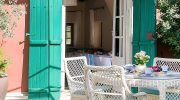
Traditional Cypriot houses were designed as working systems for heat, privacy, and shared family life, using local stone, inward-facing layouts, and courtyards that cooled and organised daily routines. Over centuries, builders added layers rather than replacing the whole, blending arches, timber projections, and flexible rooms into a coherent domestic logic that still feels practical today. This article explains how courtyards, materials, and spatial features like the kamara and sachnisi made these homes resilient, and why restoration efforts aim to preserve function as well as appearance. pinterest-com Architecture That Accumulated Over Centuries Cyprus rarely erased its past when new powers arrived. Instead, architectural ideas accumulated. Neolithic stone foundations, Byzantine masonry, Lusignan arches, Venetian defensive logic, and Ottoman wooden additions coexist within a single vernacular tradition. The traditional house became a quiet record of this continuity. Rather than following stylistic purity, Cypriot builders reused, adapted, and layered. A medieval structure might gain an Ottoman timber projection. A Venetian urban plan might absorb domestic courtyards. The result was not uniformity, but coherence. Houses responded to climate, density, and social needs long before sustainability became a concept. Living inward in a demanding environment One defining feature unites almost all traditional Cypriot homes: they turn inward. High stone walls and modest street-facing facades protected families from heat, dust, noise, and unwanted attention. Life unfolded inside,…

Read more