Explore Cyprus with Our Interactive Map

Explore our top stories and discover ideas worth your time.

Myrtle in Cypriot Hills

Myrtle in Cypriot Hills

Picture yourself on a sun-drenched slope in Cyprus, where the air carries a sweet, spicy fragrance whenever a breeze stirs the shrubs. Amid the rocky terrain and scattered pines, you encounter clusters of glossy green leaves dotted with delicate white flowers. This is the common myrtle, a quiet but ever-present companion in the island’s wild landscapes. www.inaturalist.org A Shrub Steeped in Mediterranean Grace Myrtus communis, known simply as the common myrtle, belongs to the Myrtaceae family a group that includes fragrant giants like eucalyptus and clove trees. In Cyprus it grows as an evergreen shrub or small tree, reaching up to five metres tall. It is one of only two species in its genus worldwide, the other being a rare Saharan relative. Here on our island it forms part of the classic maquis vegetation, that resilient scrubland of aromatic bushes that cloaks hillsides from sea level right up to 1,500 metres. Tales from Antiquity: Aphrodite’s Favourite Veil Long before botanists catalogued it, the myrtle was woven into the very birth story of Cyprus. Legend tells that when Aphrodite, the goddess of love and beauty, rose from the foaming waves near Paphos, she modestly hid her nakedness behind a myrtle bush. Ever since, the plant has been sacred to her. Ancient brides wore myrtle wreaths and bathed in myrtle-scented water on…

Read more
Cyprus Secret Endemic Spurges

Cyprus Secret Endemic Spurges

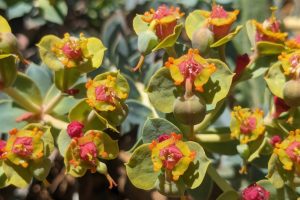
Tucked away in the rugged hills and mountains of Cyprus, two special plants — Euphorbia veneris and Euphorbia lemesiana — bring subtle beauty to rocky spots. These endemic spurges, found nowhere else, whisper stories of ancient gods and recent discoveries. But what makes them thrive in such harsh places, and why are they like hidden treasures waiting to be found? www.inaturalist.org What Are These Tough Little Island Natives? Euphorbia veneris and Euphorbia lemesiana are both small, wild plants from the spurge family, a group known for their milky sap and simple flowers. They're perennials that come back each year, perfectly adapted to Cyprus's dry, sunny landscapes, adding quiet charm to the island's wild corners. How Did These Plants Spring from Cyprus's Mythical and Fiery Past? The Euphorbia genus gets its name from Euphorbus, an ancient Greek doctor around 12 BC, whose name meant "well-fed" — a funny twist since these plants are toxic. Euphorbia veneris honors Venus (Aphrodite), the goddess born from Cyprus's seas, linking it to the island's mythical roots. Described in 1963, it's a nod to Cyprus's geological history from ancient ocean floors pushed up by tectonic forces. Euphorbia lemesiana, named after Limassol (Lemesos), was discovered more recently in 2015 as part of the Eastern Mediterranean spurge group, evolving in isolation amid the island's volcanic past. www.inaturalist.org Picture…

Read more

Reshef Warrior Protector

Reshef Warrior Protector

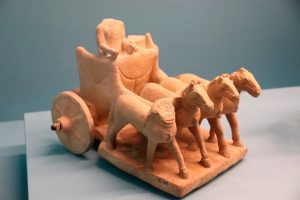
Reshef was a prominent deity in the ancient eastern Mediterranean, especially in regions such as Syria, Phoenicia, and the Levant. He was primarily associated with protection, warfare, and sometimes with plague or healing, reflecting a divine role that combined destructive and safeguarding powers. Unlike deities who represented abstract forces, Reshef was closely tied to the realities of conflict, defense, and communal survival. His worship reached Cyprus through networks of trade and migration, illustrating the island’s position as a meeting point between eastern and Aegean religious traditions. In Near Eastern belief systems, Reshef embodied the paradox of a deity who could both bring harm and prevent it. He was invoked to ward off danger, especially during times of conflict or epidemic threat. This dual nature made him a figure of respect and fear, a protector whose favor was essential for maintaining social stability. When his cult spread to Cyprus, these attributes resonated with local communities who faced similar concerns about security and survival. Arrival of Reshef in Cyprus The introduction of Reshef to Cyprus reflects the island’s long-standing cultural connections with the Levant. Maritime trade during the Bronze and Iron Ages facilitated not only the movement of goods but also the transmission of religious beliefs. Inscriptions and iconographic evidence from Cypriot sites show the presence of deities with clear Near Eastern…

Read more