Explore Cyprus with Our Interactive Map

Explore our top stories and discover ideas worth your time.

Hiking Trails in the Troodos Mountains

Hiking Trails in the Troodos Mountains

The Troodos Mountains offer Cyprus's most extensive network of hiking trails, with approximately 90 designated paths across the island's largest mountain range. Mount Olympus rises to 1,952 meters as the highest peak, surrounded by dense forests of black pine, Cyprus cedar, and golden oak. lonelyplanet-com The Department of Forests manages most trails through state forests, while local communities maintain paths in their jurisdictions. These trails range from easy 30-minute family walks to challenging 14-kilometer circuits that require several hours to complete. The Troodos region contains 64 percent of Cyprus's endemic flora despite covering only 12 percent of the island's territory, with 37 plant species found nowhere else on Earth. This combination of dramatic mountain scenery, unique biodiversity, and well-maintained paths has made Troodos a premier destination for hikers seeking alternatives to Cyprus's beach-focused tourism. The Geological Foundation That Shapes the Trails The Troodos Mountains represent a rare geological phenomenon where scientists can examine ocean floor and upper mantle rocks without descending to the seabed. These mountains formed 92 million years ago at the bottom of the ancient Tethys Sea at a depth of 8,000 meters. Tectonic movements caused by the collision between African and Eurasian plates pushed Troodos upward starting 15 million years ago. UNESCO recognized this extraordinary geological importance by designating Troodos as a Geopark in 2008. pinterest-com This…

Read more
Cyprus Railway Museum

Cyprus Railway Museum

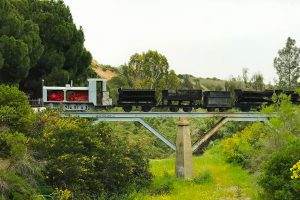
The museum occupies the original Evrychou railway station, a sandstone building constructed in 1906 in the foothills of the Troodos Mountains. The station operated as the western terminus of the Cyprus Government Railway from June 14, 1915, until December 31, 1931, when the final five miles of the railway were abandoned due to financial losses. atlasobscura-com After the railway closed completely in 1951, the building served various purposes, first as a health center and later as a forest workers' dormitory. EOKA fighters damaged and burned the building during their campaign against British rule, as the railway represented colonial infrastructure. The Department of Antiquities restored the station between 2003 and 2012, with new tracks laid in 2010 to 2012 in a Y-shape formation covering about 100 meters. The museum officially opened in September 2016, becoming Cyprus's only railway museum. British expats and local railway enthusiasts contributed significantly to the museum's development, and their contributions are acknowledged in the entrance hall. Historical Background The Cyprus Government Railway operated from October 21, 1905, to December 31, 1951, covering 76 miles across the island. British High Commissioner Sir Garnet Wolseley proposed building a railway when Britain took control of Cyprus in 1878, but uncertainty about how long Britain would govern the island delayed the project for decades. Frederick Shelford submitted a feasibility study on…

Read more

House of Eustolios In Cyprus Roman Villa Mosaics

House of Eustolios In Cyprus Roman Villa Mosaics

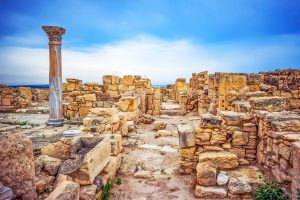
Perched on the southern cliffs of ancient Kourion near modern Limassol, the House of Eustolios stands as one of Cyprus's most fascinating archaeological sites. This late 4th-century complex blends Roman luxury with early Christian devotion, creating a unique window into a transformative period in Mediterranean history. britonthemove-com Originally built as a private villa, the structure evolved into a public recreation center that served Kourion's citizens for over two centuries. Historical Background traveladventures-org The House of Eustolios rose from the ruins of catastrophe. In 365 AD, a massive earthquake devastated the eastern Mediterranean, striking Kourion with particular force. The ancient city, which had thrived as one of Cyprus's major kingdoms since the 13th century BC, lay in rubble. Buildings collapsed, infrastructure crumbled, and the population struggled to survive among the wreckage. Twenty-five years after the disaster, Kourion remained in a dismal state. Into this scene returned Eustolios, a wealthy Christian citizen who had been away from his hometown. Shocked by the continued suffering of his fellow citizens, he made a remarkable decision. Rather than simply rebuild for himself, Eustolios constructed an elaborate complex on the ruins of an earlier Roman villa and donated the entire facility for public use. The timing proved significant. Emperor Theodosius I had just made Christianity the official religion of the Roman Empire in 380 AD. Eustolios…

Read more