Explore Cyprus with Our Interactive Map

Explore our top stories and discover ideas worth your time.

Ethnographic Costume Museum (Lefkara)

Ethnographic Costume Museum (Lefkara)

The Museum of Traditional Embroidery and Silversmith-work in Lefkara preserves Cyprus's most celebrated handicrafts within the walls of a 19th-century mansion. Located in the village of Pano Lefkara, approximately 45 kilometres from both Larnaca and Limassol, this museum documents the artisan traditions that sustained the community and brought international recognition to a small mountain settlement. tripadvisor.com Historical Background The museum occupies the House of Patsalos, named after the wealthy family that once owned this substantial white limestone residence. The house itself represents the prosperity that embroidery and silversmithing brought to Lefkara during its economic peak. The Patsalos family began accumulating wealth in the mid-19th century under Michalis Patsalos, who established the family's various business interests. Beyond producing Lefkara lace and metalwork, the family engaged in pottery production and ran both public and private educational institutions, including a music school. In 1983, the Department of Antiquities acquired the property through a donation from businessman Stelios Ioannou. Following extensive restoration work, the museum officially opened to the public in August 1988. The building comprises several rooms constructed during different periods spanning the 19th to early 20th centuries, creating a physical timeline of architectural evolution in prosperous Lefkara households. Inside the Museum Rooms The ground floor recreates traditional village life through a rural-style dining room and storeroom. Large earthenware jars stand alongside agricultural…

Read more
Kition Cyclopean Walls

Kition Cyclopean Walls

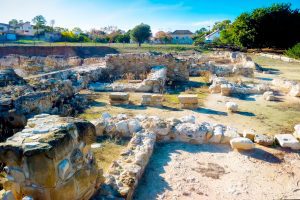
A sacred complex in Kition constructed with massive stone blocks, housing temples dedicated to Astarte and Melqart, serving the Phoenician community. larnakaregion-com The Cyclopean Walls and Temples of Kition represent a cornerstone of Cyprus's ancient heritage, where monumental architecture and religious devotion intertwined to form a vibrant sacred precinct in the heart of the island's earliest urban center. Located in modern Larnaca, ancient Kition was one of Cyprus's ten city-kingdoms, thriving as a hub of trade, culture, and spirituality from the Late Bronze Age onward. This complex, characterized by its imposing walls built from enormous limestone blocks, enclosed a series of temples primarily dedicated to the Phoenician deities Astarte, goddess of fertility and war, and Melqart, a protector figure akin to Heracles. Serving the Phoenician settlers who dominated the city from the 9th century BC, the site facilitated rituals, offerings, and communal gatherings that reinforced social bonds and economic ties across the Mediterranean. As a testament to Cyprus's role in bridging Eastern and Western civilizations, Kition's sacred spaces evolved over centuries, blending indigenous Cypriot traditions with influences from Mycenaean Greece, Phoenicia, and beyond, offering modern visitors a window into the island's multifaceted past. A Sacred Complex in Ancient Kition The Cyclopean Walls and Temples of Kition formed the defensive and spiritual core of the ancient city, sprawling across several hectares…

Read more
A Tapestry of Cyprus Sacred Spaces

A Tapestry of Cyprus Sacred Spaces

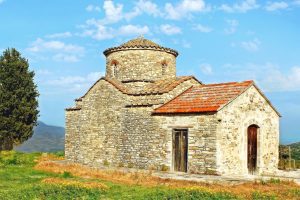
Most visitors to Cyprus know about its Greek Orthodox churches and ancient Christian monasteries, but the island's religious story is far richer and more complex. For millennia, Cyprus has been home to Jewish communities, Muslim mosques, Armenian and Maronite Christians, Sufi mystics, and Latin Catholic cathedrals - each faith leaving monuments that testify to survival, migration, and remarkable coexistence. orthodoxtimes.com Walking through Cyprus's cities means encountering this layered religious landscape where synagogues stand near mosques, Gothic cathedrals became prayer halls, and sacred springs were shared by people of different beliefs. Where Many Faiths Met and Mingled Cyprus has never belonged to a single religious tradition. Its position at the meeting point of Europe, Asia, and Africa made it a crossroads not only for trade and armies but also for belief systems. Long before Orthodox Christianity became dominant in the medieval period, Cyprus hosted Jewish traders and craftsmen, pagan mystery cults, and early Christian congregations mentioned in the New Testament. Later waves brought Islamic institutions during Ottoman rule, Armenian refugees fleeing persecution, Maronite Christians migrating from Lebanon and Syria, and Western European Crusaders establishing Latin Catholic strongholds. Rather than existing as isolated enclaves, these religious minorities participated actively in Cyprus's economy, diplomacy, and urban life. Their monuments - synagogues, mosques, churches of different denominations, and Sufi lodges - aren't marginal curiosities…

Read more