Explore Cyprus with Our Interactive Map

Explore our top stories and discover ideas worth your time.

Deneia Necropolis Cyprus Bronze Age Site

Deneia Necropolis Cyprus Bronze Age Site

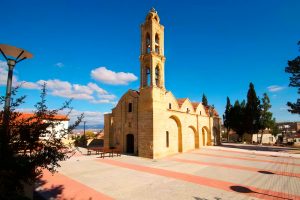
Just southeast of the modern village of Deneia in the Nicosia district lies one of Cyprus's most significant Bronze Age burial grounds. This ancient necropolis contains over 1,250 tombs that document nearly a thousand years of funerary practice, from approximately 2500 BCE through 1650 BCE, making it among the most extensively used cemeteries in prehistoric Cyprus. cyprusisland.net The Deneia necropolis represents an extraordinary concentration of chamber tombs carved into natural rock during the Early and Middle Bronze Age periods. Unlike many smaller cemeteries scattered across Cyprus that served individual villages, Deneia appears to have functioned as a regional burial ground that drew communities from a wider area. The tombs follow the standard Bronze Age design, with a dromos or entrance passage leading down to one or more roughly circular burial chambers. These chambers typically held multiple interments as families reopened tombs over generations to add new dead. Grave goods found at the site include red-polished pottery, copper tools and weapons, jewelry made from gold and precious stones, and clay figurines. Historical Background The people who used this cemetery lived during a critical transformation in Cypriot history. Around 2500 BCE, newcomers from Anatolia introduced new pottery styles and burial customs to Cyprus. These immigrants are identified by archaeologists as the Philia Culture, and they brought with them the knowledge to exploit…

Read more
Ancient Kourion in Cyprus

Ancient Kourion in Cyprus

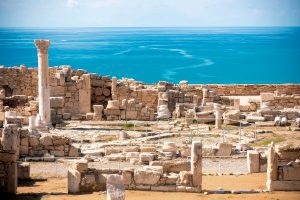
Ancient Kourion sits on a limestone cliff nearly 100 meters high along the southwestern coast of Cyprus, overlooking Episkopi Bay. The site was first inhabited during Neolithic times, with the earliest evidence dating back to 4,500 to 3,900 BC, but the town itself was founded in the 13th century BC by the Argives. orangecyprushome.com The city-kingdom was built on the hills of the area and overlooked and controlled the fertile valley of the river Kouris. Archaeological finds suggest that Kourion was associated with the Greek legend of Argos of Peloponnese, and its inhabitants believed they were descendants of Argean immigrants. The site stands as one of Cyprus's most impressive archaeological areas, preserving remains that span from the Bronze Age through the Byzantine period. The ruins tell stories of prosperity, political intrigue, natural disaster, and religious transformation. Historical Background According to Herodotus, Kourion was founded by Argives in the Late Bronze Age and was named for Koureus, the son of Cinyras, the first king of Cyprus. The Assyrian kings Sargon II and Esarhaddon mentioned Damasu, king of Kuri, in their records. During the Cypriot uprising against Persia in the 5th century BC, its king Stasanor betrayed his country, lending his support and troops to the Persians. However, Kourion later supported Alexander the Great's fight against the Persians in the 4th century…

Read more

Nea Paphos Harbor

Nea Paphos Harbor

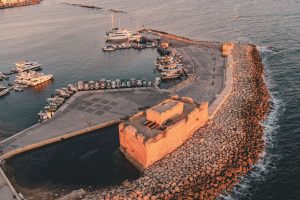
Nea Paphos emerged as one of the most strategically important harbor cities in the ancient Mediterranean. Founded in the late 4th century BC on the southwest coast of Cyprus, this planned city replaced the older settlement of Palaipaphos and quickly became the island's capital. touriste-ru The harbor served dual purposes as both a major naval base and a thriving commercial port, connecting Egypt with the broader Mediterranean world. Today, the archaeological remains spread across 100 hectares near modern Kato Paphos, offering a window into ancient maritime power. Historical Background King Nikokles, the last monarch of Palaipaphos, founded Nea Paphos around 320 BC. After Alexander the Great's death, Cyprus fell under Ptolemaic Egyptian control in 294 BC, where it remained for over 250 years. The site offered exceptional advantages. The city occupied a peninsula between two hills, with a natural bay providing shelter from storms. Strabo reported that the harbor offered protection from winds in all directions. Nearby forests supplied abundant cedar wood for shipbuilding, while the location sat on the critical maritime route between Rhodes and Alexandria. tripadvisor-ru Urban planners designed Nea Paphos according to the Hippodamian grid system, heavily influenced by Alexandria. Regular streets intersected at right angles, creating rectangular blocks called insulae. Defensive walls separated the urban area from the mainland, while public buildings faced the large harbor.…

Read more