Explore Cyprus with Our Interactive Map

Explore our top stories and discover ideas worth your time.

Traffic Flow and Everyday Driving Culture

Traffic Flow and Everyday Driving Culture

Cyprus follows left-hand traffic, a direct inheritance from British colonial rule that ended in 1960. This means vehicles drive on the left side with steering wheels positioned on the right. The system remains unchanged despite the island's location in a region where most countries drive on the right. The cost of transitioning the entire transportation infrastructure would exceed €2 billion according to government estimates, making any change economically unfeasible. argophilia-com For British, Irish, and Australian visitors, this familiar setup offers immediate comfort. However, drivers from right-hand traffic countries face a genuine adjustment period. Research shows that drivers require 3-5 days to fully adapt their spatial processing when switching traffic sides. The challenge extends beyond steering to include automatic behaviors like mirror checking and turn judgment. Speed Limits and Road Infrastructure The speed limit structure in Cyprus is straightforward. Urban areas have a 50 km/h limit, while 80 km/h applies to major roads outside cities. Motorways allow a maximum of 100 km/h with a minimum requirement of 65 km/h. Villages typically enforce a 30 km/h limit with traffic calming measures. carandmotor-gr Road quality varies significantly across the island. Motorways and major urban routes receive excellent maintenance with clear signage in both Greek and English. However, rural and mountain roads present challenges, including potholes, narrow passages, and deteriorated surfaces in remote areas.…

Read more
Vouni Palace in Cyprus

Vouni Palace in Cyprus

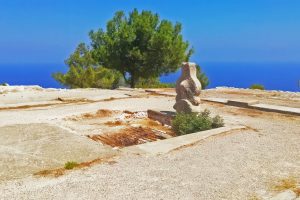
Perched on a rocky hilltop 250 meters above the Mediterranean Sea, the ruins of Vouni Palace stand as a remarkable architectural anomaly in ancient Cyprus. This site represents the only known example of Persian palace design not just on the island but throughout the entire eastern Mediterranean, built during one of history's most intense power struggles between two great civilizations. visitnorthcyprus-com Historical Background Around 500 BC, Cyprus found itself caught in the crossfire of the great wars between the Persian Empire and the Greek city-states. The island's ten kingdoms split into opposing camps, with some supporting the Persians and others backing the Greeks. This division led to bitter conflicts across Cyprus, on both land and sea. google-com The ancient city of Soli, located near modern Lefke on the northwest coast, firmly supported the Greek cause. This position threatened Marion, a nearby pro-Persian kingdom situated close to present-day Polis. King Doxandros of Marion, a ruler loyal to the Persian Empire, decided to take action against his pro-Greek neighbor. In 500 BC, Doxandros established a military settlement on a strategic hill overlooking Soli. The location was perfect for surveillance. From this elevated position, Persian forces could monitor all sea traffic along the coast and observe every activity in the city below. What began as a simple military outpost would transform into one…

Read more
Night Culture in Cyprus – Dining and Events

Night Culture in Cyprus – Dining and Events

Cyprus transforms dramatically when the sun sets over the Mediterranean. The island's night culture combines traditional tavernas, modern beach clubs, live music venues, and cultural events that operate well past midnight. Government regulations require all nightlife establishments to close by 3:00 AM, with restaurants and bars shutting at 1:00 AM. A noise curfew from 10:00 PM protects residential areas, ensuring entertainment zones remain distinct from living quarters. This structure creates concentrated nightlife hubs in coastal cities and tourist areas where locals and visitors gather for evening entertainment. Historical Context Traditional Cypriot evening culture centered on family gatherings and village celebrations for centuries. The taverna, a cornerstone of social life, provided spaces where communities shared meals, stories, and music. After Cyprus gained independence in 1960, urbanization and tourism development gradually transformed these customs into more diverse offerings. The 1970s and 1980s saw coastal areas develop tourism infrastructure, particularly in Ayia Napa, Limassol, and Paphos. International visitors brought demand for nightclubs, cocktail bars, and entertainment that extended beyond traditional dinner hours. By the 1990s, Ayia Napa had emerged as a major party destination, attracting European clubbers with its concentration of venues and world-class DJs. The 2000s brought sophistication to Cyprus nightlife. Limassol developed upscale marina restaurants and rooftop bars that catered to a more affluent demographic. Paphos Harbor became a refined alternative…

Read more