Explore Cyprus with Our Interactive Map

Explore our top stories and discover ideas worth your time.

Traditional Building Materials of Cyprus Villages

Traditional Building Materials of Cyprus Villages

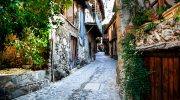
Since the arrival of the first permanent settlers of Cyprus during the early phase Neolithic, people have been living in houses made of stone and mud brick. The island's vernacular architecture uses local materials such as stone, clay, and wood, with traditional Cypriot houses featuring thick stone walls, small windows, and flat or pitched roofs designed to keep interiors cool in the hot Mediterranean climate. These materials came directly from the landscape, with builders quarrying limestone from hillsides, digging clay from valley floors, and cutting timber from mountain forests. The reliance on local materials created regional variations in building styles while establishing construction methods that persisted for millennia until modern industrialization introduced concrete, steel, and imported materials. Stone as the Foundation of Village Architecture Buildings were constructed with locally available materials, primarily stone for foundations and lower courses. The main materials include limestone, sandstone, shell rock, and granite, with structures reaching two or three stories high depending on the type of stone used. Limestone dominated as the most common building stone across Cyprus due to its abundance and relative ease of quarrying and shaping. Kafkalla, a type of soft limestone, is easy to work with and has been extensively used in traditional Cypriot architecture, particularly for constructing houses, churches, and public buildings. The porous nature of kafkalla allows for efficient…

Read more

Limassol Archaeological Museum

Limassol Archaeological Museum

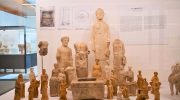
The Limassol Archaeological Museum houses a rich collection spanning 9,000 years of human civilization in southern Cyprus. Founded in 1948 and originally housed in Limassol Castle, the museum moved to its current purpose-built structure in 1975. The building consists of two long rooms joined together by two transversal spaces, covering 3,000 square meters. The exhibits focus on discoveries from the Limassol district, particularly from the ancient kingdoms of Kourion and Amathous. Unlike the Cyprus Museum in Nicosia, which displays material from across the entire island, this regional facility concentrates on southern coastal culture and trade. The collection includes pottery, jewelry, sculptures, tools, and everyday objects that provide insight into how ancient Cypriots lived in this fertile and strategic region. Entry is free, making the museum accessible to all visitors. Historical Background The museum displays remains of pygmy elephants and pygmy hippopotamus found at the Pre-Neolithic site of Akrotiri Aetokremnos, the earliest known site in Cyprus. These extinct animals lived on the island before humans arrived, providing evidence of Cyprus's unique ecosystem during the Ice Age. The pygmy species evolved smaller body sizes due to island isolation, a common evolutionary pattern. Tools and pottery from the Aceramic Neolithic I period through the Late Bronze Age demonstrate how early settlers developed agriculture and craft technologies. Objects excavated from Chillourokampos in Parekklisia, Sotira,…

Read more
Gefyria Natural Trail

Gefyria Natural Trail

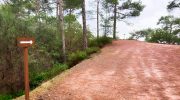
The Gefyria Natural Trail stands as a hidden jewel within the dense emerald canopy of the Paphos Forest. This path winds through a landscape where history and nature merge into one seamless experience. It follows the ancient routes that camel caravans once used to transport copper across the island. Every step reveals the architectural brilliance of the Venetian era through three iconic stone bridges. The air here carries the scent of pine and wild herbs. It provides a sanctuary for those who seek solace away from the coastal crowds. Travelers walk beside clear streams that flow year-round. This journey offers a profound connection to the silent past of Cyprus. Trail Overview Location: Paphos Forest, near Vretsia and Pera Vasa villages, Cyprus. Distance: 7.5 miles (12 km) for the full linear route. Route Type: Point-to-Point (Linear). Difficulty: Moderate. Elevation Gain: 320 meters. Duration: 3.5 – 4 hours. Best Time to Visit: March–May or September–November. Terrain: Forest floor, dirt tracks, and occasional rocky slopes. The Historical Significance of the Venetian Bridges The Gefyria Natural Trail derives its name from the magnificent stone structures that span the Platys River. These bridges date back to the 15th and 16th centuries when the Venetians ruled the island. They served as vital links for the trade of ore and timber from the Troodos Mountains to the…

Read more