Explore Cyprus with Our Interactive Map

Explore our top stories and discover ideas worth your time.

Ancient Idalion Dali

Ancient Idalion Dali

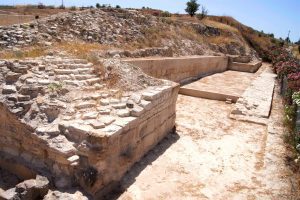
Idalion was an ancient city in Cyprus, in modern Dali, Nicosia District. The city was founded on the copper trade in the 3rd millennium BC. Located in the fertile Gialias valley between two hills, this powerful kingdom left behind one of the most important historical documents in ancient Cyprus, a bronze tablet that recorded a social welfare system 2,500 years old. wikimedia.org1 The ancient city was located in the fertile Gialias valley and flourished there as an economic centre due to its location close to the mines in the eastern foothills of the Troodos Mountains and its proximity to the cities and ports on the south and east coast.Idalion prospered and became so wealthy that it was listed as the first among the ten Cypriot kingdoms on the prism of the Assyrian king Esarhaddon (680-669 BC). This ranking shows how important the city was in the ancient Mediterranean trade network. Historical Background The ancient city was founded by the Achaean hero of the Trojan war, Chalcanor, descendant of Teucer, the founder of Salamis. This foundation legend connects Idalion to the wave of Greek colonization that followed the Bronze Age collapse around 1200 BC. The worship of Apollo Amyclae reveals that the Greeks came from Laconia. This detail shows that the settlers originated from the Peloponnese in southern Greece, bringing their…

Read more
Vouni Necropolis

Vouni Necropolis

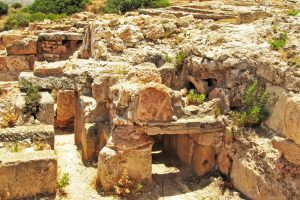
On gentle slopes near the medieval abbey of Bellapais in the Turkish-occupied part of Cyprus sits an extensive Bronze Age cemetery known to the world almost exclusively through its dead. The Vounous necropolis contains 164 rock-cut chamber tombs that served an unknown settlement for nearly five centuries, from approximately 2500 to 2000 BCE, preserving one of the finest collections of prehistoric pottery ever discovered on the island. wikipedia-org Vounous presents archaeologists with an unusual challenge. Despite extensive searches that began in the 1930s and continue sporadically today, the settlement that used this cemetery has never been located. The site sits somewhere between the villages of Ozanköy and Çatalköy in the Kyrenia region, but the homes, workshops, and temples of the people buried here remain hidden beneath modern development or agricultural land. Historical Background The tombs at Vounous date to the Early and Middle Bronze Age, a period when Cyprus underwent major transformation. Around 2500 BCE, settlers from Anatolia arrived on the island, bringing new pottery styles, copper-working technology, plow agriculture, and the warp-weighted loom. These immigrants, identified as the Philia Culture, moved quickly to the foothills of the Troodos Mountains to exploit the rich copper deposits. shutterstock-com The people who used Vounous cemetery were part of this cultural shift. Their pottery shows clear Anatolian influence, particularly the distinctive Red Polished…

Read more
Troodos Lizard

Troodos Lizard

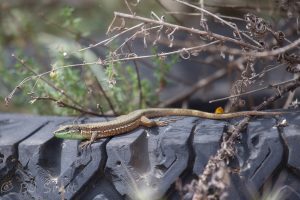
In the rugged heights of Cyprus' Troodos Mountains, a nimble creature darts across sun-warmed rocks, its scales glinting like hidden emeralds. This is the Troodos lizard, Phoenicolacerta troodica, an endemic jewel of the island's wildlife. Let’s explore this shy resident, a survivor of ancient landscapes, and discover why it captivates those who seek it out. A name Phoenicolacerta prefixes the Latin word, Phoenice, meaning "Phoenicia", the coast of the Levant, where most of the species of these lizards are found, with lacerta, "a lizard". The specific name refers to the type locality being in the Troodos Mountains of Cyprus. www.inaturalist.org A Mountain Marvel Emerges The Troodos lizard is a small reptile native only to Cyprus, thriving in the cool, forested slopes of the Troodos range. It's a member of the Lacertidae family, or true lizards, known for agile ground-dwellers, and represents one of the island's unique evolutionary tales. Imagine a lizard perfectly attuned to misty peaks and rocky crevices – that's our subject, a quiet emblem of Cyprus' isolated biodiversity. In Greek it is called Σαύρα του Τροόδους (Saura tou Troodus) which simply means The Troodos lizard. www.inaturalist.org From Ancient Seas to Island Peaks The story of the Troodos lizard begins millions of years ago, when Cyprus emerged from the Mediterranean's turbulent geological past. As the island formed through tectonic…

Read more