Explore Cyprus with Our Interactive Map

Explore our top stories and discover ideas worth your time.

Cyprus War Resistance Stories

Cyprus War Resistance Stories

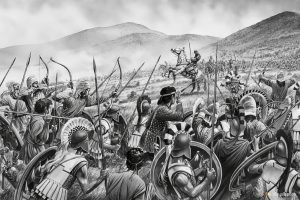
Cyprus has witnessed countless conflicts throughout its 10,000 years of human habitation. The island's position at the crossroads of three continents made it a prize worth fighting for, and its people developed a long tradition of resistance against foreign rule. dzeninfra-ru From ancient sieges to modern independence struggles, Cyprus has been repeatedly conquered, defended, and fought over by armies ranging from Persian emperors to British colonial forces. These conflicts left deep marks on the landscape and shaped the national character of both Greek and Turkish Cypriots who call the island home. Historical Background Cyprus experienced its first major conflicts during the ancient period when Persian forces conquered the island's city kingdoms in the 6th century BC. The Greek population survived Persian rule and later came under Alexander the Great's control, followed by Ptolemaic Egypt and then Rome. Each conquest brought armies, resistance, and sometimes devastation. nano-banana The Arab invasions beginning in 649 AD marked one of the most unusual periods in Cypriot history. Arab forces under Muawiyah I sailed from Alexandria with a large fleet and conquered the capital Salamis-Constantia after a brief siege. During this expedition, Umm-Haram, a relative of the Prophet Muhammad, fell from her mule near Larnaca's Salt Lake and died. She was buried there, and the Hala Sultan Tekke shrine was built in her honor. Arab…

Read more
Trahanas Preserving In Cyprus

Trahanas Preserving In Cyprus

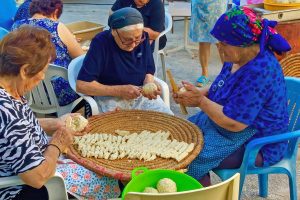
Trahanas is not a soup in the usual sense. It is a solution shaped by necessity. Long before refrigeration, electricity, or supermarkets, Cypriot households needed a way to preserve the abundance of summer milk and turn it into nourishment for the colder, damp months that followed. Trahanas emerged as a practical answer to this challenge, turning perishable ingredients into a stable, nourishing reserve. homeiscyprus-com Tangy, filling, and deeply comforting, trahanas sits at the centre of Cyprus’s food memory not because it is impressive, but because it worked when it mattered most. To eat trahanas is to taste the logic of survival shaped by land, climate, and patience. A Food Designed to Last, Not Impress At its core, trahanas is made from sour sheep’s or goat’s milk combined with cracked wheat, often called konari in Cyprus. The mixture is fermented, cooked, shaped, and then dried under the summer sun until it becomes hard and shelf-stable. Months later, it is rehydrated with water or stock and slowly boiled into a thick, warming soup. cyprusfoodmuseum-com This transformation is the point. Trahanas begins as liquid, becomes solid, and returns to liquid again, with every stage designed to extend life rather than enhance appearance. The rough texture, the sourness, and the muted colour are not flaws. They are evidence of a food designed with intention,…

Read more

Former Government House, Nicosia

Former Government House, Nicosia

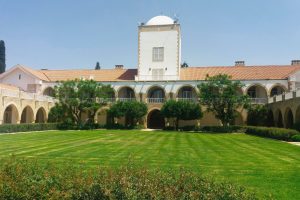
The Former Government House in Nicosia stands as a tangible reminder of British rule in Cyprus. Constructed during the colonial period, it served as the administrative center of British governance on the island. The building symbolized centralized control, colonial administration, and imperial authority during that era. While its function has changed over time, it continues to carry significant political and historical importance. Today, the building remains closely linked to state authority and modern governance. wikipedia-com Historical Background British administration in Cyprus began in 1878, when the island came under British control while remaining formally part of the Ottoman Empire. Cyprus was later annexed by Britain in 1914 and officially became a Crown Colony in 1925. During this period, British authorities worked to establish permanent administrative structures that reflected imperial governance and order. The Government House was constructed between 1933 and 1937 on the site of earlier Lusignan and Venetian fortifications, near the Cephane, or Quirini Bastion, of the Venetian walls. The location was chosen deliberately, placing colonial authority at the historic heart of Nicosia and asserting dominance over previous layers of rule. The building served as the residence of the British Governor and the administrative headquarters of the colonial government. Major political decisions, official ceremonies, and colonial policies were conducted here. It remained in use until British rule ended in…

Read more