Explore Cyprus with Our Interactive Map

Explore our top stories and discover ideas worth your time.

Ancient Idalion Dali

Ancient Idalion Dali

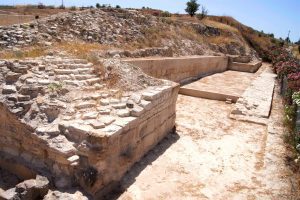
Idalion was an ancient city in Cyprus, in modern Dali, Nicosia District. The city was founded on the copper trade in the 3rd millennium BC. Located in the fertile Gialias valley between two hills, this powerful kingdom left behind one of the most important historical documents in ancient Cyprus, a bronze tablet that recorded a social welfare system 2,500 years old. wikimedia.org1 The ancient city was located in the fertile Gialias valley and flourished there as an economic centre due to its location close to the mines in the eastern foothills of the Troodos Mountains and its proximity to the cities and ports on the south and east coast.Idalion prospered and became so wealthy that it was listed as the first among the ten Cypriot kingdoms on the prism of the Assyrian king Esarhaddon (680-669 BC). This ranking shows how important the city was in the ancient Mediterranean trade network. Historical Background The ancient city was founded by the Achaean hero of the Trojan war, Chalcanor, descendant of Teucer, the founder of Salamis. This foundation legend connects Idalion to the wave of Greek colonization that followed the Bronze Age collapse around 1200 BC. The worship of Apollo Amyclae reveals that the Greeks came from Laconia. This detail shows that the settlers originated from the Peloponnese in southern Greece, bringing their…

Read more
Mountain Traditions As A Living Heritage

Mountain Traditions As A Living Heritage

The Troodos Mountains, covering roughly one-third of Cyprus's land area, preserve traditional ways of life that have largely disappeared from coastal regions. These mountains rise to 1,952 meters at Mount Olympus and shelter approximately 70 villages where customs, crafts, festivals, and daily practices maintain connections to centuries-old heritage. wikimedia-org The difficult terrain that once isolated these communities now protects their cultural distinctiveness, creating living museums where visitors experience authentic Cypriot traditions rather than reconstructed performances for tourists. Village Life and Seasonal Rhythms Mountain villages follow agricultural calendars that structure community life around planting, harvesting, and religious festivals. Cherry season in June brings the Cherry Festival to Pedoulas, where families gather to celebrate summer fruit alongside folkloric entertainment programs. August wine festivals in villages like Omodos honor centuries of viticulture with free-flowing local wines, traditional music from violin and laouto, and folk dances. The panigyria, traditional open-air festivals honoring patron saints, represent the most important events in village calendars. These celebrations blend solemn religious liturgy with communal feasting, folk dancing, and socializing that continues late into the night. The evening before the saint's feast day features icon processions where believers follow the saint's image through village streets carrying lit candles. After liturgy concludes, the festival atmosphere transforms with stalls selling traditional foods like loukoumades, shamishi, and shoushoukos. secrental-com Traditional hospitality, called…

Read more

Cyprus Driving – Cities vs Mountains vs Village Roads

Cyprus Driving – Cities vs Mountains vs Village Roads

Cyprus offers drivers dramatically different experiences depending on where they travel. City streets demand alertness for roundabouts and parking challenges, mountain roads require careful handling on steep grades, and village lanes test patience with narrow passages. Understanding these differences helps drivers navigate the island safely and confidently. In-Cyprus-com Major cities like Nicosia, Limassol, and Paphos feature modern infrastructure with well-maintained roads, but they also present unique obstacles. Roundabouts appear frequently, especially at highway exits and major intersections. Traffic already on the roundabout has the right of way, so drivers must yield before entering. Local drivers move quickly through these circles, which can intimidate newcomers. Parking in city centers presents significant difficulties. Limassol has metered street parking along the seafront Molos promenade and in the old town, with pay-and-display machines requiring euro coins. Nicosia offers some free parking outside the Venetian walls along the moat, though finding a spot requires luck and patience. The old town streets are narrow, making it easy to accidentally block driveways or delivery zones. Traffic congestion hits peak levels during morning and evening rush hours. Nicosia sees particularly heavy traffic between 7:30 and 9:00 AM as commuters flood into the capital. The same pattern repeats between 5:00 and 6:30 PM when people leave work. Highway exits outside major cities require special caution because they are often…

Read more