Explore Cyprus with Our Interactive Map

Explore our top stories and discover ideas worth your time.

Whispers of White Petals in the Cypriot Breeze

Whispers of White Petals in the Cypriot Breeze

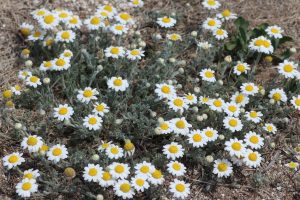
Picture a sun-drenched Cypriot meadow in spring, dotted with cheerful daisy-like flowers that bob like tiny suns on slender stems, their delicate scent mingling with the salty sea air. These are the Anthemis or Mayweed species, often mistaken for their chamomile cousins, a group of wildflowers that paint the island's landscapes with subtle beauty. But what tales do these unassuming blooms tell of Cyprus' wild heart? www.inaturalist.org Getting Acquainted with the Island's Daisies Anthemis is a genus of flowering plants in the vast Asteraceae family, which includes everything from sunflowers to dandelions, showing how these humble herbs fit into a broader world of composite blooms that rely on wind and insects for their spread. In Cyprus, they're known as wild chamomiles or μαργαρίτες (margaritas) in Greek, evoking simple, everyday beauty. Think of them as the island's resilient ground-huggers, annual or perennial herbs that thrive in open spaces, offering a gentle introduction to the Mediterranean's floral diversity without any fuss. A Legacy Etched in Ancient Soils The story of Anthemis in Cyprus reaches back to the island's Bronze Age settlers, who likely encountered these flowers amid terraced fields and rocky hills, perhaps using them in early herbal remedies as hinted in ancient texts like Dioscorides' "De Materia Medica," where similar chamomiles were praised for soothing woes. www.inaturalist.org Over centuries, as Phoenicians,…

Read more

Avakas Gorge Hiking Trail

Avakas Gorge Hiking Trail

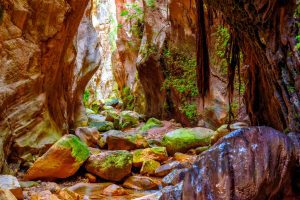
Avakas Gorge sits within Pegeia State Forest at the southwestern edge of the Akamas Peninsula, approximately 20 kilometers west of Paphos. The gorge follows the course of the Avgas River, which gave the canyon its name. chooseyourcyprus.com Constant erosive activity on sloping limestone rocks created this dramatic formation. The rocks consist of loams, chalks, reef limestone, grain limestone, and bentonitic clays that erode at different rates. The gorge area holds protected status as a Natura 2000 site and was designated a Plant Micro-Reserve under the Cyprus Forest Law in 2013. Historical Background Geologists believe Avakas Gorge emerged from the sea when tectonic forces lifted the entire region. The Avgas River began its work of erosion millions of years ago. Water flowing over the limestone gradually carved deeper into the rock, creating steep vertical walls. The gorge became narrower and deeper with each passing century as the river continued its relentless cutting. The ancient Greek word "avakas" means without voice or mute, possibly referring to how the towering walls muffle sound within the canyon. Local shepherds and travelers have used this route for centuries. The gorge provided shelter, fresh water, and a passage through otherwise difficult terrain. People shared stories of mythical creatures inhabiting the shadowy recesses between the cliffs. The geological formations visible in the gorge walls reveal layers deposited…

Read more
Kition Temples Phoenician Hellenistic Period

Kition Temples Phoenician Hellenistic Period

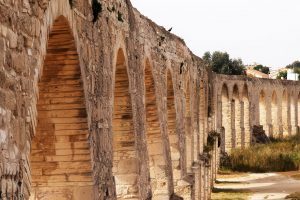
Kition, located beneath modern Larnaca on Cyprus's southeastern coast, served as a major Bronze Age settlement before the Phoenicians arrived. The site contains five successive temples dated from the late 13th to the late 11th century BC, built during the Late Bronze Age when Mycenaean Achaeans inhabited the city. LarnakaTourism-com These early temples were connected to copper smelting workshops, revealing an unusual integration of industrial and religious activities. The copper industry was central to Cyprus's prosperity, and scholars believe this placement suggests either worship of a deity related to copper production or a ritual significance attached to metallurgy itself. Around 1000 BC, the religious part of the city was abandoned, though life continued in other areas. This abandonment created a gap in the archaeological record until the Phoenicians revitalized the site two centuries later. Historical Background The Phoenicians arrived at Kition near the end of the 9th century BC, first as traders and later as permanent settlers. Around 850 BC, they built a large temple dedicated to Astarte on the foundations of an earlier Mycenaean temple. This temple became the most important religious building in the city and stayed in use for more than five centuries. Researchgate-net The Temple of Astarte was a major architectural achievement. The rectangular building measured 35 by 22 meters, with walls made of large ashlar…

Read more