Explore Cyprus with Our Interactive Map

Explore our top stories and discover ideas worth your time.

Pafos Aphrodite Festival

Pafos Aphrodite Festival

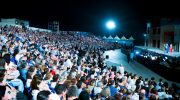
Each September, the ancient harbor of Pafos becomes something rare: a place where opera, history, and landscape converge without competing for attention. The Pafos Aphrodite Festival transforms the space in front of a medieval castle into an open-air opera stage, offering full productions in a setting shaped by sea air, stone walls, and night sky. What makes the festival distinctive is not only its musical ambition, but how naturally it belongs to its surroundings. facebook-com When Opera Leaves the Opera House The Pafos Aphrodite Festival is Cyprus’s leading international opera event, held annually in late August or early September in the coastal city of Pafos. Performances take place outdoors, directly in front of Pafos Medieval Castle, using the historic harbor as both venue and atmosphere. facebook-com Rather than recreating the formality of a traditional opera house, the festival embraces openness. Music is performed under the sky, with the sea close by and the castle standing as a silent witness. The experience feels ceremonial, but not enclosed, allowing opera to exist in dialogue with place rather than behind walls. A Cultural Decision, Not an Accident The festival was established in 1998, with its first performance staged in 1999. Its creation was a deliberate attempt to reposition Pafos as more than a seasonal beach destination. Local cultural institutions and authorities sought a…

Read more

Kition Temples

Kition Temples

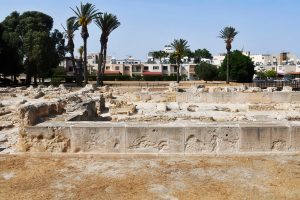
Kition, located beneath modern Larnaca on Cyprus's southeastern coast, served as a major Bronze Age settlement before the Phoenicians arrived. The site contains five successive temples dated from the late 13th to the late 11th century BC, built during the Late Bronze Age when Mycenaean Achaeans inhabited the city. arnakaregion-com These early temples were connected to copper smelting workshops, revealing an unusual integration of industrial and religious activities. The copper industry was central to Cyprus's prosperity, and scholars believe this placement suggests either worship of a deity related to copper production or a ritual significance attached to metallurgy itself. Around 1000 BC, the religious part of the city was abandoned, though life continued in other areas. This abandonment created a gap in the archaeological record until the Phoenicians revitalized the site two centuries later. Historical Background The Phoenicians arrived at Kition near the end of the 9th century BC, first as traders and later as permanent settlers. Around 850 BC, they built a large temple dedicated to Astarte on the foundations of an earlier Mycenaean temple. This temple became the most important religious building in the city and stayed in use for more than five centuries. researchgate-net The Temple of Astarte was a major architectural achievement. The rectangular building measured 35 by 22 meters, with walls made of large ashlar…

Read more
Saint Barnabas Monastery

Saint Barnabas Monastery

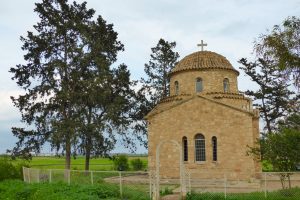
Near the ruins of ancient Salamis, a monastery complex marks the spot where one of Christianity's first apostles was buried in secret after being martyred for his faith. Saint Barnabas was a native of Cyprus who joined Paul on missionary journeys that brought Christianity to the island and converted its Roman governor. His discovery in a tomb 400 years after his death would change the course of Cypriot church history and establish the Orthodox Church of Cyprus as an independent institution. shutterstock-com Barnabas holds a unique position in Christian history as the apostle who validated Paul's conversion and introduced him to the Christian community in Jerusalem. According to the Acts of the Apostles, Barnabas sold his property near Jerusalem and donated the proceeds to the early church, demonstrating his complete dedication to the new faith. He is considered the patron saint of Cyprus and is commemorated on June 11th in the Orthodox calendar. Historical Background Barnabas traveled to Jerusalem to study law under Rabbi Gamaliel, the same teacher who instructed Paul. While studying in Jerusalem, Barnabas witnessed miracles performed by Jesus and became one of His followers. megtaza-com When Paul (then called Saul) returned to Jerusalem after his dramatic conversion on the road to Damascus, the Christian community was understandably suspicious of the former persecutor of Christians. Barnabas played a…

Read more