Explore Cyprus with Our Interactive Map

Explore our top stories and discover ideas worth your time.

Ayia Napa Lover’s Bridge

Ayia Napa Lover’s Bridge

The Lover's Bridge stands as one of Cyprus's most photographed natural landmarks. This limestone arch extends from the coastal cliffs near Ayia Napa, reaching toward the Mediterranean Sea with one end firmly anchored to land while the other dips into crystal-clear turquoise water. tripadvisor-com The bridge measures approximately 6 meters long and half a meter wide, formed entirely through natural processes without any human construction. Visitors from around the world come to walk across this slender natural formation, particularly during sunset hours when golden light transforms the white limestone and azure water into a scene of remarkable beauty. The bridge takes its name from romantic traditions that have developed around the site. Local legend claims that couples who kiss while standing in the middle of the arch and make a wish together will see their wishes come true. This belief has made the location a popular destination for marriage proposals, wedding photographs, and symbolic ceremonies celebrating love and commitment. How Wave Action Sculpted the Arch The Lover's Bridge formed through a combination of mechanical and chemical erosion acting on limestone bedrock. Rainwater absorbs carbon dioxide from the atmosphere and soil, creating a weak carbonic acid solution. When this slightly acidic water contacts limestone, it triggers chemical reactions that gradually dissolve the calcium carbonate rock. Seawater contains additional dissolved salts and…

Read more
Pepper Trees of Cyprus

Pepper Trees of Cyprus

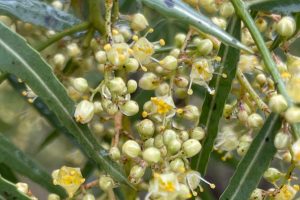
Imagine strolling through a sun-drenched village square or along a quiet coastal road in late summer. A graceful tree with feathery, weeping branches catches your eye, its small greenish-white flowers having given way to clusters of shiny pink-red berries that sparkle like strings of tiny jewels. These are the Schinus species of Cyprus – elegant South-American guests whose light, peppery fragrance and airy beauty have quietly woven themselves into the island’s everyday scenery. The Pepper Trees of the Cashew Family Schinus belongs to the Anacardiaceae family – the same remarkable group that includes pistachios (Pistacia vera), mastic trees (Pistacia lentiscus), cashews, mangoes and even sumacs. This family is known for resinous bark, compound leaves and often aromatic fruits. The genus Schinus contains about 30 species, nearly all native to South America. In Cyprus the two most common are Schinus molle (Peruvian pepper tree or false pepper tree) and Schinus terebinthifolius (Brazilian pepper tree). Locally they are called Αρτυμαθκιά (Artumathkiá – “pepper tree”) for S. molle, and Μαστισιά (Mastisiá – “mastic-like”) or Σχίνος η τερεβινθόφυλλη for S. terebinthifolius, evoking their resinous family ties. A Journey from the Andes to Cypriot Soil Both species are native to subtropical and tropical South America. Schinus molle comes from the Andes foothills of Peru, Bolivia and neighbouring countries, while S. terebinthifolius hails from Brazil, Argentina…

Read more
Myrtou Pigadhes Sanctuary

Myrtou Pigadhes Sanctuary

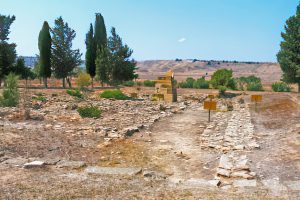
A Late Bronze Age sanctuary featuring a rare monumental altar with "horns of consecration," establishing a clear religious link between Cyprus and Minoan Crete. blogspot-com The Myrtou-Pigadhes Sanctuary represents a pivotal archaeological site in Cyprus, illuminating the island's religious practices during the Late Bronze Age and its cultural exchanges with the Aegean world. Located in the northwest region near the village of Myrtou, this sanctuary dates primarily to the 16th to 11th centuries BC and is renowned for its monumental stepped altar adorned with "horns of consecration," a distinctive Minoan symbol that underscores direct influences from Cretan religious traditions. As a rural cult center, it served local communities for rituals involving offerings, animal sacrifices, and possibly fertility or solar worship, blending indigenous Cypriot elements with imported Minoan motifs. This site highlights Cyprus's role as a Mediterranean hub, where trade in copper and ceramics facilitated the spread of religious ideas, fostering a syncretic spirituality that bridged Eastern and Western traditions and influenced subsequent Iron Age cults. A Late Bronze Age Cult Center Nestled on a low hill in the fertile plains south of the Kyrenia Mountains, the Myrtou-Pigadhes Sanctuary spans approximately 0.5 hectares, comprising open courts, altars, and storage areas that reflect an organized religious complex. Excavated in the 1950s by archaeologist Joan du Plat Taylor, the site reveals a sequence…

Read more